


 Play store

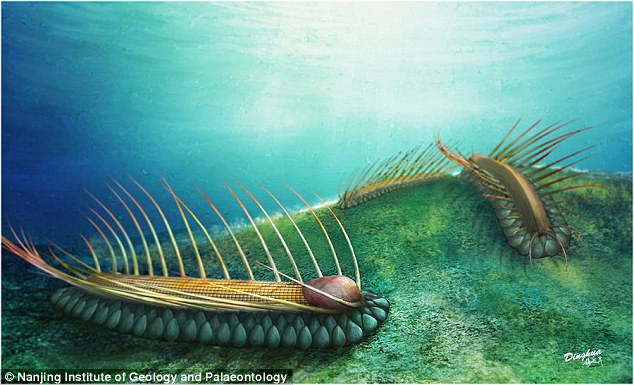
Scientists have uncovered the earliest known evidence of the evolutionary structures that later became spider fangs, identifying them in a 518-million-year-old fossil from China’s famous Chengjiang fossil site.
The discovery, made by researchers from Yunnan University and the University of Leicester, sheds new light on the origins of chelicerae—the specialized pincers and fangs that define spiders, scorpions, ticks and other chelicerates. The findings were published in the journal Nature.
The fossil belongs to Urokodia, a small marine creature that lived during the early Cambrian Period, hundreds of millions of years before modern spiders evolved. Measuring just 2-3 centimeters long, the animal had stalked eyes, a segmented body and jointed limbs, with little outward resemblance to today’s spiders.
Using advanced X-ray imaging, researchers examined the rock encasing the fossil and found that much of the creature’s soft anatomy had been remarkably preserved. The scans revealed a pair of pincer-like appendages located just behind its eyes.
Scientists identified these structures as an early form of chelicerae, providing the oldest known evidence of the anatomical features that eventually evolved into the fangs and pincers used by modern chelicerates to capture and subdue prey.
The fossil also preserved structures on the animal’s legs that may have functioned as book gills, enabling it to breathe underwater. Similar respiratory organs are still present in aquatic chelicerates such as horseshoe crabs.
Researchers said the discovery offers valuable insight into the early evolution of one of nature’s most successful groups of predators and helps trace the origins of a defining feature that has persisted for more than half a billion years.