


 Play store

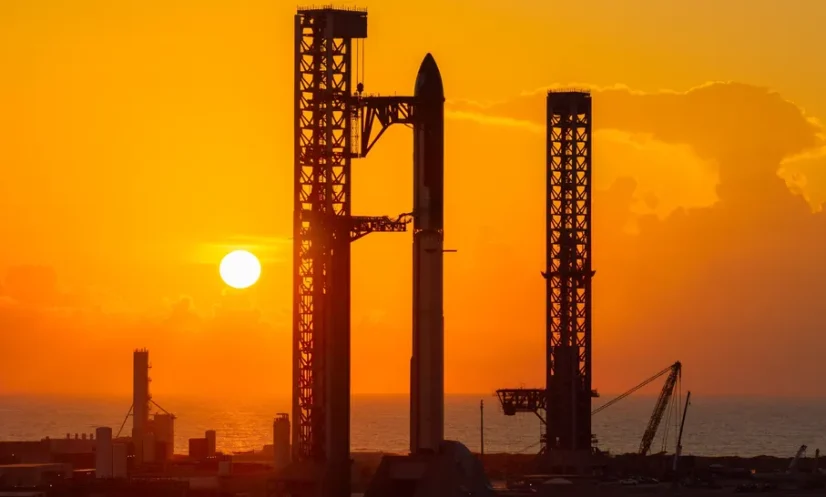
SpaceX is set to attempt the first orbital flight of its giant Starship rocket on Monday, September 28, marking a major milestone in the development of the company’s fully reusable launch system.
The Starship-Super Heavy vehicle is scheduled to lift off from SpaceX’s Starbase facility in South Texas during a 75-minute launch window opening at 7:15 a.m. local time (8:15 a.m. EDT; 1215 GMT). The US Federal Aviation Administration has approved the flight, while its current operations advisory lists September 28 as the primary launch date and September 29 as a backup.
The mission, known as Starship Flight 14, will be the 14th flight of the integrated vehicle. All 13 previous Starship flights were suborbital, making Monday’s mission the first attempt to place the upper-stage spacecraft into Earth orbit.
Standing about 407 feet (124 metres) tall when fully stacked, Starship is the largest and most powerful rocket ever built. It consists of the Super Heavy booster and the Ship upper stage, both designed for rapid reusability.
For Flight 14, the 171-foot (52-metre) Ship is expected to enter orbit and deploy 26 next-generation Starlink Version 3 satellites. The spacecraft is then planned to complete six orbits of Earth before performing a deorbit manoeuvre and splashing down in the Pacific Ocean off the coast of Chile roughly 10 hours after launch.
The Super Heavy booster is expected to make a much shorter flight, splashing down in the Gulf of Mexico about seven minutes after liftoff.
The mission represents a significant change from previous Starship tests, which lasted no more than about 65 minutes and followed suborbital trajectories toward the Indian Ocean near Western Australia.
SpaceX ultimately plans to recover both stages at the launch site using the giant tower’s mechanical “chopstick” arms. The company has successfully caught the Super Heavy booster three times, but has yet to attempt a similar catch of the Ship spacecraft.
The orbital test will also provide an important demonstration of Starship’s ability to operate for extended periods in space. Future missions will require the spacecraft to conduct in-space propellant transfers with tanker versions of Starship before travelling to the Moon or Mars. SpaceX has not yet demonstrated such an operation in orbit.
Starship is also central to NASA’s Artemis programme. NASA has selected a Starship-derived vehicle as the first crewed lunar lander for the Artemis programme, which aims to return astronauts to the Moon.
SpaceX says Starship is designed to eventually support missions to the Moon, Mars and beyond, but the vehicle remains in an experimental flight-test programme.
The launch will be streamed live by SpaceX, with coverage expected to begin about 30 minutes before liftoff.