Play store

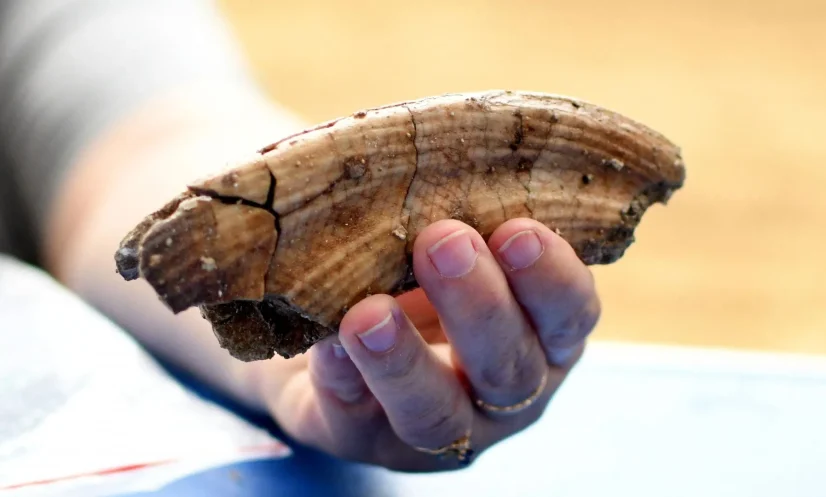
An archaeological site in the Jordan Valley is at least 1.9 million years old, suggesting that early humans spread beyond Africa hundreds of thousands of years earlier than previously believed, according to new research.
The revised dating places ‘Ubeidiya in present-day Israel among the oldest known sites of early human activity outside Africa, alongside Dmanisi in Georgia, offering fresh insights into the early migration of human populations.
The research was led by Prof Ari Matmon of the Hebrew University of Jerusalem, Prof Omry Barzilai of the University of Haifa and Prof Miriam Belmaker of the University of Tulsa.
The team combined three dating techniques to establish a more reliable age for the site, which has long been significant for research into human evolution.
Previous estimates generally placed ‘Ubeidiya between 1.2 million and 1.6 million years old, based largely on comparisons with other archaeological and geological evidence.
Researchers used cosmogenic isotope burial dating, analysis of ancient magnetic records preserved in lake sediments and uranium-lead dating of fossilised freshwater snail shells to reassess the site’s age.
The findings indicate that the archaeological deposits date back at least 1.9 million years.
The ‘Ubeidiya Formation is known for its evidence of the Acheulean stone tool tradition, characterised by large tools shaped on both sides, including hand axes. The site has also yielded abundant animal fossils representing species associated with Africa and Asia, including extinct animals.
The revised chronology suggests that early human populations had reached the Levant during a crucial period of expansion beyond Africa.
The findings also raise questions about how different groups of early humans migrated and adapted to new environments.
Evidence from ‘Ubeidiya and Dmanisi suggests that populations carrying different stone tool technologies may have spread beyond Africa during overlapping periods.
These traditions included the Oldowan, associated with relatively simple stone tools, and the Acheulean, known for more carefully shaped implements such as hand axes. This raises the possibility that early human expansion did not follow a single, uniform technological sequence.
The researchers also encountered discrepancies in their dating results. Initial cosmogenic isotope measurements suggested that some rocks were around three million years old, considerably older than the evidence from fossils, geology and archaeology indicated.
Further investigation suggested that the discrepancy stemmed from the complex history of the sediments, which had undergone repeated deposition, burial, exposure and movement within the Dead Sea rift.
Some materials had been buried long before being transported and deposited again near the ancient lake at ‘Ubeidiya, complicating efforts to determine when the archaeological layers were formed.
The researchers said combining independent dating methods helped resolve the uncertainties and establish a more dependable timeline for the site, deepening understanding of early human dispersal beyond Africa.