Play store

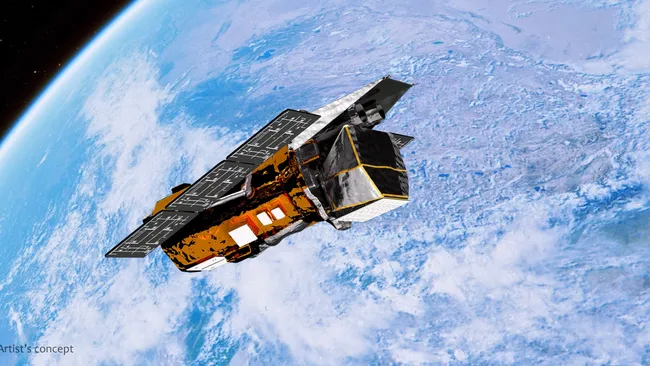
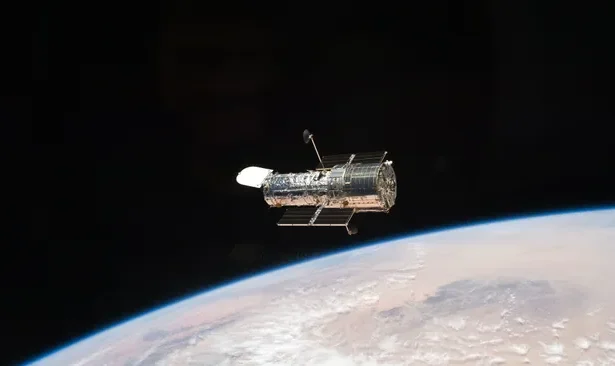
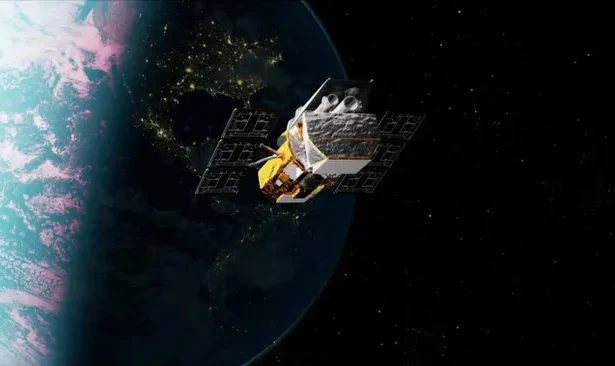
NASA’s Swift space telescope re-entered Earth’s atmosphere in an uncontrolled descent on Wednesday (November 4), ending its 22-year mission after a last-ditch effort to save the observatory failed.
The 3,200-pound (1,450kg) spacecraft re-entered the atmosphere at 7:39am EST (1239 GMT) over northern Sumatra, according to satellite tracker Jonathan McDowell, citing US Space Force data.
Most of the minibus-sized observatory was expected to burn up during re-entry. NASA had estimated the probability of any surviving debris causing injury on the ground at just one in 2,100.
Officially known as the Neil Gehrels Swift Observatory, the spacecraft was launched in November 2004 for an initial two-year mission to study gamma-ray bursts (GRBs), the most powerful explosions in the universe.
Swift was designed to rapidly detect and locate gamma-ray bursts, relay their positions to other observatories and turn its telescopes towards them before their afterglows faded. It could typically complete the process in about a minute.
Beyond gamma-ray bursts, the observatory also studied supernova explosions, black holes, asteroids and comets. During its operational life, it observed more than 2,000 gamma-ray bursts and 1,400 supernovae.
Although designed for a two-year mission, Swift continued scientific operations for more than two decades. It conducted its final science observation on October 20 this year.
The observatory was renamed the Neil Gehrels Swift Observatory in 2018 in honour of its first principal investigator, who died in 2017.
Its mission could have continued longer if a rescue operation had succeeded.
In September 2025, NASA awarded Arizona-based Katalyst Space a $30 million contract to develop and operate a robotic spacecraft to raise Swift into a higher orbit and extend its operational life.
The company launched its LINK servicing spacecraft on July 3 this year, aiming to rendezvous with Swift and boost its orbit in August.
However, technical problems with LINK’s propulsion system and reaction wheels prevented it from completing the planned operation. The servicing spacecraft itself re-entered Earth’s atmosphere on September 25.
NASA described the rescue attempt as a high-risk, high-reward mission, saying it had nevertheless advanced technologies for future robotic spacecraft servicing.
Swift’s return to Earth is part of a routine process in which defunct satellites and rocket bodies re-enter the atmosphere. A 2025 report estimated that at least three large pieces of space debris fall back to Earth every day, a figure expected to increase as satellite constellations expand.