


 Play store

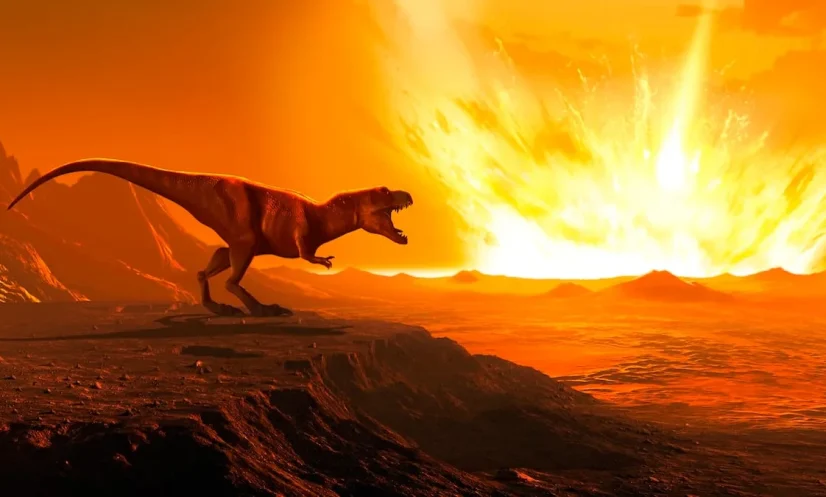
The asteroid that wiped out the dinosaurs 66 million years ago may have been even rarer than scientists previously believed, adding another extraordinary twist to one of Earth’s most catastrophic extinction events.
A new study published in Science Advances suggests the space rock that struck present-day Mexico’s Yucatán Peninsula belonged to an exceptionally rare type of meteorite known as a Carbonaceous Ornans (CO) chondrite.
Scientists had already identified the impactor as a carbonaceous chondrite, a class of meteorites that accounts for less than five percent of those that reach Earth. However, the latest analysis indicates it came from the much rarer CO subgroup, representing only a tiny fraction of carbonaceous chondrites.
The asteroid’s impact, about 66 million years ago, triggered global wildfires, massive tsunamis, earthquakes, volcanic activity and widespread ocean acidification. Dust and debris thrown into the atmosphere blocked sunlight, cooled the planet and devastated plant life, causing food chains to collapse and leading to the extinction of nearly 75% of Earth’s species, including the non-avian dinosaurs.
Researchers say the dinosaurs were also victims of extraordinary bad luck. Previous studies have suggested that if the asteroid had struck almost anywhere else on Earth, or at a different angle, the destruction might have been less severe. The impact also occurred during the Northern Hemisphere’s spring, a season that likely made it harder for many species to recover.
The study further suggests the impactor may have originated in the outer Solar System, a region from which asteroids rarely reach Earth because Jupiter’s gravity acts as a protective barrier, deflecting many incoming space rocks.
The findings provide new insight into the unique chain of events that ended the age of the dinosaurs and reshaped life on Earth.