


 Play store

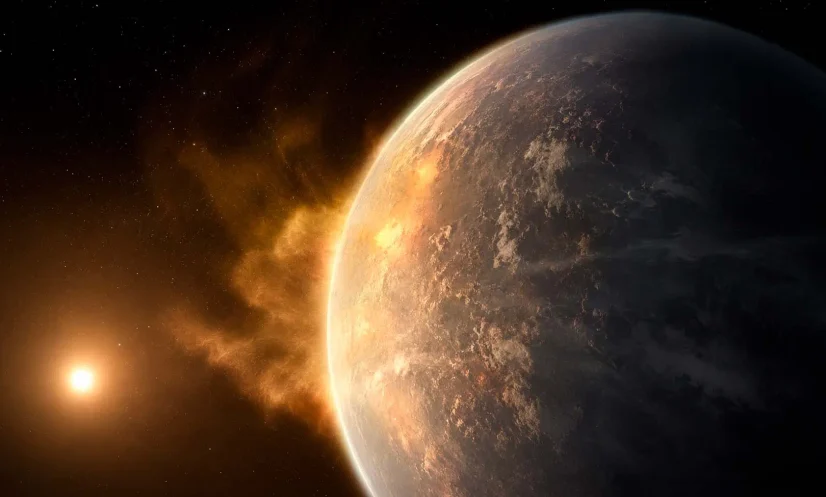
Scientists have found the strongest evidence yet that a rocky, Earth-sized planet beyond our solar system has retained a stable atmosphere, marking a significant step in the search for potentially habitable worlds.
The planet, LHS 1140b, located about 48 light years from Earth, orbits within the habitable zone of a small red dwarf star, where temperatures could allow liquid water to exist. The latest discovery suggests the planet has managed to hold onto its atmosphere despite the harsh radiation typically emitted by red dwarf stars.
Astronomers first discovered LHS 1140b in 2017, but new observations have elevated its status as one of the most promising candidates for an Earth-like world capable of supporting life.
Led by planetary scientist Collin Cherubim of Harvard University, the research found evidence that the planet is releasing helium into space—a key indicator that it possesses a long-lasting, stable atmosphere rather than one that has been stripped away by stellar activity.
While the findings do not indicate the presence of life, researchers say LHS 1140b appears to possess many of the essential conditions needed for habitability.
“All the necessary ingredients seem to be there,” Cherubim said, while stressing that no evidence of living organisms has yet been detected.
The discovery is particularly significant because confirming atmospheres on distant rocky planets is extremely challenging. Most exoplanets with confirmed atmospheres are gas giants, which are considered inhospitable to life as we know it.
A stable atmosphere is regarded as one of the most important requirements for sustaining liquid water and protecting a planet’s surface from harmful radiation.
The detection of helium suggests LHS 1140b has maintained a layered atmosphere over a long period and is continuing to replenish it, rather than gradually losing it to space.
Scientists say the findings make LHS 1140b one of the best targets for future observations by powerful telescopes searching for atmospheric gases that could indicate biological activity.
Although further studies will be needed to determine the atmosphere’s composition and whether the planet could truly support life, researchers believe the discovery represents a major milestone in the ongoing search for habitable worlds beyond the solar system.