


 Play store

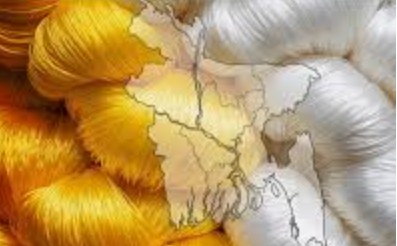
Bangladesh’s ready-made garment (RMG) industry, which transformed the country into the world’s second-largest apparel exporter, now stands at another historic crossroads. After four decades of spectacular growth built largely on cotton garments, the next wave of expansion will depend on whether the country can successfully embrace man-made fibre (MMF) apparel.
Industry experts say the opportunity is enormous. If Bangladesh can establish a competitive MMF value chain over the next five years, annual exports from the segment alone could reach US$45 billion by 2030, helping lift total garment exports close to the long-envisioned US$100 billion milestone.
The transition, however, demands far more than adding new production lines. It requires billions of dollars in investment, reliable energy supplies, policy reforms, skilled workers and an entirely new industrial ecosystem.
Global apparel consumption is changing rapidly. Consumers increasingly favour sportswear, athleisure, performance clothing, outdoor apparel, lingerie, medical textiles and technical garments, products that rely heavily on polyester, nylon, viscose, elastane and other synthetic or blended fibres.
According to the PwC-BGMEA MMF Study 2024, man-made fibres already account for more than half of global apparel trade, with their share expected to approach 60% by 2030.
Bangladesh’s production profile tells a very different story. Data from the Bangladesh Foreign Trade Institute (BFTI) and the Bangladesh Garment Manufacturers and Exporters Association (BGMEA) show around 72% of Bangladesh’s garment exports remain cotton-based, while only 24-27% come from MMF products.
“This mismatch represents both Bangladesh’s biggest weakness and its greatest opportunity,” said BGMEA President Mahmud Hasan Khan Babu in recent industry discussions.
“Global buyers are diversifying towards synthetic and blended products. Bangladesh cannot rely on cotton alone if it wants to sustain export growth.”
The numbers are compelling. BFTI estimates the global MMF apparel market could reach around US$375 billion by 2030. Capturing merely 12% of that market would generate almost US$45 billion in annual exports for Bangladesh.
Combined with projected growth in conventional cotton garments, overall RMG exports could reach US$95-100 billion, nearly doubling current earnings.
The shift is becoming increasingly urgent as Bangladesh prepares for graduation from the UN’s Least Developed Country (LDC) category, expected to take full effect in the coming years.
After graduation, exporters will gradually lose several preferential trade benefits that have helped Bangladesh dominate global apparel markets.
Although the European Union’s Everything But Arms (EBA) scheme will provide temporary support until 2029 under transitional arrangements, exports to many other destinations could face import duties averaging 9-12%, according to trade experts.
Those additional costs will squeeze already thin margins on basic cotton products.
Higher-value MMF garments, by contrast, command better prices and offer greater flexibility in offsetting tariff disadvantages.
Despite its global reputation in garment manufacturing, Bangladesh still lacks a competitive synthetic textile industry.
Nearly all major MMF raw materials, including polyester staple fibre, polyester filament yarn, viscose, nylon, technical fabrics and specialty fibres, are imported primarily from China, Taiwan, South Korea and other suppliers.
This dependence lengthens lead times, increases logistics costs and reduces manufacturers’ ability to respond quickly to changing buyer demand.
According to studies by Research and Policy Integration for Development (RAPID) and BFTI, Bangladesh requires between US$25 billion and US$30 billion in new investment over the next four to five years to establish domestic production of polyester, PET chips, synthetic yarn, filament manufacturing, weaving, knitting, dyeing and finishing facilities.
Such investment would represent one of the largest industrial transformations since the country’s garment boom began in the 1980s.
Unlike cotton garment assembly, synthetic textile manufacturing is highly capital-intensive.
It requires advanced chemical processing plants, sophisticated spinning technology and continuous dyeing operations.
Industry economists say Bangladesh will need innovative financing models, combining private investment, foreign direct investment, development finance and government-backed incentives.
Reliable energy is equally critical. Synthetic fibre manufacturing depends on uninterrupted electricity and gas supplies, areas where Bangladesh continues to face significant challenges.
Without competitive utility pricing and improved grid reliability, investors may hesitate to establish large-scale MMF manufacturing facilities.
Industry leaders argue that investment alone will not be sufficient. They have called for:
Reduced import duties on MMF raw materials;
Expanded bonded warehouse facilities;
Dedicated financing windows for synthetic textile projects;
Fiscal incentives for non-cotton apparel;
Faster customs clearance;
Simplified investment procedures.
Economists also stress the importance of attracting foreign investors from South Korea, Taiwan, Japan and China, countries with decades of experience in synthetic fibre technology.
Such partnerships could accelerate technology transfer, innovation and workforce development.
The future of MMF manufacturing is no longer defined solely by volume.
Global brands are increasingly demanding recycled polyester, traceable supply chains, low-carbon production and circular manufacturing.
The European Union’s Ecodesign for Sustainable Products Regulation (ESPR), Digital Product Passport requirements and broader circular economy policies are reshaping sourcing decisions.
“Future competitiveness will depend not only on producing synthetic garments but producing them sustainably,” says Rubana Huq, former BGMEA president. “Circularity, recycling and compliance will increasingly determine sourcing decisions.”
Bangladesh has already built a strong reputation in green manufacturing, hosting the world’s highest number of LEED-certified garment factories.
Industry observers believe extending that leadership into recycled MMF production could provide a major competitive advantage.
Bangladesh’s garment industry has repeatedly demonstrated its ability to reinvent itself, from low-value basic garments to complex fashion products, compliance-driven manufacturing and green factories.
The transition towards man-made fibres may prove its biggest transformation yet.
Success will depend on coordinated action involving government, manufacturers, financial institutions and international investors.
“If Bangladesh misses the MMF transition, competitors such as Vietnam, Indonesia and India will capture much of the future market,” trade analysts warn.
“But if the country builds a complete synthetic textile ecosystem over the next five years, it will not simply diversify exports. It will secure the next chapter of Bangladesh’s industrialisation.”
For an industry that has long relied on cotton, the future may increasingly be woven from synthetic fibres. The race has already begun, and Bangladesh’s ability to seize the US$45 billion MMF opportunity could determine whether it remains one of the world’s leading apparel exporters in the decades ahead.