


 Play store

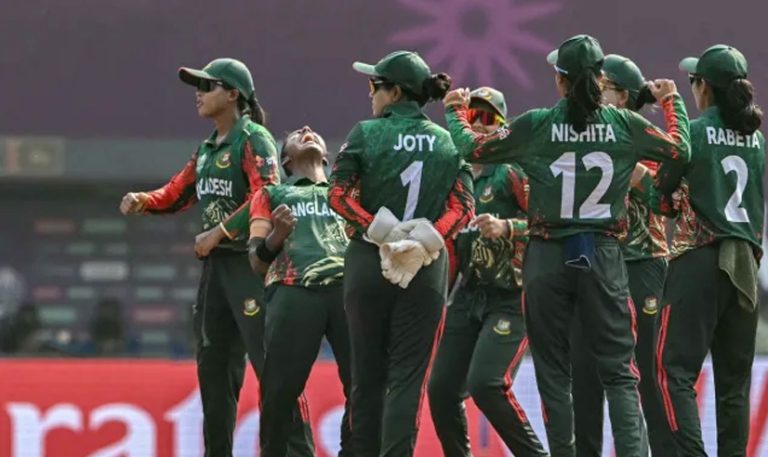
Shamim Hossain Shishir: One tournament ends, another series passes, yet the story of Bangladesh women’s cricket seems largely unchanged. There are promising starts and occasional individual performances, but consistency remains elusive. Most recently, Bangladesh bowed out in the semi-finals of the Asia Cup before returning from the Asian Games without a medal. In between, long-serving T20I captain Nigar Sultana Joty stepped down from the leadership, while comments by head coach Sarwar Imran after the Asian Games sparked a fresh controversy.
Taken together, these developments suggest that Bangladesh women’s cricket is no longer dealing with the failure of one particular series or tournament. Leadership, coaching, batting and the broader development structure all need to be examined.
The Asia Cup provides the most recent example. Bangladesh began the tournament in the United Arab Emirates with a convincing 71-run win over Indonesia. They then lost to Sri Lanka by four wickets before beating the UAE by 34 runs to secure a place in the semi-finals. With two wins from three group matches, Bangladesh finished second with four points.
However, there was little resistance against India in the semi-final. India posted 149 for six before Bangladesh were restricted to 109 for seven in 20 overs, ending their campaign with a 40-run defeat.
The result was hardly unexpected. Throughout the tournament, Bangladesh’s ability to post big totals and maintain the required scoring rate under pressure remained a concern. Against stronger sides, their limitations become particularly evident when chasing targets of around 150 or more.
Bangladesh’s T20I campaign was hardly smooth even before the Asia Cup. In the tri-series involving Scotland and the Netherlands in June, Bangladesh lost their opening two matches, going down to Scotland by eight wickets and the Netherlands by eight runs. They recovered to beat Scotland by 34 runs and the Netherlands by 13 runs, but finished the four-match series with two victories.
Earlier, they had lost the ODI series against Sri Lanka at home 2-1 and then suffered defeats in the first two matches of the three-match T20I series against the same opponents.
The problem, therefore, is not confined to the Asia Cup or the Asian Games. Bangladesh have produced encouraging results from time to time, but their inability to perform consistently against stronger opposition and under pressure in important matches remains evident.
At the same time, it would be unfair to describe the entire 2026 season as a failure. Bangladesh qualified for the T20 World Cup proper unbeaten in the qualifying tournament at the beginning of the year. At the World Cup, they beat the Netherlands and Pakistan, matching their best-ever finish in the competition.
Bangladesh finished fourth in their group with two wins from five matches. But they could not carry that momentum into the subsequent tournaments. Their Asia Cup semi-final exit and medal-less Asian Games campaign brought the same weaknesses back into focus.
The Asian Games in Japan offered another opportunity after the Asia Cup disappointment. The target was a medal, particularly after Bangladesh had won bronze at the 2022 Hangzhou Asian Games. Instead, they returned home empty-handed.
Their quarter-final against China was abandoned because of rain, and Bangladesh advanced to the semi-finals on the basis of their ranking. There, India inflicted a heavy defeat. After India made 195 for four, Bangladesh were bowled out for just 81, suffering a 114-run defeat and missing out on a place in the gold-medal match.
Pakistan awaited them in the bronze-medal match, the same side Bangladesh had beaten to win bronze at the previous Asian Games. Bangladesh had also defeated Pakistan at this year’s World Cup. This time, however, Pakistan won by 31 runs. After Pakistan scored 145, Bangladesh managed only 114.
Bangladesh failed to produce the expected performance in batting, bowling or fielding, surrendering another opportunity to retain an Asian Games medal.
Even before the Asian Games ended, another major change was emerging in Bangladesh women’s cricket. After several years leading the T20I side, Nigar Sultana Joty decided to step down as captain.
Joty became T20I captain in 2022 and has led Bangladesh in 81 matches, winning 32 and losing 48. Under her leadership, Bangladesh recorded their first T20 World Cup victory in 2024, beating Scotland.
Her batting and captaincy, however, have come under scrutiny in recent times. In the 2026 Asia Cup, Joty scored only 56 runs in four matches, making 10 against Indonesia, four against Sri Lanka, 23 against the UAE and 19 against India in the semi-final.
Joty herself said she wanted to step down from T20I captaincy to concentrate more on her batting and individual performance. She is expected to continue leading the ODI side.
The immediate question is who will succeed her as T20I captain. The Bangladesh Cricket Board has yet to announce the new captain.
The debate over the team’s performance has also extended to coaching. After Bangladesh lost the Asian Games bronze-medal match to Pakistan, head coach Sarwar Imran attributed some of the team’s problems to uncertainty surrounding changes in the coaching and leadership setup.
In an interview with a local media outlet, Sarwar reportedly questioned how good results could be expected while repeatedly changing coaches and captains.
Following his comments, the BCB decided to issue him a show-cause notice. Women’s cricket committee chairman Rafiqul Islam Baku said the board would seek an explanation from the senior coach over the remarks.
Sarwar has also pointed to deeper structural weaknesses in women’s cricket. He has highlighted shortcomings in school cricket, age-group competitions, the under-18 pathway and dedicated high-quality training facilities for women players.
Recent results suggest that the problems need to be examined more broadly. Bangladesh’s bowling attack has often kept the team competitive, but the batting has struggled to score quickly, post imposing totals and chase targets under pressure.
The numbers tell part of the story. Bangladesh managed 109 for seven while chasing 149 in the Asia Cup semi-final, were bowled out for 81 chasing 196 in the Asian Games semi-final, and finished on 114 for seven while chasing 146 in the bronze-medal match.
These are three different examples of the same underlying problem. Bangladesh’s batting struggles have been evident for a long time.
Bangladesh will not have much time to regroup. With the Asian Games over, their next major challenge is an Australia tour.
In October, Bangladesh will play a bilateral series in Australia for the first time. The tour features three ODIs on October 9, 11 and 14, followed by three T20Is on October 18, 20 and 22. The ODIs are part of the ICC Women’s Championship.
The tour will also come with a change in T20I leadership. Joty’s successor will have to take charge, while changes to the coaching staff are also possible. The BCB had earlier indicated plans to appoint an experienced foreign coach ahead of the Australia tour.
Playing Australia in Australia will be a demanding challenge. But for Bangladesh, the significance of the series will extend beyond the results. It will also test how quickly the team can regroup after recent setbacks while adapting to new leadership and a potentially new coaching structure.
Bangladesh women’s cricket has reached a point where simply saying the team needs to “play better” is no longer enough. Alongside results on the field, attention must be given to the long-term structure, age-group cricket, talent identification, high-quality preparation, batting depth and the ability to handle pressure in international matches.
A change in leadership may bring fresh energy. A new coach may introduce new ideas. But sustainable progress will also require improvements to the broader cricket development system.
Bangladesh women’s cricket has established a presence on the international stage in recent years. A World Cup victory, an Asia Cup semi-final appearance and regular contention for medals at the Asian Games are signs of that progress. The next step, however, requires the team not only to compete against stronger sides but also to develop the habit of winning important matches.
The Australia tour could provide the first major test of that next phase. Bangladesh will arrive with a new T20I captain, potentially a new coaching structure and the pressure of recent disappointments.
The bigger question is whether Bangladesh women’s cricket can turn those setbacks into lessons and make meaningful changes to both its playing approach and development structure. The Australia tour will offer the first major indication.