Play store

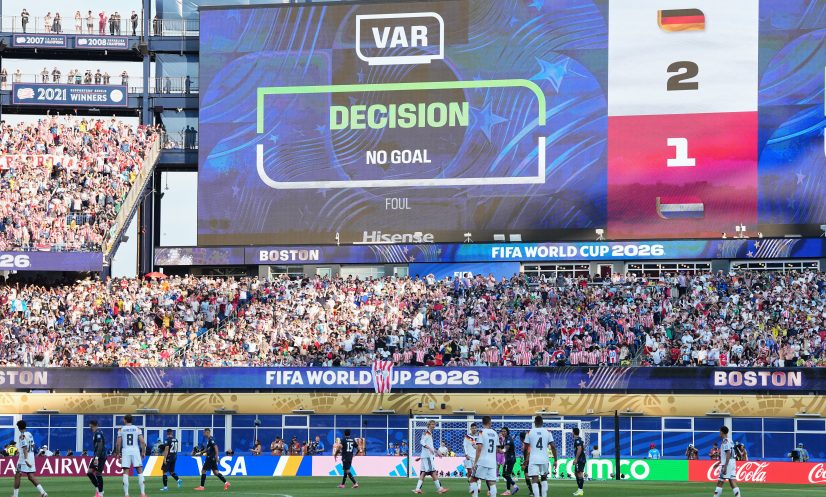
New FIFA rules and expanded use of video technology have become as influential as the players themselves at the FIFA World Cup, with several controversial decisions shaping the outcome of knockout matches and triggering widespread debate among teams and supporters.
The latest controversy came during Argentina’s 3-1 extra-time victory over Switzerland in the quarter-finals, when Swiss forward Breel Embolo was sent off after a Video Assistant Referee (VAR) review under FIFA’s newly introduced “mistaken identity” rule.
Although the rule’s name suggests a case of mistaken identity, officials clarified that referee Joao Pinheiro initially failed to spot Embolo simulating a foul under a challenge from Argentina’s Leandro Paredes. Paredes was first booked, allowing VAR to intervene. After reviewing the incident on the pitch-side monitor, the referee concluded Embolo had committed a clear simulation, issued him a second yellow card and dismissed him.
The decision proved decisive, coming shortly after Switzerland had equalised at 1-1 before Argentina went on to seal victory in extra time.
Switzerland coach Murat Yakin criticised the ruling, saying the referee’s decision had effectively destroyed his team’s chances.
“The referee made the wrong decision. This rule destroyed our game today, and it is very painful,” he said.
The Embolo incident is the latest in a series of controversial rulings linked to new FIFA regulations during the tournament.
Germany’s campaign ended in the round of 32 after defender Jonathan Tah’s extra-time goal against Paraguay was ruled out following a VAR review that identified a foul on goalkeeper Orlando Gill. FIFA’s refereeing department has instructed officials to penalise attackers who obstruct goalkeepers without attempting to play the ball.
Germany eventually lost in a penalty shootout, a defeat that prompted coach Julian Nagelsmann to step down.
Technology also proved costly for Croatia. During its last-16 defeat to Portugal, Josko Gvardiol’s dramatic stoppage-time equaliser was disallowed after the tournament’s connected-ball technology detected an almost imperceptible touch by teammate Igor Mantanovic during the build-up, resulting in an offside decision.
The sensor-equipped match ball records contact data 500 times per second, allowing officials to detect even the slightest touches that cannot be identified through conventional video replays.
Croatia coach Zlatko Dalić criticised the growing reliance on technology, saying such decisions diminish the spirit of the game.
Egypt also voiced strong protests after a goal against defending champion Argentina in the round of 16 was overturned following a VAR review of a foul committed much earlier in the attacking move. Argentina eventually recovered from two goals down to win 3-2.
The Egyptian Football Association questioned the consistency and fairness of the officiating, while FIFA referees chief Pierluigi Collina defended the decision, saying there is no limit on how far back officials may review an incident if it leads directly to a goal.
Technology again came under scrutiny during England’s quarter-final victory over Norway. Norwegian players claimed the ball had struck an overhead camera cable before Jude Bellingham’s equaliser, which under the Laws of the Game would have required play to stop.
However, FIFA said data from the connected-ball sensor showed no contact with the cable.
Norway also had a goal disallowed after VAR detected a foul by Erling Haaland before a corner kick was taken, another example of FIFA’s new interpretation allowing officials to review incidents occurring before the ball is put back into play.
The growing influence of VAR, connected-ball technology and revised refereeing protocols has made officiating one of the defining storylines of the tournament, with FIFA insisting the innovations are intended to improve accuracy despite mounting criticism from several teams eliminated following controversial decisions.