


 Play store

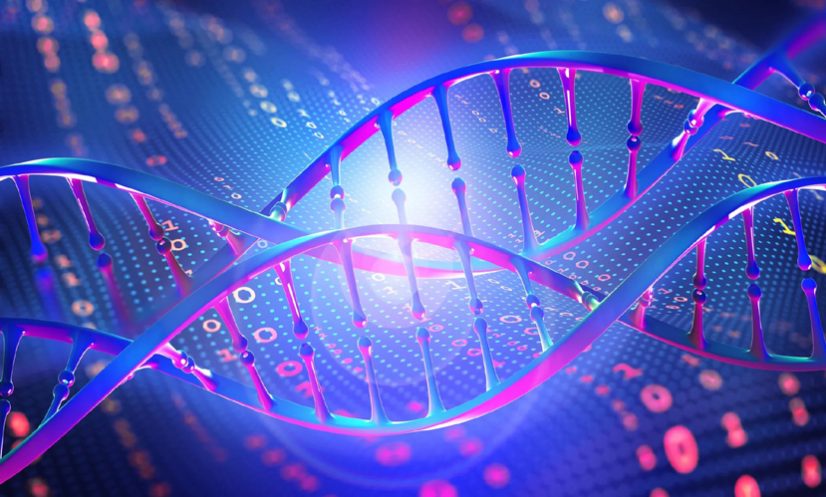
Researchers at Pennsylvania State University have developed a DNA-based electronic device that could pave the way for ultra-low-power memory systems capable of storing and processing vast amounts of data.
DNA is not only the genetic blueprint of living organisms but also an exceptionally dense medium for information storage. A single gram of DNA can theoretically hold about 215 million gigabytes of data, making it potentially attractive for next-generation data storage and computing technologies.
The Penn State team has developed a new approach to integrate synthetic DNA with electronic materials, addressing a key challenge in using biological molecules in electronic devices.
The research, published in Advanced Functional Materials and the subject of a patent application, combines synthetic DNA with crystalline perovskite, a semiconductor already used in applications including solar cells, lasers and data-storage technologies.
“Biology and electronics are different domains,” said Kavya S. Keremane, co-corresponding author and postdoctoral researcher in materials science and engineering at Penn State.
She said the researchers created a new materials platform by combining DNA’s information-storage capabilities with the electronic properties of perovskite semiconductors, potentially opening new approaches to designing low-power memory devices.
Memristor stores and processes information
Using the two materials, the researchers developed a memory resistor, or memristor, capable of operating with very low energy consumption.
Unlike conventional resistors, memristors can retain a record of previous electrical activity even after the power supply is switched off. This allows them to store and process information in the same location, a feature that resembles how neurons operate in the human brain.
The researchers said such technology could support neuromorphic computing systems, which are designed to process information in a manner similar to the human brain and can handle multiple inputs simultaneously.
Bed Poudel, co-corresponding author and research professor of materials science and engineering at Penn State, said the growing demand for artificial intelligence requires new approaches to developing low-power, high-capacity computing devices.
“Usually, it takes more power to store more information,” Poudel said, adding that the researchers’ device consumes about 100 times less power while offering greater storage capacity than conventional devices such as flash drives.
To build the device, the researchers incorporated silver nanoparticles into a layer of customised DNA sequences and integrated the material with thin films of perovskite.
The process, known as doping, involves adding a small amount of another material to modify specific properties. In this case, silver nanoparticles enabled the DNA to conduct electricity and helped organise its molecular structure.
The researchers used synthetic DNA rather than natural DNA because short, rigid synthetic sequences can be precisely designed and arranged at extremely small scales.
Neela H. Yennawar, a co-author and research professor at Penn State, said molecularly engineered DNA could provide structural organisation, adjustable electrical conductivity and functional control that natural DNA cannot readily offer in thin electronic films.
The researchers said the ability to computationally design DNA sequences of specific compositions and lengths could allow the material to be tailored for different electronic applications.
The findings point to a possible new class of bio-hybrid electronic materials that combine DNA’s extraordinary information density with semiconductor technology, although further development would be needed before such devices could be used in commercial systems.