


 Play store

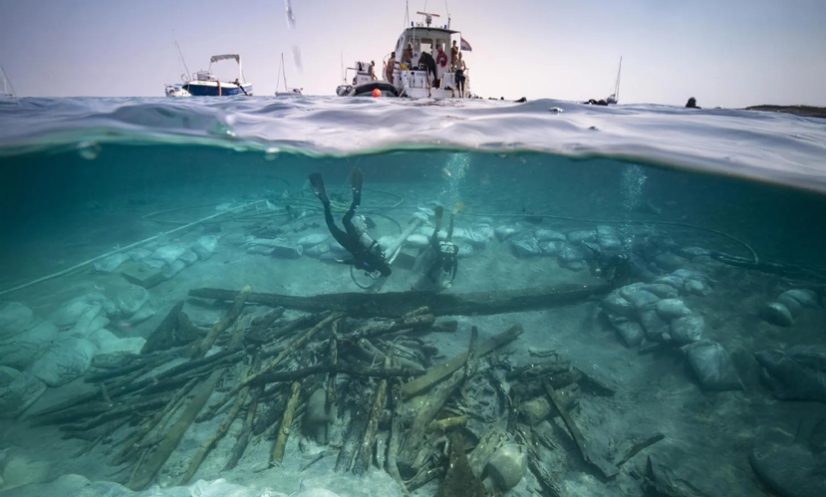
A 2,200-year-old Roman shipwreck off the coast of present-day Croatia has provided new clues about ancient waterproofing techniques, with researchers finding evidence that its hull was protected with pine tar and a mixture of pine tar and beeswax.
The findings come from a new study published in Frontiers in Materials, in which researchers from France and Croatia analyzed protective coatings found on the Roman Republic-era shipwreck Ilovik-Paržine 1.
Researchers said waterproofing materials used in ancient shipbuilding have received relatively little attention despite their importance in protecting vessels from water, salt, microorganisms and marine organisms.
“In archaeology, little attention is paid to organic waterproofing materials. Yet they are essential for navigation at sea or on rivers and are true witnesses of past naval technologies,” said first author Dr Armelle Charrié, an archaeometrist at the Laboratory of Mass Spectrometry of Interactions and Systems in Strasbourg.
The wreck was discovered in 2016 and has since been examined several times, along with its cargo. The latest study is the first to combine molecular and pollen analysis to identify the coatings and reconstruct the vegetation present when the materials were produced and applied to the hull.
Researchers analyzed 10 coating samples using structural, molecular and pollen analysis, including mass spectrometry to identify substances within the complex organic mixtures.
Molecular analysis found compounds associated with pine trees in all the samples, indicating that the coatings were mainly made from heated coniferous resin or coniferous tar, also known as pitch.
One sample showed a different formulation consisting of beeswax mixed with tar. The mixture, known to ancient Greek shipbuilders as zopissa, makes the adhesive more flexible and easier to apply when heated.
Pollen analysis also allowed researchers to identify plant taxa that were present in the immediate environment when the ship was built or repaired.
The research was conducted jointly by the Department for Underwater Archaeology of the Croatian Conservation Institute and the ADRIBOATS programme of the Centre Camille Jullian at Aix-Marseille University in France.
Charrié said differences in the Adriatic region had encouraged local communities to develop distinctive shipbuilding techniques. She added that studies of protective coatings can help reveal these traditions and the maritime expertise of ancient communities.