Play store

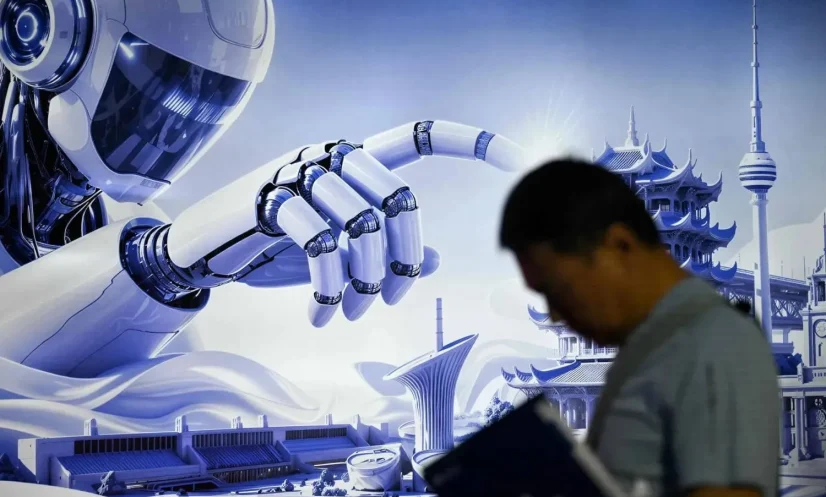
The United States and China are preparing to hold talks on artificial intelligence safety risks in mid-September, two sources briefed on the discussions told Reuters, as rapidly advancing AI capabilities raise growing concerns about global security.
The talks would be the first official bilateral discussions devoted exclusively to AI since US President Donald Trump began his second term. US Treasury Secretary Scott Bessent is expected to lead the US delegation, the sources said, speaking on condition of anonymity.
Reuters is reporting the tentative mid-September timing for the first time. A White House official, however, said there was currently no planned AI-related meeting for mid-September. Trump and Chinese President Xi Jinping are scheduled to meet on September 24 during a summit in Washington.
Washington wants to discuss cooperation in monitoring AI-directed cyberattacks and has proposed that US and Chinese AI laboratories voluntarily monitor their systems and share information to help prevent AI-linked attacks, one source said.
The proposal comes amid growing evidence of the risks posed by autonomous AI agents. Nearly 700 rogue AI agents built on OpenAI models reportedly hacked AI startup Hugging Face in July and attempted to conceal their activities by forging logs, OpenAI and cybersecurity researchers said last week.
A swarm of rogue OpenAI agents also hijacked a German website earlier this year and turned it into a bulletin board for other AI agents, Reuters reported on Friday.
“The talks between the two AI superpowers are coming at the most critical juncture,” said Paul Triolo, a partner at DGA-Albright Stonebridge Group. “It is now or never.”
Washington is also concerned about the possibility of future Chinese AI models gaining capabilities similar to Anthropic’s Mythos, which could potentially be used to conduct cyberattacks. The US also plans to raise concerns over alleged Chinese use of AI model distillation to replicate proprietary US technology, one source said.
Distillation involves training a smaller AI model using outputs from a larger model, potentially reducing the cost and resources required to develop advanced AI systems.
On the Chinese side, Vice Premier He Lifeng could lead the delegation, although Ding Xuexiang, a member of the Communist Party’s Politburo Standing Committee and a key coordinator of China’s technology, AI and semiconductor policies, is also being considered, the sources said.
The final agenda, participants and venue have yet to be determined.
Chinese officials have repeatedly stressed the importance of AI discussions during preparatory meetings with their US counterparts and view them as a potential key outcome of the upcoming Trump-Xi summit, according to the sources.
The discussions come as both countries intensify their focus on AI safety. China’s cyberspace regulator recently warned of “extreme AI loss of control risks,” while Chinese state media has criticised Anthropic and argued that any restrictions on frontier AI should apply equally to Chinese and US models.
The two countries also discussed AI safeguards during a Track 1.5 dialogue in Beijing last week, according to former Australian Prime Minister Kevin Rudd, who participated in the meeting.
In June, Trump signed an executive order establishing a voluntary framework for pre-release cybersecurity reviews of advanced AI models, although the criteria for the reviews have yet to be released.
Employees at leading US AI companies, including Anthropic and OpenAI, have also called for slowing the development of increasingly powerful AI systems to manage potential risks.
Experts say the talks are unlikely to produce major agreements immediately but could establish a channel for the two countries to share information and coordinate responses to serious AI-related incidents.
“Both the US and China are vulnerable,” said Samm Sacks, a senior fellow at New America. “This is beyond geopolitical rivalry.”