


 Play store

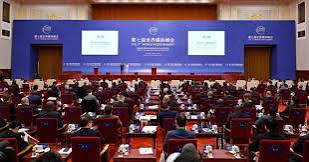
BEIJING: Senior media professionals from the Global South have called for closer international cooperation to strengthen their countries’ voices in global media coverage as artificial intelligence (AI) reshapes the industry.
The call came at the 7th World Media Summit, being held in Beijing from November 5 to 9, with nearly 500 representatives of media organisations, think tanks and government bodies from 112 countries and regions, as well as the United Nations and other international organisations.
Co-organised by Xinhua News Agency and the Beijing municipal government, the summit is being held under the theme “Media in the Intelligent Age: From Consensus to Action”.
Initiated in 2009, the World Media Summit has evolved into a major platform for dialogue and cooperation among media leaders and professionals from different regions and language communities.
“What is important about the summit is that it brings media outlets from around the world and gives us a forum to discuss the future of our industry,” said Kenedid Ibrahim Houssein, director of publication of La Nation in Djibouti, who is attending the summit for the first time.
He said his organisation hoped to further develop partnerships with China on information sharing through the platform.
Ghislain Ruffin Etoughet Nzuet, chairman of the board of directors of Gabon Broadcasting Corporation, said the summit provided African countries with an opportunity to tell their own stories and present their perspectives to the world.
“Africa has a long tradition and a long history, yet very little is known about us,” Nzuet said, adding that cooperation with international partners, particularly China, could help bring African perspectives into global discussions.
Agnes Kalekye Nguna, managing director and CEO of Kenya Broadcasting Corporation, stressed the importance of dialogue among civilisations on an equal footing.
She called for more initiatives to expand exchanges and strengthen media cooperation between Africa and China, saying mutually beneficial partnerships could inspire similar efforts across the Global South and beyond.
Under this year’s theme, delegates are also discussing how countries in the Global South can work together to help their media organisations adapt to the expanding use of AI.
“How do we ensure smaller nations have a meaningful voice in shaping the future of AI?” asked Aminath Namza, chairperson of Public Service Media in the Maldives.
She pointed out that many AI models were trained primarily on data from societies with a greater digital presence, potentially failing to reflect the languages, cultures and realities of smaller nations.
“International cooperation must therefore ensure that developing countries and small island states can contribute not only to AI’s development, but also to the principles governing it,” she said.
On Saturday, the summit released the Global Media Initiative for the Joint Development of AI Application Standards.
Launched by Xinhua, the initiative brings together major media organisations and professional bodies to safeguard information authenticity, ensure data security and uphold media ethics to maintain public trust in the media.
Under the initiative, participants plan to work together over approximately two years to develop a set of standards covering different applications of AI in the media industry, with the standards to be validated by participating media organisations.
Najeh Missaoui, director general and CEO of Tunis Afrique Presse, one of the initiative’s first participants, described it as a significant step forward.
“It takes us from talking about AI to taking joint action and setting rules,” he said.
He added that the initiative would enable the Global South to participate in shaping AI standards rather than merely consuming technologies developed elsewhere.
Mohammed Alyami, director general of the Union of News Agencies of the Organisation of Islamic Cooperation, also welcomed the initiative.
He said it could provide a practical platform for cooperation, sharing expertise and building capacity, enabling media organisations of different sizes and resources to apply the proposed standards.
Wong Chun Wai, chairman of the Malaysian National News Agency (Bernama), said media organisations needed to go beyond access to basic AI tools by investing in advanced technologies and training journalists and other staff to use them effectively.
He called for closer cooperation among Global South countries to ensure that media organisations worldwide could share the benefits of AI amid the rapidly changing media landscape.
The 7th World Media Summit Beijing Consensus, adopted on Saturday, also called for joint efforts to advance the transformation and development of the global media industry in the AI era.
It pledged to promote the inclusive and responsible application of AI in the media sector so that technological advances benefit media organisations at every stage of development and in all countries.
“The future of global communication must be intelligent, but above all, inclusive,” said Viasen Soobramoney, CEO of South Africa’s Independent Media IOL and the African News Agency.
He called for transparent, accountable and inclusive global AI governance to prevent the technology from reinforcing inequalities that have long affected many countries in the Global South.
Soobramoney said Africa and China could deepen cooperation in AI-assisted translation, multimedia production, journalist training, content verification and the exchange of technical expertise.
Abdul Hakim, president director of Indonesia’s Antara News Agency, proposed closer cooperation in information sharing and verification, greater exchanges on responsible AI use and newsroom innovation, and better coordination in reporting on global challenges.
“No country, no community, and no voice should be left behind,” he said, stressing the importance of international cooperation.