


 Play store

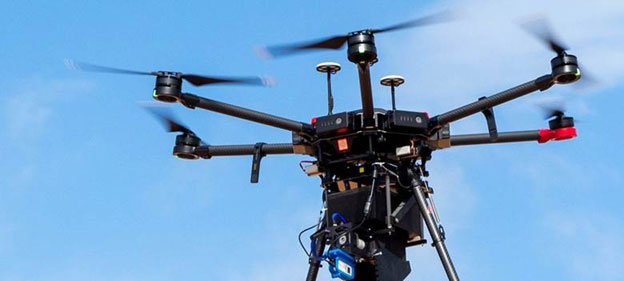
UNITED NATIONS: The growing use of autonomous weapons, particularly drones, in conflicts in Ukraine, Palestine, Lebanon, Iran and civil wars in Africa has intensified calls for an international treaty to curb the deployment of these increasingly lethal technologies.
Addressing delegates from more than 120 member states last week, UN Secretary-General António Guterres urged countries to move towards negotiating a legally binding instrument to regulate autonomous weapons systems, including clear prohibitions and restrictions.
In a video message to the Seventh Review Conference of the Convention on Certain Conventional Weapons (CCW), Guterres warned that the nature of warfare was changing and that even war had limits.
“New technologies, including autonomous weapons systems, present new humanitarian, legal, ethical and security challenges,” he said, urging delegates to seize the opportunity to prevent the use and proliferation of such weapons.
UN High Commissioner for Human Rights Volker Türk also called on member states to urgently agree on a treaty, warning that rapid technological advances could soon make autonomous weapons systems widely accessible.
However, after more than 13 years of discussions, the conference failed to launch formal negotiations on a legally binding treaty, exposing deep divisions among major military powers and other member states.
The strongest resistance came from countries including the United States and Russia, both permanent members of the UN Security Council with veto powers.
Nicole van Rooijen, executive director of Stop Killer Robots, warned that delaying a legally binding instrument put civilians and humanity at risk.
The urgency of regulating autonomous weapons is underscored by their growing use in ongoing conflicts.
In Ukraine, drone attacks have damaged or destroyed homes, hospitals, educational institutions, bridges and railway stations, while disrupting electricity, water and heating supplies. The attacks have left around 80,000 households and businesses without heating and forced schools to switch to remote learning.
Drone strikes have also killed humanitarian workers and damaged UN facilities.
A recent report by The New York Times said the widespread deployment of drones in Ukraine had made battle tanks, armoured personnel carriers and helicopters increasingly vulnerable on the battlefield.
Equipped with thermal cameras and devices capable of intercepting electronic communications, some of these drones are being used as highly sophisticated hunting systems. In the United States, such technology is commonly described as ‘hunter-killer’ capability.
US Defence Secretary Pete Hegseth has described drones as the biggest battlefield innovation in a generation, saying they accounted for most casualties in Ukraine this year.
The United Nations has also expressed alarm over continued drone attacks in Sudan, which have killed civilians, including children, and disrupted essential services.
In a recent statement, the UN said drone strikes over a weekend reportedly killed at least 19 people, including 10 children, and injured others in West Darfur, South Darfur and North Kordofan.
It also condemned the killing of a Sudanese Red Crescent volunteer who was providing first aid at a health centre in Um Darfa, Blue Nile State, following a drone attack on the facility.
Since the conflict began in April 2023, 25 Sudanese Red Crescent volunteers have reportedly been killed while on duty.
The UN described attacks on humanitarian workers as particularly heinous and reiterated that civilians, civilian infrastructure, medical facilities and personnel must be protected under international humanitarian law.
An October 22 report by The New York Times said a single drone strike had killed more than 150 people, citing a Sudanese official.
The Seventh Review Conference of the High Contracting Parties to the CCW, held in Geneva from November 16 to 21, ended without formally adopting its agenda or rules of procedure after Russia blocked the opening session over the European Union’s speaking rights.
As a result, the entire week was conducted informally, preventing the conference from carrying out its formal mandate to review the convention.
Tariq Rauf, former head of Verification and Security Policy at the Vienna-based International Atomic Energy Agency (IAEA), told Inter Press Service (IPS) that the outcome represented a significant setback for efforts to regulate lethal autonomous weapons systems (LAWS).
In his personal assessment, Rauf said that after overnight negotiations, states agreed to language calling for the elaboration, by consensus, of an instrument during 2027-2028.
However, the agreed wording stopped short of explicitly committing countries to negotiations, while references to clear prohibitions and restrictions were dropped at Russia’s insistence.
The legal status and substance of any future instrument therefore remain uncertain, as all decisions under the CCW require consensus, effectively giving every participating state the power to block an agreement.
Rauf said the failure to make meaningful progress on LAWS was a missed opportunity after more than a decade of discussions.
He also pointed to growing frustration among countries seeking legally binding rules, warning that they might pursue negotiations outside the CCW framework if the process remained deadlocked.
Whether a separate initiative similar to the Oslo Process, which led to the Convention on Cluster Munitions, emerges will depend on the progress made during 2027-2028 and the political willingness of pro-treaty countries to move negotiations elsewhere, he said.
Rauf also criticised what he described as increasingly disruptive behaviour in international arms control forums, saying the European Union was perceived by many delegations as inconsistent because of its strong interventions on Ukraine but relative silence over Gaza and attacks on Iran.
Laura Bruun, senior researcher in Governance of Artificial Intelligence at the Stockholm International Peace Research Institute (SIPRI), described the conference as a critical juncture for the future governance of autonomous weapons systems.
After more than a decade of discussions, most countries believe the time has come to move towards negotiating a new protocol, she told IPS.
A cross-regional majority, including the Arab Group, the Non-Aligned Movement, the African Group and a group of seven countries, has called for a legally binding instrument to prohibit and regulate autonomous weapons systems, in line with the UN secretary-general’s position.
The group of seven includes Austria, Belgium, Brazil, Ireland, New Zealand and Panama.
However, a small number of major military powers, including the United States, Israel and Russia, oppose a legally binding instrument. The United States has proposed a fresh five-year mandate aimed at developing a non-binding instrument, Bruun said.
She noted that Russia had spent much of the week delaying proceedings by raising procedural objections over the participation of observers. Consequently, instead of discussing the substance of the next mandate, delegates were forced into informal discussions to resolve the procedural deadlock.
Bruun also pointed out that the CCW had not adopted a new protocol in 30 years, putting pressure on the convention to demonstrate its effectiveness as an instrument of international humanitarian law.
The debate over autonomous weapons is particularly challenging because, unlike previous arms control negotiations, it is not simply about regulating a specific weapon or its effects. It involves determining the extent to which humans must remain involved in decisions to select and attack targets, raising complex legal, ethical and conceptual questions.
The political environment has further complicated the negotiations.
“We are in what we call an ‘arms control winter’ where states are more interested in rearming rather than disarming, or watering down (or even opting out) of existing legal obligations,” Bruun said, referring to debates over countries withdrawing from the treaty banning anti-personnel landmines.
She warned that if the CCW failed to deliver an effective agreement acceptable to the majority seeking legally binding rules, countries might take the process outside the UN framework, following the examples of the Ottawa and Oslo conventions.
Such an approach would allow like-minded countries to develop a more substantive instrument, but it would also carry a major disadvantage: limited participation by heavily militarised states, meaning the rules might not apply to some of the countries most likely to deploy autonomous weapons.
The challenge facing the majority of states, Bruun said, is whether to pursue a diluted agreement that includes all countries, particularly major military powers, or a stronger legally binding instrument that may not secure their participation. Source: IPS News