Play store

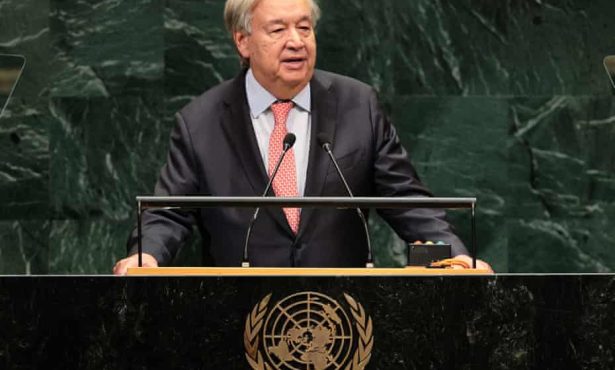
UN Secretary-General António Guterres has called for urgent global cooperation to ensure that artificial intelligence (AI) benefits all countries, warning that the transformative technology must not be controlled by a handful of powerful nations or corporations.
Addressing the opening session of the World Artificial Intelligence Conference (WAIC) in Shanghai on Friday, Guterres described AI as “humanity’s greatest opportunity in the 21st century” but cautioned that, without inclusive governance, it could deepen global inequality and create new risks.
“Technology that will shape the future of humanity must be shaped by all of humanity,” he said, stressing that AI governance “cannot be governed by a handful of countries or companies” and that every nation must have a voice in shaping its future.
The UN chief said AI has the potential to revolutionise healthcare, education, agriculture and job creation while accelerating progress towards achieving the Sustainable Development Goals (SDGs). However, he warned that many developing countries risk being left behind as computing power, technical expertise and investment remain concentrated in a small number of economies.
“One-third of humanity is still offline,” Guterres noted, warning that unless the digital divide is addressed, AI could reinforce inequalities in income, opportunity and security rather than reduce them.
Highlighting recent progress, Guterres referred to the adoption of the UN’s Global Digital Compact, the establishment of the UN-backed Independent International Scientific Panel on AI and the first Global Dialogue on AI Governance held in Geneva earlier this month. He said the next challenge is to translate these commitments into practical support for all countries.
To strengthen global AI capacity, he announced that more than 20 countries, including China, have nominated centres for a UN-supported Global Network for Exchange and Cooperation on AI Capacity Building. He also said he would soon present recommendations for establishing a Global Fund for AI to help developing countries access technology, expertise and infrastructure.
The Secretary-General outlined three priorities for responsible AI development: expanding AI capacity in developing countries, establishing internationally accepted safety standards and ensuring AI systems are environmentally sustainable.
He urged governments to adopt common approaches to AI testing and risk management based on international law, while emphasising that human rights must remain at the centre of AI development.
“Humans must keep control over every life-and-death decision,” Guterres said, adding that no AI system should be placed in the hands of children before it has been proven safe.
He also called on major AI companies to disclose the environmental impact of their technologies and transition to renewable energy by 2030.
“The defining question,” Guterres said, “is whether AI will reduce inequalities or reinforce them, and whether it will concentrate power or expand opportunity.”