


 Play store

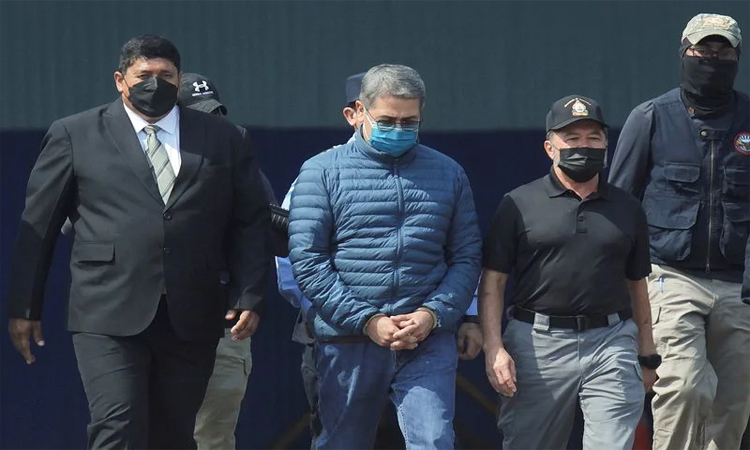
Former Honduran president Juan Orlando Hernández returned to Honduras on Sunday after being pardoned by US President Donald Trump, ending his 45-year prison sentence in the United States for drug trafficking.
Hernández arrived on a private flight at Palmerola Airport near the capital, Tegucigalpa, where he was welcomed by family members and hundreds of supporters. Addressing the crowd, he expressed gratitude to Trump, praising the decision to grant him clemency and describing his conviction as a “tremendous injustice” and a politically motivated “witch hunt.”
Despite his return, Hernández’s legal troubles are far from over. He is scheduled to appear in court on August 3 to face fraud and money-laundering charges linked to allegations that he diverted $2 million in public funds to finance his initial presidential campaign.
He denies the accusations, claiming he remains a victim of political persecution. A judge has temporarily suspended an arrest warrant after he agreed to appear voluntarily.
Hernández, who led Honduras from 2014 to 2022, was extradited to the United States shortly after leaving office under the administration of his successor, President Xiomara Castro.
In 2024, a US court convicted him of facilitating the trafficking of large quantities of cocaine into the United States, working with major drug figures including Joaquín “El Chapo” Guzmán.
Trump’s decision to pardon Hernández—issued just days before Honduras’s presidential election last year—sparked widespread controversy.
Critics accused Washington of interference in domestic politics, particularly after Donald Trump warned of cutting aid if conservative candidate Nasry Asfura—an ally of Hernández—failed to win. Asfura ultimately secured victory.
The pardon also drew criticism for perceived inconsistency, as Trump had simultaneously intensified anti-drug operations across Latin America.
Back home, Hernández insisted he has no plans to return to politics. However, his comeback has reignited tensions. Supporters celebrated his release, while critics condemned it as a blow to justice.
“This return, with complete impunity and no accountability, is a profound injustice to the victims,” said legal analyst Joaquín Mejía.
Hernández’s controversial legacy remains deeply divisive, marked by allegations of corruption, disputed elections, and a violent crackdown on protests following his 2017 re-election.