


 Play store

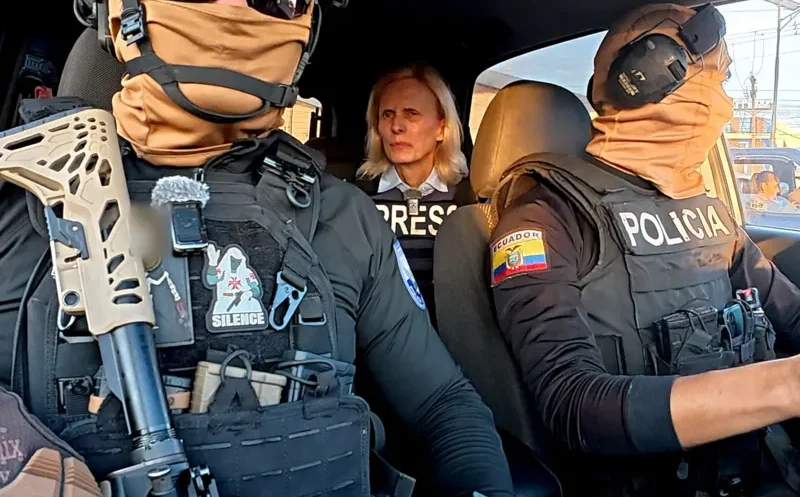
On the front lines of Ecuador’s escalating drug war, police officers are fighting not only heavily armed gangs but also corruption within their own ranks.
In the crime-ridden city of Durán, Police Captain Jean Carlos Bustamante faces a relentless enemy—criminal groups known for brutal killings—as well as what he describes as a deeply rooted internal threat. “We have many corrupt people inside our unit, inside the state, inside politics,” he says, warning that some officials are on the payroll of drug gangs.
Bustamante, 34, trusts only a small, hand-picked team of officers. A former special forces member, he leads them into one of Durán’s most dangerous neighbourhoods, where fear keeps residents silent and homes are fortified with metal grills. The area is controlled by a gang known as Los Aguilas.
“People don’t speak out,” he explains. “If they do, they are killed.”
During a night operation, Bustamante’s team raids an abandoned house suspected of being used to store weapons. Moving in formation, they break down the door and recover two handguns—one rusted, the other ready to fire—along with ammunition for an assault rifle.
While the seizure is a success, Bustamante acknowledges it is only a small gain in a much larger battle. “The gangs have more weapons and more money than the state,” he says.
The personal cost of the conflict is high. Bustamante has lost three close colleagues in the fight and says he no longer fears death. His parents, however, remain deeply worried. “My mum tells me to be careful,” he says. “My dad calls constantly to check if I’m safe.”
Ecuador has become a key transit hub in the global cocaine trade, with an estimated 70% of shipments bound for Europe and the United States passing through the country, according to President Daniel Noboa. Drugs flow in from neighbouring Colombia and Peru—the world’s largest producers—before being trafficked onward by local gangs linked to Mexican cartels and Albanian crime networks.
Exploiting weak border controls, underfunded security forces, and Ecuador’s long Pacific coastline, these groups have transformed the once-peaceful nation into one of the region’s most violent hotspots in less than a decade.