


 Play store

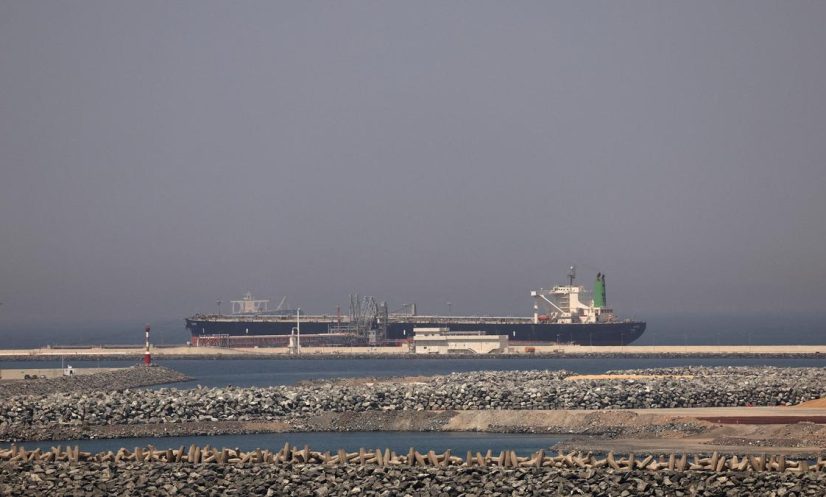
Iran’s Islamic Revolutionary Guard Corps (IRGC) on Wednesday claimed that its naval forces intercepted and halted three oil tankers in the Strait of Hormuz after the vessels allegedly ignored repeated warnings and continued sailing along what Tehran described as an “unsafe and illegal route.”
According to Iran’s semi-official Tasnim News Agency, the IRGC Navy said the three tankers were stopped during an operation in one of the world’s most strategically important maritime chokepoints, despite a relative lull in direct military exchanges between Iran and the United States.
“The three violating oil tankers, which ignored our warnings and continued sailing an unsafe and illegal route, were struck and brought to a halt,” the IRGC Navy said in a statement carried by Tasnim.
The report did not identify the vessels, disclose their nationalities or ownership, or specify the extent of any damage caused during the operation. There was also no immediate information on whether any crew members were injured or detained.
Iranian authorities have not released further details about the alleged violations or the precise location of the incident within the Strait of Hormuz.
The latest development comes amid heightened tensions in the Gulf region following weeks of confrontation between Iran and the United States over maritime security and freedom of navigation.
Although large-scale military exchanges have eased in recent days, both sides have continued to issue strong warnings over activities in and around the Strait of Hormuz.
Iran has repeatedly insisted that all commercial vessels transiting the strategic waterway must comply with navigation instructions issued by its maritime authorities. Tehran has warned that ships deviating from designated routes or failing to coordinate with Iranian authorities could face interception.
The Strait of Hormuz is one of the world’s most critical energy corridors, linking the Persian Gulf to the Gulf of Oman and the Arabian Sea. Roughly one-fifth of global oil supplies pass through the narrow waterway each day, making any disruption there a major concern for international energy markets and global shipping.
Analysts say even isolated incidents involving commercial vessels can heighten geopolitical risks, increase insurance and freight costs, and fuel volatility in global oil prices, particularly at a time when energy markets remain sensitive to developments in the Middle East.
There was no immediate response from the United States, regional maritime authorities or the operators of the vessels regarding the Iranian claim. The incident could not be independently verified, and no international shipping organisation had confirmed the reported interception at the time of writing.