


 Play store

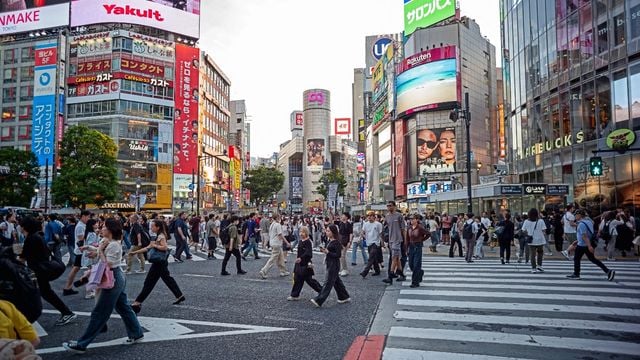
Japan’s population of Japanese nationals has fallen below 120 million for the first time in 42 years, underscoring the country’s deepening demographic crisis marked by a declining birth rate and an ageing population.
According to data released on Wednesday by Japan’s Ministry of Internal Affairs and Communications, the number of Japanese nationals stood at 119,736,483 as of January 1, 2026, a decline of 917,000 from a year earlier. It is the largest annual drop since comparable records began in 1968.
The latest figures highlight the mounting demographic challenges facing the world’s fourth-largest economy, where a shrinking workforce and rapidly ageing society are placing increasing pressure on economic growth, labour supply and the social security system.
Among Japan’s 47 prefectures, Tokyo was the only one to record an increase in the number of Japanese nationals, with a modest growth of 0.09 percent, reflecting the continued concentration of population and economic activity in the capital.
In contrast, the country’s foreign resident population continued to grow, rising by 354,000 to a record 4,031,159. It is the highest number since the government began compiling comparable data in 2013, reflecting Japan’s gradual reliance on foreign workers to help ease labour shortages across key sectors.
Including foreign residents, Japan’s total population stood at 123,767,642, down by approximately 563,000 from the previous year.
Population growth was recorded in only three prefectures—Tokyo, Chiba and Osaka—while all other regions experienced population declines.
Japan has struggled for years with one of the world’s lowest birth rates and one of its fastest-ageing populations. Successive governments have introduced a range of measures, including financial incentives for families, expanded childcare support and policies aimed at attracting more foreign workers, but reversing the long-term population decline remains a major challenge.