


 Play store

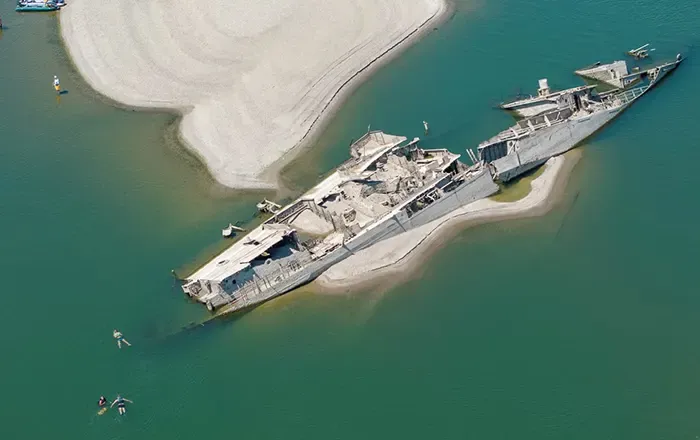
A severe drought sweeping across Europe has caused water levels in the Danube River to fall to historic lows, exposing several Nazi German warships that had remained submerged since World War II.
According to The Independent, the wrecks have emerged near Prahovo in eastern Serbia after the prolonged heatwave and exceptionally low river levels.
The European Investment Bank said at least 200 German warships, cargo vessels and barges were deliberately scuttled in the Danube in 1944 as German forces retreated. Many of those vessels are now becoming visible as the river continues to recede.
In neighbouring Croatia, the wreck of the Hungarian cargo ship Fulton, which sank in 1937, has also resurfaced near Opatovac.
The unusually low water level is disrupting river transport, tourism, industry and electricity generation across parts of Europe. In Budapest, the Danube’s water level has dropped to just 23 centimetres, well below the previous record low of 33 centimetres set in 2018.
Commercial shipping has been severely affected, while river cruise vessels have been forced to dock far from city centres because of the shallow water.
The drought has also created serious challenges for nuclear power generation. Hungary’s Paks Nuclear Power Plant and Romania’s Nuclearelectrica facility both rely on water from the Danube to cool their reactors.
With water levels continuing to fall, both countries have reportedly reduced nuclear power generation by around 50%.
Romanian Prime Minister Ilie Bolojan has declared a nationwide state of emergency for August and announced plans to import electricity from Ukraine, Greece and Bulgaria.
Meanwhile, Hungarian Prime Minister Péter Magyar warned on Friday that if the river level falls further, the Paks Nuclear Power Plant could be shut down entirely for the first time in its 44-year history.
The ongoing heatwave has also pushed electricity demand up by nearly 20%, prompting Hungarian authorities to urge major industries to reduce power consumption.
With little prospect of significant rainfall in the coming weeks, experts warn that Europe’s energy system could face mounting pressure if drought conditions persist.