Play store

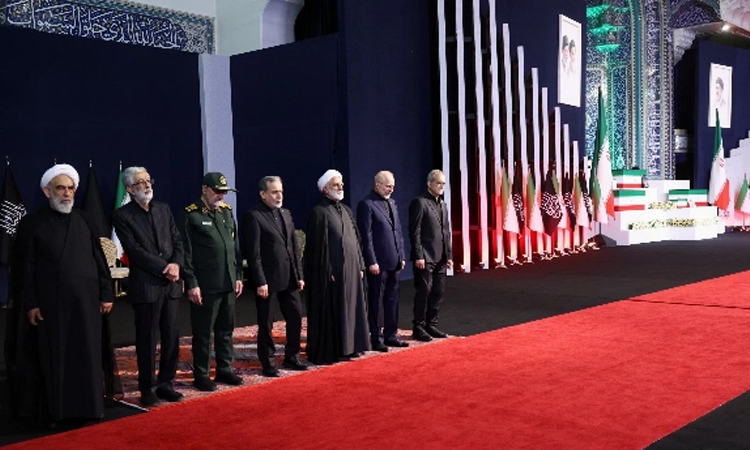
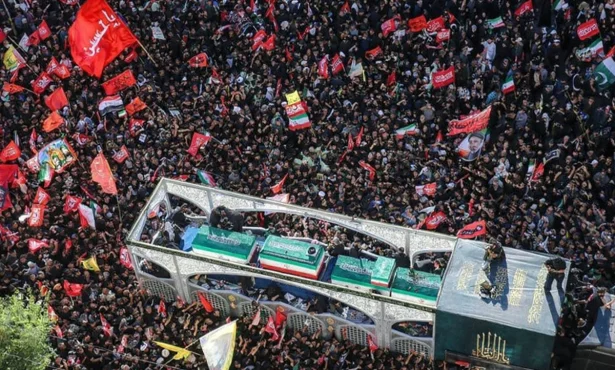
Senior Iranian officials on Friday paid their final respects to the country’s slain Supreme Leader Ali Khamenei as Iran began a week of funeral ceremonies expected to draw millions of mourners.
Authorities have organised a series of public mourning events ahead of Khamenei’s burial next week, four months after he was killed at the age of 86 during the opening US-Israeli strikes in the Middle East war.
Images from the capital showed mourners carrying Khamenei’s flag-draped coffin through the Grand Mosalla religious complex, where his body is lying in state.
State television showed Masoud Pezeshkian paying tribute alongside Parliament Speaker Mohammad Bagher Ghalibaf. Revolutionary Guards chief Ahmad Vahidi also appeared publicly for the first time since the conflict began in February.
Foreign dignitaries, including Shehbaz Sharif, former Russian president Dmitry Medvedev and the foreign minister of Afghanistan’s Taliban administration, attended the ceremonies. Delegations from Hamas and Hezbollah also paid their respects.
Representatives from around 30 countries are expected to attend the funeral, while China and several neighbouring countries have also announced plans to send delegations.
Preparations across Tehran intensified ahead of the main public procession. Security has been tightened, streets have been decorated with portraits and quotations of Khamenei, and temporary facilities have been set up to accommodate the expected influx of mourners.
Speaking ahead of the ceremonies, Parliament Speaker Ghalibaf called on Iranians to participate in large numbers, saying their presence would “write a glorious page” in the country’s history.
Khamenei’s body will lie in state for three days before being taken to the Iraqi holy cities of Najaf and Karbala. He is scheduled to be buried on July 9 at the shrine of Imam Reza in the northeastern city of Mashhad, his birthplace.
Authorities have declared public holidays during the funeral period, closed government and private offices in Tehran from Saturday through Monday, and imposed traffic and airspace restrictions to facilitate the ceremonies.
Many residents have left the capital ahead of the events, citing heavy congestion and extensive security measures.