Play store

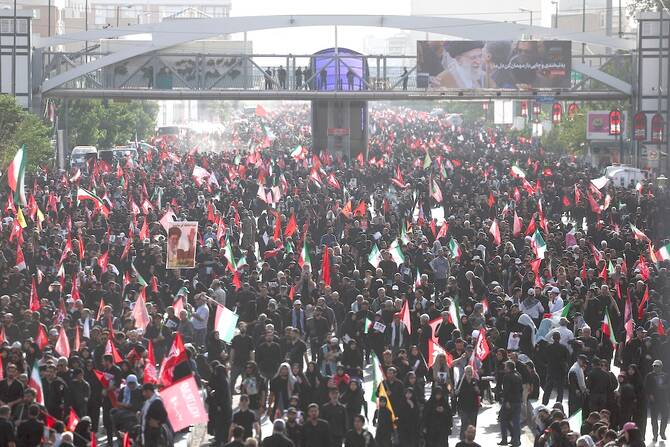
Iran began a funeral procession for late Supreme Leader Ayatollah Ali Khamenei through the streets of Tehran on Monday, marking the start of several days of ceremonies intended to demonstrate national unity following weeks of war with Israel and the United States.
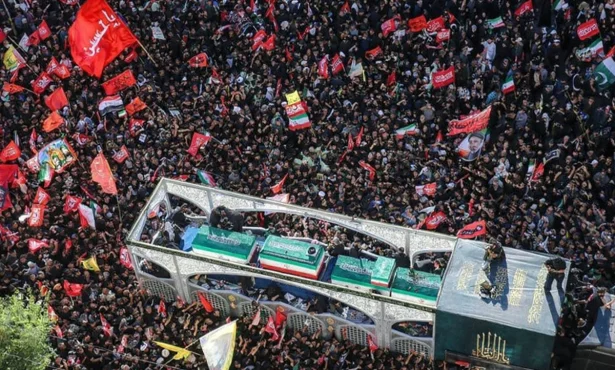
Khamenei’s flag-draped coffin, along with those of family members killed in the February 28 airstrikes that triggered the conflict, was carried on a truck from central Tehran toward Mehrabad International Airport.
Authorities expected large crowds to line the route in a public display of support for the Islamic Republic. Security measures were tightened to prevent a repeat of the chaos that marred the 1989 funeral of Ayatollah Ruhollah Khomeini, when crowd surges left more than 10 people dead and over 10,000 injured, according to state media.
Thousands of mourners had gathered at Tehran’s Grand Mosalla on Sunday to pay their final respects to Khamenei and four members of his family. Massive concrete barriers were erected around the coffins to reduce the risk of stampedes.
The funeral ceremonies come at a pivotal moment for Iran’s leadership as the country seeks to project stability after five weeks of conflict with Israel and the United States.
Parliament Speaker Mohammad Bagher Ghalibaf, who has emerged as one of the country’s most influential figures since Khamenei’s death, praised what he described as the Iranian nation’s united tribute to its “martyr” in a post on X.
The funeral procession in Tehran will be followed by ceremonies in the holy city of Qom on Tuesday and in the Iraqi shrine cities of Najaf and Karbala on Wednesday. Khamenei is scheduled to be buried in his hometown of Mashhad on Thursday.
Three of Khamenei’s sons appeared publicly during Sunday’s ceremonies, but the absence of his son and successor, Mojtaba Khamenei, continued to fuel speculation. Iranian officials have said the new supreme leader was injured in the February 28 airstrikes, though they have provided no details on his condition.
New Revolutionary Guards commander Ahmad Vahidi also attended the ceremonies after remaining out of public view during the conflict. Esmail Qaani, commander of the Guards’ Quds Force, made a rare public appearance as well.
President Masoud Pezeshkian attended the funeral, but none of Iran’s surviving former presidents, many of whom had strained relations with Khamenei, were seen at the ceremonies.
The government is also using the funeral to project public support following anti-government protests earlier this year and the recent war. Speakers and mourners repeatedly called for those responsible for Khamenei’s death to be held accountable, while officials pledged that Iran remained prepared to respond if hostilities resumed despite the current ceasefire.