Play store

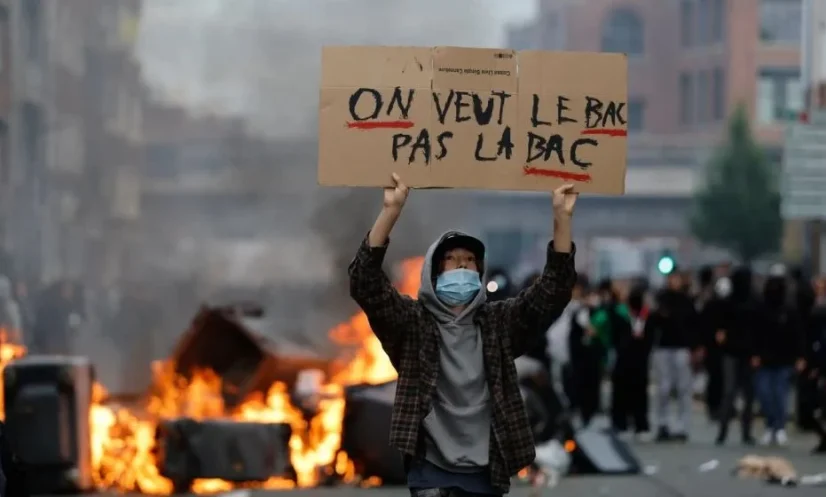
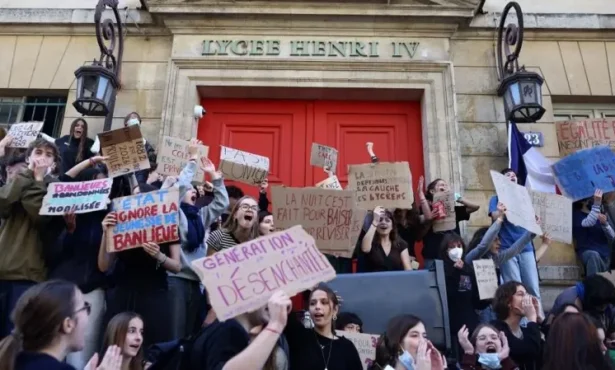
Student protests over France’s education crisis have escalated into violence, with demonstrations spreading from the Paris region to several cities across the country.
Protesters have raised concerns over teacher shortages, deteriorating school buildings, overcrowded classrooms and lengthy class schedules. Demonstrations have been reported in Paris, Marseille, Nantes, Strasbourg, Toulouse and Lille, with incidents of blockades, vandalism, attempted arson and clashes with police.
Prime Minister Sébastien Lecornu held an interministerial crisis meeting as authorities sought to contain the unrest.
More than 400 schools and other educational institutions were ordered closed nationwide on Friday. Education Minister Édouard Geffray said slightly more than 400 institutions would remain closed, while distance learning would be arranged where in-person classes were not possible.
The protests began late last week at several high schools in the Paris region. Students have complained about insufficient teachers, overcrowded classrooms and poor school infrastructure. They have also criticised lengthy school schedules and academic pressure, while some have raised concerns about university admission procedures.
What began largely as peaceful demonstrations later turned violent in several areas. Schools in Nantes and Rouen were set on fire, while several teachers were affected after petrol was reportedly spread outside a school in Marseille. A vehicle was set ablaze in Strasbourg, while riot police clashed with protesters in Toulouse. Public transport services were also temporarily disrupted in several cities.
Authorities have carried out widespread arrests. According to the interior minister, nearly 2,000 people had been detained since the protests began by October 1, with about two-thirds remaining in police custody. A total of 1,949 people were detained on October 1 alone.
The violence has also left hundreds of law-enforcement personnel injured. The Interior Ministry said 305 police and gendarmes were injured in clashes on October 1. The Education Ministry said 170 students and 65 education-sector employees had been injured since the protests began.
The unrest has also triggered political controversy. Government-aligned sources have accused politicians from the left-wing La France Insoumise (LFI) of encouraging the protests. LFI lawmaker Louis Boyard rejected the allegation. The party has expressed support for peaceful demonstrations while criticising police actions.
Controversy has also surrounded Saint-Denis mayor and LFI member Bally Bagayoko, who met protesting students and expressed support for their demands. A video circulated online appeared to show him celebrating near a fire. However, fact-checking by French media TF1 and a report by Le Parisien said the video was edited and that the full footage did not show him setting the fire; his side said he had attempted to put it out.
Bagayoko also faced scrutiny over remarks made on September 29 outside a blocked high school, when he said violence could be legitimate in response to police conduct. He did not retract the remarks. On September 30, the Paris police prefect referred him to judicial authorities over alleged incitement to commit an offence. The referral is a judicial complaint and does not mean he has been convicted of any offence.
The government has said it will continue efforts to address students’ concerns while maintaining security around affected schools. The education minister has also said discussions would be held with students, teachers and other representatives.
The protests, which began over grievances about France’s education system, have now developed into a wider public-order crisis, with authorities facing pressure to address students’ demands while containing arson, vandalism, clashes and mass arrests. Demonstrations continued in several parts of the country on Friday.
Available next action: Create a downloadable PDF file here in this chat containing the finalized decisions and immediate actions above