Play store

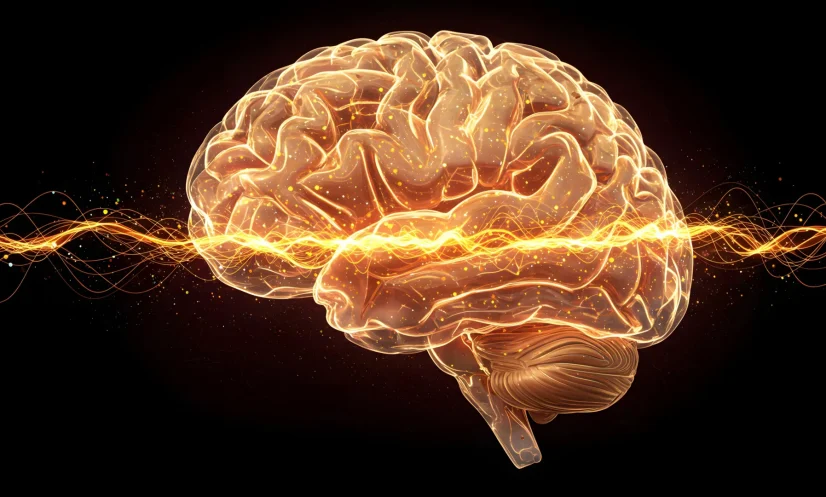
Peter Hegemann, Georg Nagel and Karl Deisseroth have transformed neuroscience by developing a technique that allows scientists to control nerve cells using light, opening new avenues for brain research and potential treatments for neurological disorders.
The work, recognised by the 2026 Nobel Prize in Physiology or Medicine, originated from a seemingly simple question: how does a tiny, single-celled alga sense light and use it to navigate its surroundings?
Hegemann of Humboldt University of Berlin and Nagel of the University of Würzburg studied Chlamydomonas, a microscopic alga that responds to light. Their research revealed an ingenious mechanism involving a light-sensitive protein called channelrhodopsin.
The protein is embedded in the alga’s outer cell membrane and contains a light-absorbing molecule called retinaldehyde. When light strikes the molecule, it changes shape, triggering a structural change in the protein that opens a channel through the membrane.
Positively charged particles, including sodium ions, can then flow into the cell, generating signals that help the alga respond to light and control its movement.
The discovery became significant for neuroscience because nerve cells also rely on the movement of charged particles, or ions, across their membranes to regulate their activity.
Researchers realised that channelrhodopsin could potentially be introduced into nerve cells, allowing them to be activated simply by shining light on them. Hegemann and Nagel, working alongside Karl Deisseroth, a psychiatrist and bioengineer at Stanford University in California, helped establish the foundations of optogenetics.
Controlling the brain with light
Optogenetics enables researchers to switch specific groups of nerve cells on or off using light, helping them investigate how the brain and nervous system function.
The technique involves introducing the gene responsible for producing channelrhodopsin into targeted nerve cells, often using a modified virus that cannot cause disease. The cells then produce the light-sensitive protein and become responsive to illumination.
In animal experiments, scientists can deliver light into the brain through a thin optical fibre. When illuminated, cells containing the protein become active, while neighbouring cells without it remain largely unaffected.
The precision of this method allows researchers to investigate the roles of particular nerve-cell groups in memory, sleep, sensation and movement.
A landmark experiment published in 2012 demonstrated the technique’s potential to study memory. Researchers at the Massachusetts Institute of Technology identified nerve cells activated when mice experienced a mild electric shock in a particular cage.
Days later, they used light to reactivate those cells while the mice were in a different cage. The animals froze in fear, suggesting that activating the cells could trigger a response associated with the earlier experience. Mice that had not received the shock did not show the same reaction.
Deisseroth was among the authors of the study, which provided important evidence that specific patterns of nerve-cell activity could be linked to particular memories.
Potential medical applications
Beyond basic research, optogenetics is being investigated as a possible treatment for certain medical conditions.
Early-stage clinical trials have explored its use in people with retinal degeneration, a condition in which the light-detecting rods and cones in the retina are damaged or lost.
Researchers introduce light-sensitive proteins into surviving retinal nerve cells, potentially enabling them to respond to light and restore some visual function. The approach remains experimental, and the extent of any benefit depends on the treatment and the patient’s condition.
Scientists are also investigating whether optogenetics could eventually help treat neurological disorders such as Parkinson’s disease and epilepsy by targeting specific circuits in the brain.
The Nobel-recognised research illustrates how discoveries driven by basic scientific curiosity can lead to technologies with far-reaching implications.
The initial investigation into how a microscopic alga responds to light was not aimed at treating human disease. Yet understanding the underlying biological mechanism ultimately helped scientists develop a powerful method for studying the brain.
The progress of optogenetics underscores the importance of fundamental research, demonstrating that questions with no immediate practical application can sometimes lead to major advances in medicine and scientific understanding.