


 Play store

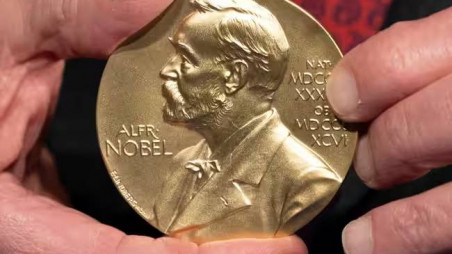
The 2026 Nobel Prize season opened Monday with three scientists winning the medicine prize for discoveries that made it possible to control nerve-cell activity with light, while speculation intensified over potential winners of the remaining five awards.
Karl Deisseroth, Peter Hegemann and Georg Nagel were awarded the Nobel Prize in Physiology or Medicine for their discoveries of light-gated ion channels and their contributions to the development of optogenetics. The technique allows scientists to control the activity of individual nerve cells using light and has become an important tool in neuroscience.
The medicine award had been widely tipped to recognise research behind GLP-1 drugs such as Ozempic and Mounjaro. Researchers including Daniel Drucker, Jens Juul Holst and Svetlana Mojsov had been frequently mentioned by Nobel watchers. Other possibilities included CAR-T cancer therapy, gene editing, sleep research and biomedical imaging.
The unexpected medicine choice illustrates the difficulty of predicting the Nobel committees’ decisions. The committees do not publish shortlists, and nominations remain secret.
The physics prize, to be announced Tuesday, is attracting speculation around quantum physics, condensed matter and particle physics. Among the names discussed are researchers working on quantum interference, geometric phases and advanced materials. Swiss-British physicist Nicola Spaldin has also been mentioned among possible contenders.
For chemistry, predictions include research into electron transfer in proteins, solar cells, DNA sequencing, self-assembled molecular layers and glycoprotein synthesis. Chemistry experts have also discussed base and prime editing, biomolecular condensates and other advances in molecular science.
The literature prize on Thursday is, as usual, particularly difficult to predict. Names frequently appearing on prediction lists include Chinese writer Can Xue, Canadian poet Anne Carson, Indian-born writer Amitav Ghosh, Japanese novelist Haruki Murakami, Argentine writer César Aira and Australian author Gerald Murnane. Prediction markets have also placed several of these writers near the top of their lists, but such markets have no official connection to the Swedish Academy.
The Nobel Peace Prize, to be announced Friday in Oslo, has generated perhaps the most politically charged speculation. Reported contenders include Ukrainian children’s rights advocate Mykola Kuleba, Sudan’s Emergency Response Rooms, Save the Children, the Committee to Protect Journalists and international judicial institutions such as the International Criminal Court and International Court of Justice.
U.S. President Donald Trump and Canadian Prime Minister Mark Carney have also been discussed, while the International Space Station has emerged as an unusual possible candidate because of its long-running international cooperation. The Nobel committee received 287 nominations for this year’s peace prize, including 208 individuals and 79 organisations.
However, experts cited by Reuters said Trump is unlikely to receive this year’s Peace Prize, despite his reported nominations, amid the continuing conflict involving Iran. They said last year’s controversy surrounding Venezuelan opposition leader María Corina Machado and her subsequent decision to give her medal to Trump could also influence the committee’s considerations.
The final award, the Nobel Memorial Prize in Economic Sciences, will be announced on October 12. Predictions include possible recognition for work on macroeconomics, inequality and behavioural economics, although there is no official shortlist and speculation remains highly uncertain.
The Nobel announcements continue with physics on October 6, chemistry on October 7, literature on October 8, peace on October 9 and economic sciences on October 12.