Play store

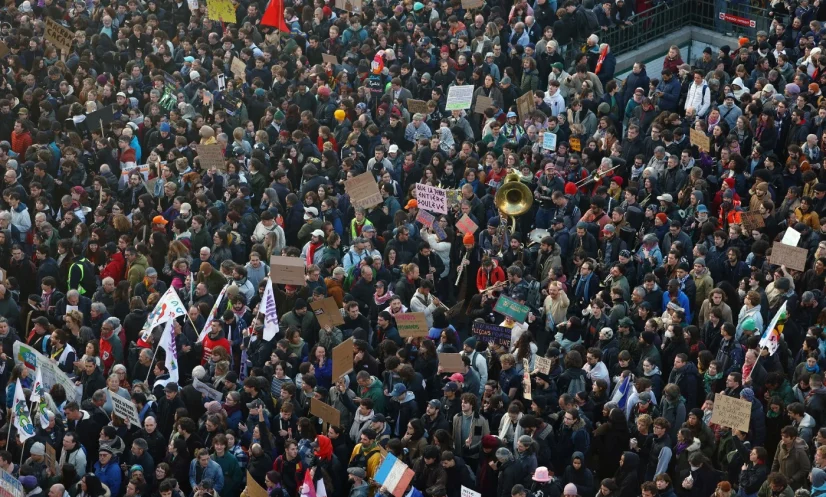
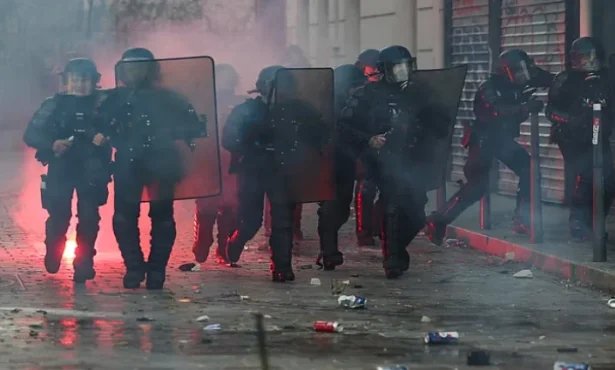
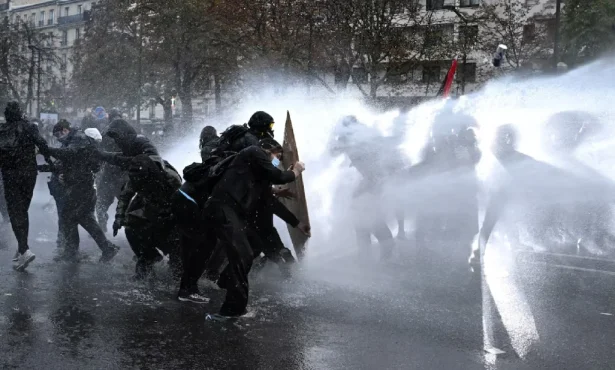
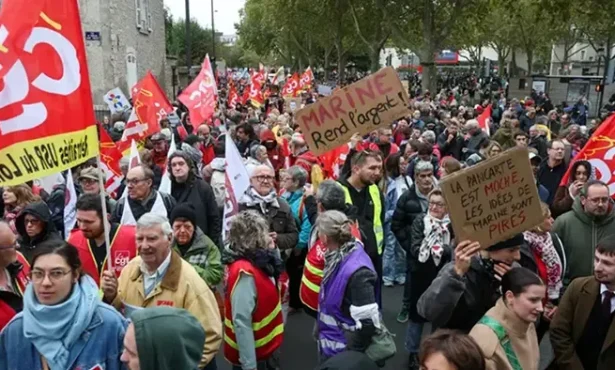
Thousands of workers, students and other protesters took to the streets across France on Thursday in a fresh wave of demonstrations against the rising cost of living, with police firing tear gas as clashes and vandalism were reported in several cities.
More than 270,000 people had already joined protests nationwide, according to the Interior Ministry, ahead of a major march in Paris that began at 2:00 pm (1300 GMT).
The demonstrations come as France, the eurozone’s second-largest economy, struggles to restore its public finances, six months before elections to replace centrist President Emmanuel Macron. Far-right parties are leading in opinion polls.
The latest protests have brought together several movements, including high school students protesting against learning conditions and workers demanding higher wages and action against growing inequality.
Public anger intensified after October 17, when France witnessed its worst riots in years.
“The question today is not whether we’re going to win” but rather “how much we’re going to win”, CGT union leader Sophie Binet told demonstrators at the Paris rally.
Trade unions are demanding across-the-board wage increases, tax reforms and improved learning conditions for young people. They have also criticised police restrictions on certain demonstrations.
Although most marches remained peaceful, clashes broke out between protesters and police in some cities. In Lyon, at least one vehicle was set on fire, while police fired tear gas to disperse demonstrators.
Winegrower Martin Thiberge, who joined the Lyon protest, said the movement had brought together people from different sections of French society.
“We want to make a living from our work, to make a dignified wage,” he said.
In Marseille, 31-year-old social worker Lea told AFP that she was “fed up with counting every cent”.
“This social movement has given us hope,” she added.
In Paris, major tourist attractions, including the Eiffel Tower and the Arc de Triomphe, remained closed for the day.
School blockades
High school students also staged demonstrations in several cities. The government reported blockades at 81 of the country’s 3,700 high schools, while a student association said classes had been suspended at around 1,000 secondary schools.
About 16 per cent of teachers nationwide joined the strike, according to the Education Ministry.
In eastern Paris, police fired tear gas to prevent students from blocking access to the Helene-Boucher high school, an AFP reporter said.
Public and private education unions joined the strike, along with unions representing railway workers, public hospital employees and postal workers.
At Montparnasse railway station in Paris, a psychologist who identified herself as Jeanne said her journey had been delayed by the industrial action.
“It’s tedious to get up early, wait, and then see your train cancelled, but it’s understandable there’s a strike,” she said.
Security tightened
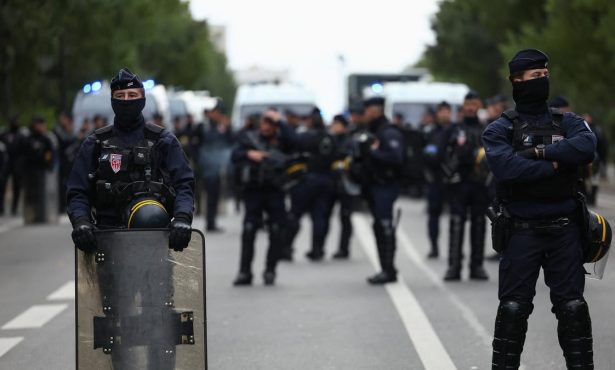
Interior Minister Laurent Nunez announced on Wednesday that 70,000 police officers and security personnel would be deployed nationwide. He warned of an “extremely firm response” to acts of violence and public disorder.
While most demonstrations have remained peaceful, some have descended into clashes, prompting police to use tear gas and water cannon.
An attempted murder investigation was launched after petrol bombs were thrown at security forces in Paris on Saturday.
The police response has also drawn criticism over alleged excessive force. Internal investigations have been launched into accusations of police brutality, while several teenage protesters have reportedly been seriously injured and thousands arrested.
Similar protests have erupted in several other European countries in recent weeks.