Play store

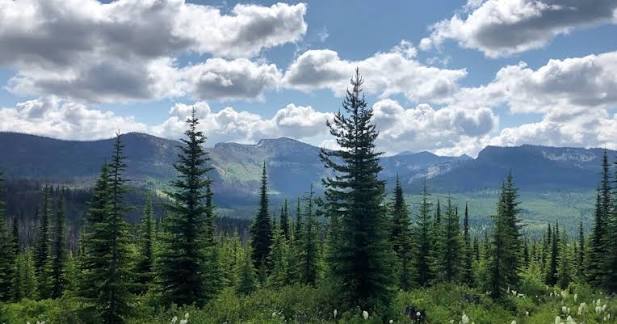
US President Donald Trump’s administration plans to sell portions of federally owned public land to state, tribal and local governments as part of a broader effort to reduce the federal land estate, according to a new five-year strategic plan released by the Interior Department.
The plan, covering 2026-2030, says selling federal property would allow the government to focus resources on lands of national significance, but does not specify which areas would qualify or identify properties for potential sale.
The proposal has already drawn opposition from lawmakers across party lines, including Republican Representative Ryan Zinke, who served as Trump’s first Interior secretary.
The strategic plan also proposes land transfers and exchanges to facilitate greater energy production, reflecting the administration’s pro-fossil fuel agenda and its emphasis on the economic use of public lands.
The Interior Department manages more than 750,000 square miles (1.9 million square kilometres) of land, an area larger than Texas and California combined, along with extensive underground mineral resources.
Most federal lands are located in Western states, where government ownership accounts for a substantial share of the territory. In Nevada, for example, nearly 80 per cent of the land is federally controlled.
Interior officials said part of the proceeds from any land sales would be returned to buyers to support conservation projects elsewhere.
However, it remains unclear whether Interior Secretary Doug Burgum can implement the proposal without congressional approval.
Mark Squillace, a professor of natural resources law at the University of Colorado Law School, said federal law imposes significant restrictions on the sale of public lands.
Protected lands cannot be sold, while other properties must meet specific legal criteria, including being uneconomical to manage or having a sale that serves important public purposes such as community expansion and economic development.
Zinke’s office said in a statement that he “remains firmly opposed to the sale or transfer of public lands”. He also plans to vote against any legislation supporting the proposal before leaving Congress at the end of his current term.
Democratic lawmakers heading the House and Senate natural resources committees have also pledged to resist the initiative.
Democratic Senator Martin Heinrich of New Mexico said federal lands belonged to the American people rather than private interests seeking to profit from them.
California Democratic Representative Jared Huffman also vowed to oppose the administration’s plan.
“Americans love their public lands and sent a clear message last week: the Trump administration’s schemes to auction off our treasured resources and silence opposition must stop now. Democrats in Congress are going to deliver,” Huffman said.
Last year, some Western lawmakers proposed selling large areas of federal land in Utah and Nevada, arguing that the move could generate revenue and ease development pressures in fast-growing communities.
Republican Senator Mike Lee of Utah proposed selling more than two million acres (8,000 square kilometres) to states or other entities. However, the initiatives failed amid bipartisan opposition.
The Interior Department’s strategic plan outlines its priorities and activities for 2026-2030, although future administrations will not be bound by it.
The department oversees mining, drilling, grazing, recreation and other activities through agencies including the Bureau of Land Management, National Park Service, Fish and Wildlife Service and Bureau of Indian Affairs.
Last year, Burgum and Housing and Urban Development Secretary Scott Turner also proposed making “underutilised” federal land available for affordable housing. Turner said the country needed around seven million homes.
The Biden administration had similarly explored using public lands for affordable housing, although its initiatives were smaller in scale.