


 Play store

UNITED NATIONS: Despite rising geopolitical tensions, growing nuclear arsenals and renewed threats of nuclear confrontation, a global campaign to ban nuclear weapons has made significant progress, with 75 countries now party to the landmark Treaty on the Prohibition of Nuclear Weapons (TPNW).
A new report by the International Campaign to Abolish Nuclear Weapons (ICAN), released ahead of the treaty’s first Review Conference, highlights substantial achievements during its first five years, even as the global nuclear security environment continues to deteriorate.
The world’s nuclear landscape remains deeply troubled. Russia has occasionally threatened nuclear attacks in the context of its war against Ukraine, Iran continues to pursue its nuclear programme despite US warnings, North Korea is seeking to expand its nuclear arsenal, and most of the world’s nine nuclear-armed states continue to modernise their weapons.
The nine nuclear powers are the five permanent members of the UN Security Council (the United States, Russia, China, France and the United Kingdom), along with India, Pakistan, Israel and North Korea.
Against this backdrop, three major international treaties provide the framework for global efforts to control and eliminate nuclear weapons: the Treaty on the Non-Proliferation of Nuclear Weapons (NPT), the TPNW and the Comprehensive Nuclear-Test-Ban Treaty (CTBT).
The ICAN report, supported by grants from New Zealand and the city of Geneva, will be presented at the TPNW’s first Review Conference, scheduled for November 30 to December 4, along with recommendations on the treaty’s future direction. ICAN serves as the civil society coordinator for the treaty.
One of the report’s key findings is that the TPNW and its member states have strengthened the international norm against activities prohibited under the treaty, including possessing nuclear weapons, threatening their use and nuclear sharing, whereby nuclear-armed countries station their weapons in other states.
The report attributes this progress partly to regular joint condemnations of such activities by treaty members. Their positions have also influenced other international organisations, including the G20, which have echoed calls condemning nuclear threats.
Efforts by TPNW member states and civil society organisations have also expanded support for the treaty. The number of states parties has increased to 75 from 50 when the treaty entered into force in 2021, while another 26 countries have signed it.
In total, 101 countries have either signed, ratified or acceded to the treaty, representing a global majority. The progress is particularly significant given that the Covid-19 pandemic severely disrupted international diplomacy during much of the period.
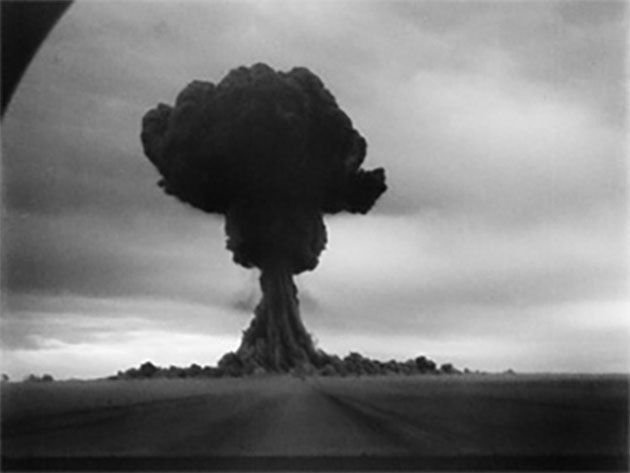
The TPNW is also distinctive among nuclear disarmament agreements because it requires member states to assist people affected by the use and testing of nuclear weapons. More than 2,000 nuclear test explosions have been conducted worldwide since 1945.
According to the report, countries have taken this responsibility seriously by assessing the extent of intergenerational harm to affected communities and the environmental damage caused by radioactive contamination.
They have also brought the issue to the attention of multilateral forums and begun developing an international mechanism to support affected communities and facilitate environmental clean-up.
However, the treaty’s achievements have yet to translate into a measurable reduction in the threat posed by nuclear weapons.
Dr M V Ramana, Professor and Simons Chair in Disarmament, Global and Human Security at the School of Public Policy and Global Affairs, University of British Columbia, Vancouver, told Inter Press Service (IPS) that the significance of the TPNW could be assessed from two perspectives.
The first is whether the treaty has helped reduce the nuclear threat. By that measure, he argued, the danger has not diminished since 2020 and has instead worsened, particularly with the integration of artificial intelligence and machine learning-based technologies into nuclear command and control systems.
The second is whether the treaty has helped spread awareness of the importance of nuclear disarmament. On this front, its impact and the activities of its supporters have been much more evident, he said.
There is now considerably greater recognition of the dangers posed by nuclear weapons, Ramana noted, adding that the real challenge is to translate widespread public concern into policy changes capable of reversing the ongoing arms race.
Alice Slater, a board member of World BEYOND War and the Global Network Against Nuclear Weapons and War in Space, and a UN NGO representative of the Nuclear Age Peace Foundation, also highlighted the limitations of the treaty.
Speaking to IPS, she said that despite the significant progress reported by ICAN during the TPNW’s first five years, nuclear-armed states and their allies protected by the US nuclear umbrella had yet to participate in the treaty’s meetings, negotiations or review process.
The Netherlands, a NATO member under the US nuclear umbrella, was the only such country to attend the original UN meeting that voted to begin negotiations on the TPNW. Its participation followed demands from grassroots activists that the Dutch government send a representative, she said.
The Netherlands also cast the sole negative vote when the UN decided to proceed with negotiations on the new treaty, Slater pointed out.
She said there were now encouraging indications that Spain, another NATO member under the US nuclear umbrella, might attend the upcoming review conference following public pressure.
Slater also referred to an unprecedented three-way meeting involving the leaders of the United States, China and Russia, which reportedly took place shortly before the conference. According to a four-point statement released by the US, the three leaders reaffirmed that a nuclear war cannot be won and must never be fought. They also agreed to hold dialogue on reducing nuclear risks and preventing the proliferation of nuclear weapons.
Despite this development, she expressed little hope that the three nuclear powers would participate in the TPNW review process, arguing that nuclear-armed states and their allies, including NATO members, Australia, Japan and South Korea, continued to remain outside the treaty’s framework.
Slater suggested that a broader approach might be necessary, complementing ICAN’s proposed list of 50 actions to advance the ultimate goal of eliminating nuclear weapons worldwide.
She also drew attention to proposals by China and Russia for a treaty banning weapons and warfare in outer space, which they presented at the Geneva-based Conference on Disarmament in 2014 and 2018. The United States vetoed the proposals and refused to discuss them, she said.
On the 80th anniversary of the end of World War II, China and Russia again called for international action on their draft proposal to prevent an arms race and warfare in outer space, but their initiative received little attention.
Slater argued that public pressure on Washington and its allies under the US nuclear umbrella could help create an opening for negotiations on the issue and, potentially, broader nuclear disarmament.
Recalling the failure of former Soviet leader Mikhail Gorbachev to persuade US President Ronald Reagan to abandon the Strategic Defense Initiative, commonly known as Star Wars, in exchange for total nuclear abolition during the Cold War, she said the world needed a change of course.
“It’s time to change course and see if a weapons free space agreement could be the opening for the nuclear weapons states to finally move to nuclear abolition,” she said. Source: IPH News