Play store

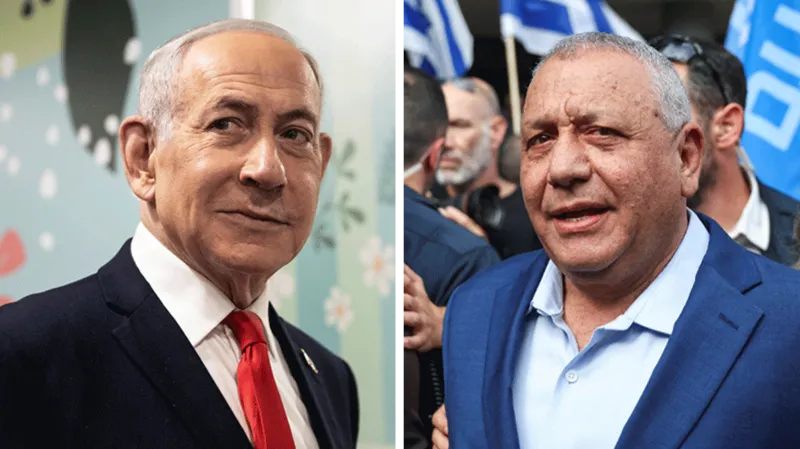
Israel’s caretaker Prime Minister Benjamin Netanyahu has offered to serve as deputy prime minister in a rotating national unity government led initially by opposition leader Gadi Eisenkot, in a bid to break the political deadlock following last month’s election.
Netanyahu is scheduled to meet Eisenkot on Sunday morning for talks on forming a new government.
In a social media post on Saturday, Netanyahu said his responsibility as a leader required him to set aside political considerations, including the principle of allowing the leader of the largest party to become prime minister first.
He said he was willing to serve initially as an “alternate prime minister” under an arrangement that would see Eisenkot take the top post.
Eisenkot, a former army chief, responded by inviting Netanyahu to take part in “genuine and accelerated negotiations”.
The offer came after Eisenkot accused Netanyahu’s right-wing Likud party on Friday of delaying coalition negotiations.
Eisenkot’s centrist Yashar party and three other Jewish opposition parties secured 48 seats in October’s election, while Netanyahu’s bloc won 53. Neither side secured the 61 seats required for a majority in the 120-member Knesset.
Eisenkot has until December 6 to form a government, after President Isaac Herzog granted him 28 days following consultations with political parties.
Two Arab-led alliances, the United Arab List and the Joint List, secured a combined 19 seats, an unprecedented result following increased turnout among Arab voters.
Their support could prove decisive in forming a government, although almost all Jewish parties had pledged before the election not to cooperate with them in a coalition.
However, Mansour Abbas, leader of the moderate Islamist Raam party, suggested in an interview with Israel’s Channel 12 on Saturday that his party could reconsider its position. He said he and his party recognised Hamas as a “terror group” and confirmed that he had voted for a bill co-sponsored by Raam that included the designation.
The move could potentially open the door for Raam to join a coalition seeking to replace Netanyahu.
Eisenkot has already made progress in securing support, reaching coalition agreements with Yisrael Beiteinu and The Democrats.
The fourth party in his bloc, Beyachad, is led by former prime minister Naftali Bennett, who on Thursday backed a unity government involving Likud, with Eisenkot serving as prime minister first.
Bennett welcomed Netanyahu’s proposal, saying the caretaker prime minister had made the right decision by showing willingness to join a unity government led by Eisenkot and based on an alliance of those who serve.
Netanyahu said his proposal was prompted by the scale of the existential threat facing Israel and the need for a government capable of addressing it.
“If Likud is ready for genuine unity, I am ready to assess the seriousness of its intentions over the next 24 hours,” Eisenkot said in response.