


 Play store

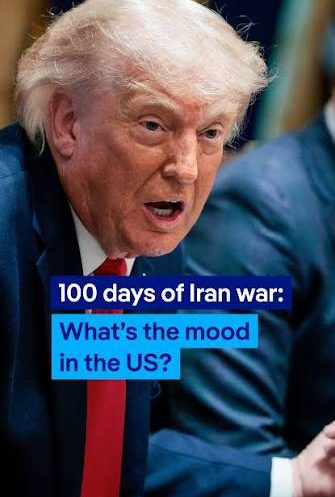
According to a report by The New York Times, U.S. President Donald Trump now risks falling into the same trap over Iran. During his election campaign, Trump promised not to start new wars but to end existing ones. He pledged to avoid prolonged or “forever wars,” particularly in the Middle East. Critics now argue that his Iran policy is creating exactly the kind of open-ended conflict he once vowed to avoid.
The military campaign launched by Israel and the United States against Iran has shifted between diplomatic negotiations and military strikes. However, Trump has so far failed to achieve his stated objectives of toppling the Iranian government or halting Iran’s nuclear program. Instead, the conflict has escalated into a broader crisis, including the closure of the strategically vital Strait of Hormuz.
With diplomatic efforts now at a standstill, Trump once again finds himself confronting the realities of war. The ceasefire has already collapsed, and the Strait of Hormuz remains blocked. Less than a month after Trump hailed a memorandum of understanding as fulfilling all U.S. objectives, the agreement has unraveled amid sharply differing interpretations by the parties involved.
Ali Vaez, director of the Iran Project at the International Crisis Group, said neither side viewed the memorandum as a genuine path to peace. Instead, both treated it as a means of continuing the conflict through different methods.
Vaez warned that without a long-term strategy for a durable political settlement, the current situation could evolve into yet another “forever war.”
The Legacy of ‘Forever Wars’ and the Limits of Military Power
The concept of the “forever war” emerged after the September 11, 2001 terrorist attacks, when the United States launched its global “War on Terror.”
Those campaigns drew the U.S. into lengthy military operations in Afghanistan and Iraq, where large numbers of American troops were deployed. What began as efforts to overthrow hostile governments eventually turned into prolonged counterinsurgency campaigns. After years of fighting, enormous financial costs, and heavy casualties, the wars ended either in unresolved stalemates or, in some cases, with U.S. withdrawal widely viewed as a defeat.
According to Professor Friedman, the same pattern can now be seen in Trump’s approach to Iran and Russian President Vladimir Putin’s war in Ukraine. Both leaders, he argues, underestimated the limits of military power and set objectives that, even if achievable, would require prolonged conflict.
Military superiority alone cannot deliver lasting success without an effective political and diplomatic strategy. Even the world’s most advanced armed forces cannot secure enduring victories if battlefield gains are not translated into sustainable political outcomes.
Trump faces an additional challenge: he hopes to prevail without deploying U.S. ground troops to Iran, relying instead on American air and naval power—an approach driven in part by the domestic political unpopularity of another large-scale ground war.
Trump, however, has repeatedly offered a different justification for his policy. He argues that the U.S.-Iran conflict has persisted since the 1979 Iranian Revolution, when the Shah was overthrown and more than 60 Americans were taken hostage. In his view, military action against Iran is intended to bring that nearly five-decade-long confrontation to a definitive end.