


 Play store

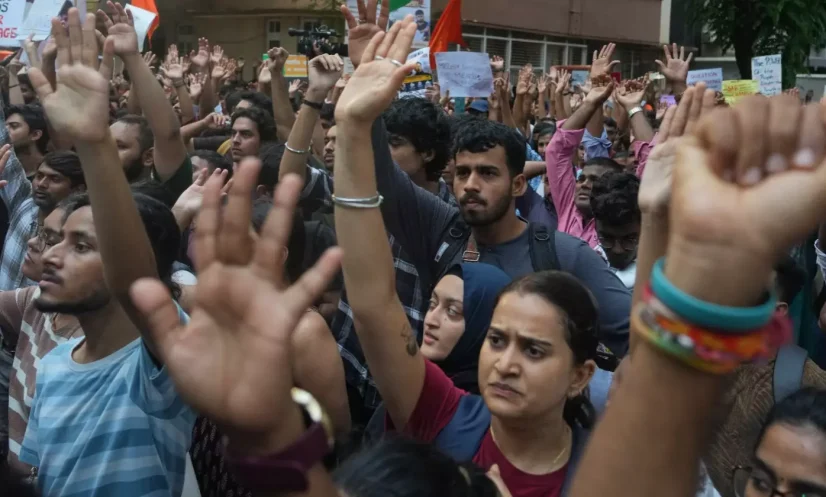
Thousands of protesters gathered in New Delhi on Monday as India’s youth-led “Cockroach” movement attempted to march towards Parliament, demanding the resignation of Education Minister Dharmendra Pradhan over repeated examination paper leaks.
The demonstration, centred at Jantar Mantar near Parliament, saw heavy police deployment and barricades, with authorities denying permission for the march due to security restrictions during the monsoon session.
Tensions rose when some protesters tried to breach barricades, prompting police to use batons to disperse sections of the crowd.
The rally drew students, professionals and families, many prepared for a day-long protest with food and supplies.
Demonstrators waved national flags and chanted slogans against Prime Minister Narendra Modi and the education minister, while police repeatedly urged them to disperse.
The “Cockroach” movement emerged in May after India’s chief justice used the term to describe unemployed youth during a court hearing.
Activists later embraced the label as a symbol of protest, transforming it into a viral campaign that has since attracted millions of supporters online.
Public anger has intensified repeated leaks of entrance examination papers for medical colleges and government jobs.
The movement gained further traction after activist Sonam Wangchuk—who had been on a hunger strike—was forcibly hospitalised by police over the weekend.
For weeks, protesters identifying as “cockroaches” have camped at Jantar Mantar, joined by student groups nationwide. Demonstrations have also spread to universities and major cities across India.
Protesters are demanding sweeping reforms to the examination system, accountability for the leaks, and compensation for families of students who died by suicide linked to the crisis.
Wangchuk has said he will end his hunger strike only if the government acknowledges responsibility or allows the march to Parliament and parliamentary debate on the issue.
The protests have become one of the most significant public challenges to Modi’s government in its third term, drawing support from opposition parties, rights groups and sections of the film industry.
However, government leaders have rejected the demands, with Pradhan accusing protesters of acting against national interests, while others downplayed the need for formal dialogue.
Participants say the movement reflects growing frustration over systemic failures and a perceived decline in space for dissent, vowing to continue protests until meaningful reforms are achieved.