Play store


Amnesty International has expressed serious concern over the reported police crackdown on peaceful protesters in New Delhi, urging Indian authorities to respect the right to peaceful assembly and investigate allegations of excessive use of force.
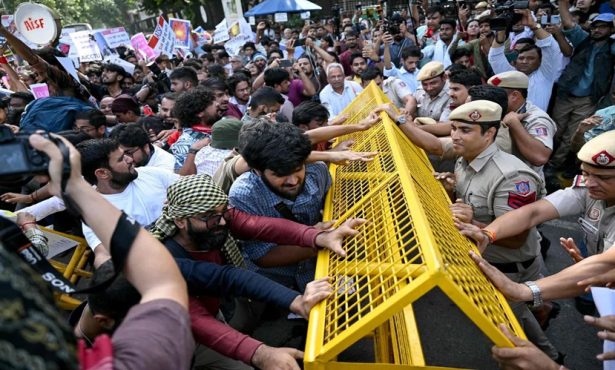
In a statement, Aakar Patel, Chair of the Board of Amnesty International India, said images and reports from the protest at Jantar Mantar indicated that peaceful dissent was being suppressed.
According to Amnesty, police used unnecessary and excessive force against demonstrators and erected barricades to stop protesters from reaching Parliament. Authorities also reportedly suspended metro services and mobile internet, measures the rights group said further restricted the right to peaceful assembly.
“The role of the authorities is to protect and facilitate peaceful protests, not to suppress them,” Patel said, adding that the right to peaceful assembly is guaranteed under both international human rights law and the Indian Constitution.
Amnesty said the actions of the Delhi Police raised questions about whether the response met international standards of legality, necessity and proportionality. The organisation called on police to exercise restraint and immediately stop the use of unlawful force against peaceful demonstrators.
It also urged authorities to conduct prompt, independent and impartial investigations into allegations that police used batons, tear gas and stone-throwing against protesters.
The demonstrations were organised by the youth-led Cockroach Janta Party (CJP), whose supporters are demanding accountability over alleged examination paper leaks that affected millions of students across India.
Prominent activist Sonam Wangchuk, who had been on a hunger strike in support of the movement, was taken to a hospital by Delhi Police on July 18 after 21 days without food, reportedly against his wishes.
On July 20, protesters marched towards the Indian Parliament, demanding the resignation of Union Education Minister Dharmendra Pradhan.
The protests follow allegations that the NEET-UG medical entrance examination was compromised by question paper leaks. In May 2026, the testing agency cancelled the examination results, requiring more than two million students to retake the test.
The controversy triggered nationwide protests, with local media reporting that several students died by suicide amid the stress and uncertainty surrounding the examination.
Protesters are also demanding compensation of INR 1 crore (about USD 104,000) for the family of each student who allegedly died by suicide due to distress linked to the examination scandal.