Play store

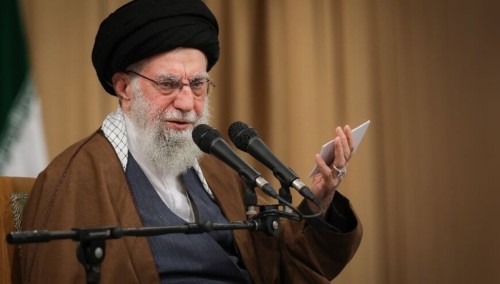
Iran’s former Supreme Leader Ayatollah Ali Khamenei, who was killed in a joint U.S.-Israeli military strike in late February, is scheduled to be buried on July 9 in his hometown of Mashhad, where he was born more than eight decades ago.
Khamenei, who led the Islamic Republic for nearly 36 years, presided over some of the most defining moments in modern Iran’s political history, from domestic unrest and regional conflicts to the country’s long-running nuclear dispute with the West.
Born on April 19, 1939, in the holy city of Mashhad, Khamenei studied at religious seminaries there before continuing his education in Najaf and the Iranian religious centre of Qom.
He became involved in the revolutionary movement led by Ruhollah Khomeini against Shah Mohammad Reza Pahlavi and was arrested several times before the 1979 Islamic Revolution that overthrew the monarchy.
Khamenei served as Iran’s third president from 1981 to 1989 during the Iran-Iraq War. Before assuming the presidency, he survived an assassination attempt in June 1981 when a bomb concealed inside a tape recorder exploded during one of his speeches.
Following Khomeini’s death in June 1989, Iran’s Assembly of Experts appointed Khamenei as interim leader before formally electing him as the country’s second Supreme Leader after constitutional amendments removed the requirement that the post be held by a senior religious authority.
During his tenure, Khamenei faced repeated waves of nationwide protests.
The first major challenge came in 2009, when supporters of presidential candidate Mir-Hossein Mousavi alleged electoral fraud following the re-election of Mahmoud Ahmadinejad. The unrest resulted in dozens of deaths, while Mousavi and his wife were later placed under house arrest.
Further nationwide protests erupted in 2019 over fuel price increases and again in 2022 following the death in police custody of Mahsa Amini, sparking one of the largest protest movements in the Islamic Republic’s history.
Another wave of demonstrations over rising living costs broke out in late 2025 and continued into early 2026.
Khamenei also played a central role in Iran’s nuclear diplomacy.
In 2015, Tehran signed a landmark agreement with six world powers limiting its nuclear programme in exchange for sanctions relief. However, the United States withdrew from the accord in 2018 under President Donald Trump and reimposed sweeping sanctions on Iran.
In January 2020, Khamenei mourned the killing of Iran’s top military commander, Qasem Soleimani, who died in a U.S. drone strike in Baghdad. Iran later retaliated by launching missile attacks on bases housing American troops in Iraq.
Regional tensions escalated dramatically in 2025 when Iran and Israel exchanged direct military strikes during a 12-day conflict involving missile and drone attacks. The fighting claimed more than 1,000 lives in Iran, including several senior military commanders, while dozens were killed in Israel before a U.S.-brokered ceasefire ended the hostilities.
On February 28, 2026, Khamenei was killed in a joint U.S.-Israeli strike targeting an Iranian leadership compound. The attack also killed several senior officials, including Revolutionary Guards chief Mohammad Pakpour and senior security official Ali Larijani.
In March, Iran’s Assembly of Experts appointed Khamenei’s son, Mojtaba Khamenei, as the country’s new Supreme Leader.