


 Play store

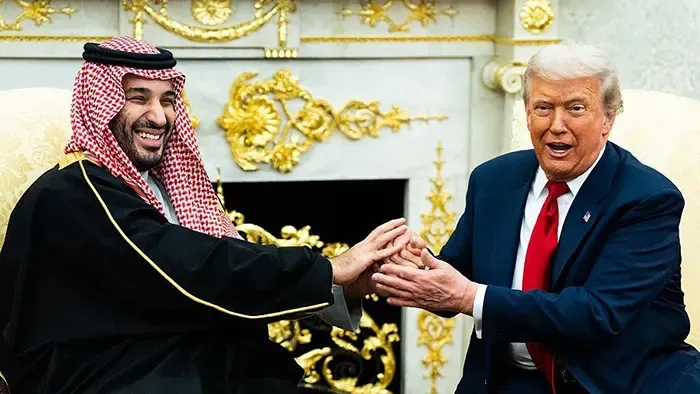
The United States and Saudi Arabia have signed a landmark nuclear cooperation agreement, paving the way for the Gulf kingdom to develop a civilian nuclear energy programme.
Described as a “peaceful nuclear cooperation deal,” the agreement is expected to open significant commercial opportunities for US companies in Saudi Arabia’s nuclear fuel sector, according to the US Department of Energy.
However, the full terms of the deal have not been disclosed, raising concerns among analysts and policymakers. Reports in US media suggest the agreement may eventually allow Saudi Arabia to enrich uranium domestically—a sensitive capability that can be used for both civilian energy production and nuclear weapons development.
Experts warn that such a provision, if confirmed, would mark an unprecedented move by Washington and could heighten the risk of nuclear proliferation in the already volatile Middle East.
Alongside the nuclear accord, the two countries have also signed a bilateral security framework, creating a legal foundation for a multi-billion-dollar partnership spanning decades.
US officials insist the agreement will uphold the highest standards of nuclear safety and non-proliferation while strengthening regional security and advancing economic cooperation.
Saudi authorities have described the deal as an extension of longstanding energy collaboration between the two nations. The groundwork for the agreement was reportedly laid following a high-level Saudi visit to Washington last November.
The timing of the deal is particularly sensitive. Tensions between the United States and Iran continue to escalate, while Iran-backed Houthi rebels in Yemen recently announced a “maritime blockade” against Saudi Arabia.
US military installations in the kingdom have also been targeted in recent attacks, underscoring the region’s fragile security landscape.
Critics, including some Israeli experts and former officials, fear the agreement could eventually enable Saudi Arabia to develop nuclear weapons capabilities. While many analysts note that such a transition would take decades and face strong international opposition, the possibility remains a key point of contention.
Rosemary Kelanic of the Washington-based think tank Defense Priorities described the prospect of allowing Saudi domestic uranium enrichment as “highly surprising,” noting that the US has historically avoided granting such capabilities to partners due to proliferation risks.
The agreement will now be submitted to the US Congress for approval, where it could face bipartisan scrutiny. While some lawmakers have voiced opposition, the Republican Party—currently aligned with President Donald Trump—holds control of both chambers, potentially easing its passage.
US Secretary of State Marco Rubio dismissed concerns, stating that Washington would not enter into any agreement that could contribute to nuclear weapons proliferation.
However, critics have pointed out that Rubio previously supported legislation requiring strict congressional oversight of any nuclear deal with Saudi Arabia.
Analysts suggest the agreement also reflects strategic competition, as both Russia and China have been exploring similar nuclear partnerships with Riyadh. By moving forward, the US may be seeking to maintain its influence in the region’s evolving energy and security landscape.
The deal marks a major diplomatic win for Saudi Arabia and could reshape the balance of power in the Middle East over the coming years. While its long-term implications remain uncertain, the agreement is already at the center of intensifying debate over nuclear security and regional stability.