


 Play store

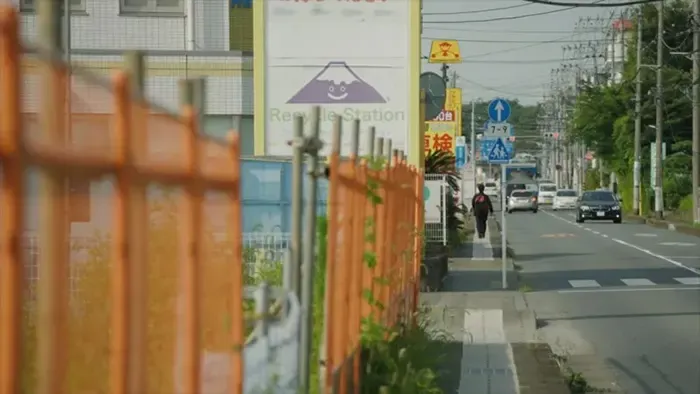
A proposed mosque in the quiet coastal city of Fujisawa, about an hour south of Tokyo, has triggered mixed reactions in Japan, highlighting broader concerns over immigration and social change.
While some residents welcome the initiative as a sign of growing diversity and inclusion, others have expressed unease, anger, and even fear. The debate comes as Japan faces a shrinking and ageing population, forcing the country to increasingly rely on foreign workers to fill labour shortages.
Although immigration remains politically sensitive and tightly controlled, the growing presence of foreign workers is bringing diverse cultures, languages, religions, and lifestyles into Japanese society. The controversy in Fujisawa reflects a deeper national question about identity and how Japan adapts to these changes, according to a report by BBC.
Local resident Noriko Izumizawa is among those concerned about the expanding immigrant community. She says political divisions over immigration in the United States and Europe have heightened her anxiety.
Earlier this year, protests erupted near a local train station against the mosque project, drawing thousands of demonstrators. Reports also indicate a rise in hate speech and misinformation on Japanese social media, along with abusive calls and emails targeting mosques. In response, anti-hate groups have held counter-rallies promoting tolerance.
Hiroki Suzuka, who runs a coffee shop opposite the proposed mosque site, emphasised the need for dialogue and understanding. “I’m not strongly for or against it,” he said. “The first step is to learn—what Islam is, who these people are, and what they believe. Everything begins with trying to understand each other with an open mind.”
Mohammed Mohiuddin, a businessman who has lived in Osaka for 39 years after moving from Sri Lanka in 1987, said attitudes toward Muslims have become more hostile over time. He noted that both online and face-to-face abuse has increased, with comments such as “leave Japan” or “go back to your country” becoming common. He also reported incidents of verbal harassment outside mosques.
Despite this, Mohiuddin said he has never feared for his life and continues to maintain good relations with neighbours. However, he acknowledged a noticeable shift in attitudes in recent years, including accusations linking Muslims to terrorism. “We remain patient and respond with kindness,” he said, adding that a lack of understanding about Islam contributes to the problem.
He also admitted that Muslim communities share some responsibility for the gap, saying they had long focused on work without engaging enough with wider society. “Now we need more dialogue and stronger efforts to build mutual understanding,” he added.
Shaquil Mohammad, a representative of the Yashio Mosque in Saitama Prefecture, stressed the importance of respecting Japanese laws and culture. A fluent Japanese speaker who has worked in construction for 26 years after arriving from Pakistan, he highlighted simple practices like proper waste sorting, following parking rules, and wearing helmets while cycling. “Courtesy matters too—even small gestures like greeting people,” he said.
Japan is undergoing significant demographic change, prompting reflection on its national identity. According to Professor Hirofumi Tanada, an expert on Islam in Japan, the Muslim population—including foreign residents and Japanese converts—reached around 420,000 by the end of 2024, up from 230,000 in 2019.
The overall number of foreign residents surpassed 4 million in 2025, with most coming from China, Vietnam, South Korea, and the Philippines. Of them, a record 2.57 million are employed.
At the same time, Japan’s population declined by nearly 1 million in 2025 alone. While the government has avoided officially labelling the country as immigration-dependent, critics argue that its visa system effectively functions as a “hidden immigration policy.” Prime Minister Sanae Takaichi has maintained a cautious stance on large-scale immigration. In June 2026, Japan increased visa fees for foreign nationals fivefold and plans to recruit around 230 additional staff for stricter immigration enforcement. Authorities are also considering limits on the number of foreign residents.
As immigrant communities become more visible, Japan faces a critical question: can it preserve its social cohesion while evolving into a more diverse society? Back in Fujisawa, Izumizawa admitted she has never had a negative experience with Muslim neighbours. “To be honest,” she said, “maybe I’m just afraid of the unknown.”