Play store

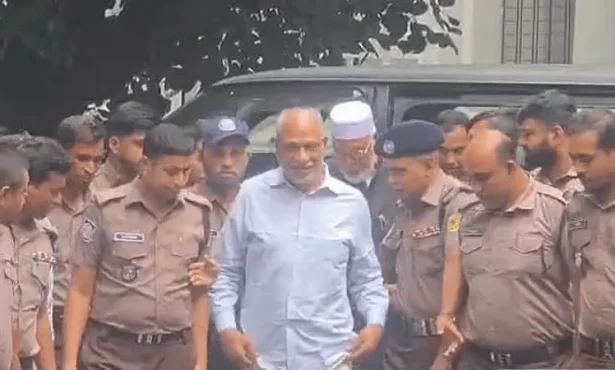
The International Crimes Tribunal (ICT)-2 on Thursday ordered former minister Abdul Latif Siddiqui to be sent to jail after showing him arrested in a crimes against humanity case over the alleged killings during a Hefazat-e-Islam Bangladesh rally at Shapla Chattar in the capital in 2013.
Prosecutor Mizanul Islam represented the prosecution and told the tribunal that Latif Siddiqui had been arrested under an arrest warrant and produced before the court. As the defence did not submit any application, the prosecution sought an order sending him to jail.
After hearing the submissions, the tribunal accepted the prosecution’s plea, formally showed Latif Siddiqui arrested in the case and ordered that he be sent to prison.
Latif Siddiqui was arrested by the Detective Branch (DB) of the Dhaka Metropolitan Police from the capital’s Gulshan area on Wednesday night in connection with the case.
Earlier, the tribunal took cognisance of formal charges against former prime minister Sheikh Hasina and 40 others in the case. It also issued arrest warrants against 31 absconding accused, including Latif Siddiqui.
The tribunal fixed August 16 for the next hearing and directed the authorities to produce the 10 accused currently in jail in connection with various cases before the tribunal on that date.
Speaking to reporters after the hearing, Prosecutor Mizanul Islam alleged that the then government had planned at different levels to disperse the Hefazat-e-Islam grand rally and remove its leaders and activists from Shapla Chattar on May 5, 2013.
He alleged that Latif Siddiqui attended a meeting of senior Awami League leaders before the operation and that decisions taken at the meeting were later presented to the then prime minister.
According to the prosecution, those decisions led to a joint operation involving members of the Rapid Action Battalion (RAB), police and Border Guard Bangladesh (BGB) against the gathering.
The prosecution said its investigation found evidence that 61 people were killed during the operation and alleged that Latif Siddiqui was among those involved in planning, instigating and making decisions regarding the operation.
Asked about Latif Siddiqui’s specific role, Mizanul said he had participated in the meeting.
Although investigators could not establish every discussion held there, he was accused based on the collective decisions taken and the subsequent actions, the prosecutor said.
Following the hearing, defence lawyer Abdullah Al Harun Bhuiyan sought the tribunal’s permission to sign the okalatnama, or power of attorney, on behalf of Latif Siddiqui and requested permission to meet him at the tribunal lock-up. The tribunal granted both requests.
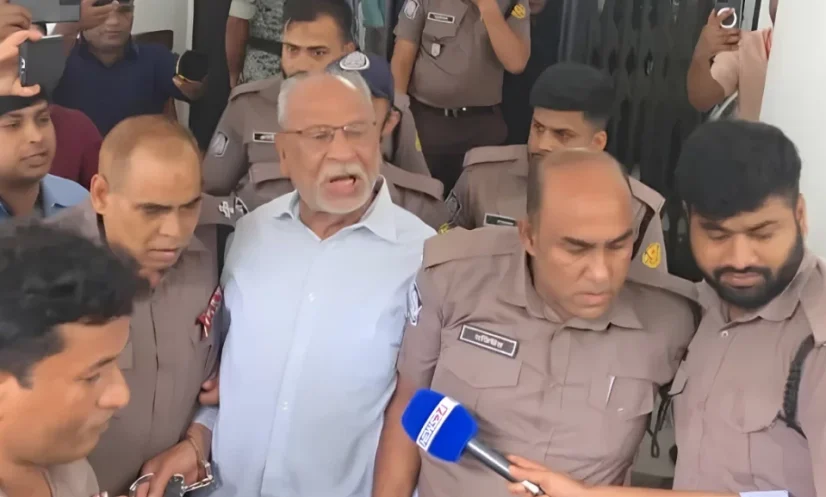
At one stage, Latif Siddiqui stood in the dock and repeatedly attempted to draw the tribunal’s attention, saying, “My Lord, I seek your attention. I seek the attention of the honourable tribunal.”
However, the proceedings had already concluded.
He later questioned where he could seek redress if the court operated in such a manner. Police personnel then asked him to put down the microphone and proceed to the lock-up. A brief verbal exchange took place between him and the officers escorting him.
Speaking to reporters, Latif Siddiqui’s younger brother, Kader Siddique, protested what he described as the inclusion of an innocent person in the case.
“Every accused person has the right to address the court. That is his legal right. Latif Siddiqui also wanted to speak, but he was not given the opportunity. I believe respected individuals deserve to be treated with respect,” he said.
Kader Siddique said his brother, now 87, was not involved in planning the Shapla Chattar operation and rejected the prosecution’s allegations.
“He cannot be described as a planner because he was not part of the government’s ‘kitchen cabinet.’ He was the jute minister at that time,” Kader Siddique said, adding that his brother had already become a controversial figure within the Awami League and with Sheikh Hasina over several issues.
He also said that his family did not consider being handcuffed a matter of shame, comparing handcuffs to ceremonial bangles worn during a wedding.