


 Play store

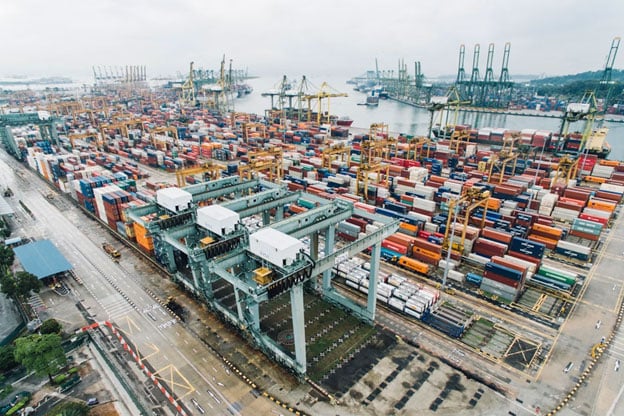
East Asia and the Pacific (EAP) will need nearly USD 900 billion in maritime investment by 2040 to modernise ports, replace ageing vessels and develop alternative marine fuel infrastructure, the World Bank said in a new report.
The report warns that without sustained investment, the region’s shipping networks could struggle to support rising trade volumes and the transition to cleaner fuels, threatening economic growth in one of the world’s largest trading and manufacturing hubs.
According to the report, container trade across the region is expected to grow by 3.5 to 4 per cent annually over the next decade. To meet rising demand, ports will need capacity for an additional 300 million twenty-foot equivalent units (TEUs) by 2040.
The World Bank estimates that USD 180 billion will be required to modernise ports, while more than USD 280 billion will be needed to replace and upgrade domestic and regional shipping fleets.
Maritime trade remains a key driver of the regional economy, supporting an estimated USD 3.7 trillion in economic activity each year and handling more than 6 billion tonnes of cargo, or roughly half of global seaborne freight.
The report highlights the strategic importance of the Strait of Malacca, through which an estimated 38 per cent of global maritime trade passed in 2023. More than 100,000 vessels transit the waterway annually, making it the world’s busiest maritime chokepoint.
Among regional maritime hubs, Singapore handled around 41 million TEUs and 295 million tonnes of seaborne cargo in 2024, making it the world’s second-busiest container port. Malaysia processed another 28 million TEUs and 447 million tonnes of cargo, while Indonesia handled the region’s largest cargo volume at 900 million tonnes.
China continues to lead global port operations through automation and digitalisation. The Port of Shanghai became the first in the world to process more than 50 million TEUs in a single year, while its automated terminals require around 70 per cent less labour and achieve about 30 per cent higher productivity than conventional facilities.
The World Bank said improving port efficiency could also reduce costs and emissions. Ships currently spend up to 9 per cent of their operating time waiting at anchor, while studies show that optimising sailing speeds based on expected port arrival times can reduce fuel consumption by around 14 per cent per voyage.
The report noted that not all ports require large-scale investment. In Tuvalu, relatively simple improvements at the Port of Funafuti, including paving cargo-handling areas and improving drainage, reduced equipment breakdowns by 80 per cent and cut vessel turnaround times from seven days to as little as two.
Beyond ports, the region faces a major challenge in replacing ageing vessels. More than USD 280 billion will be needed by 2040 to modernise domestic and regional fleets, including USD 36.5 billion for dual-fuel vessels capable of operating on cleaner energy.
Many ships currently operating across the region are more than 25 years old, making them less fuel-efficient, more expensive to maintain and more prone to accidents. Replacing just 30 per cent of domestic vessels by 2035 could cut accident rates by half, the report said.
The transition to low-carbon shipping represents the largest investment requirement. Developing supply chains for alternative marine fuels, including green ammonia, green methanol and renewable liquefied natural gas (LNG), is expected to require around USD 433 billion by 2040.
The World Bank said the transition would require coordinated investment in ships, ports and fuel infrastructure, alongside clear regulatory policies, as shipowners, ports and fuel producers remain reluctant to invest without certainty over future demand.
It warned that financing alone would not be enough. Successful modernisation of the region’s maritime sector will depend on coordinated planning to ensure ports, vessels and fuel supply chains develop together and keep pace with East Asia’s expanding trade.