Play store

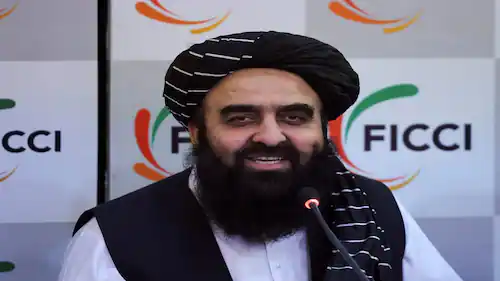
The Taliban-led Afghan government has offered US investors access to the country’s vast mineral wealth as part of an effort to improve ties with Washington, while urging the United States to lift sanctions and release billions of dollars in frozen Afghan assets.
The overture comes five years after the Taliban returned to power following the withdrawal of US-led NATO forces from Afghanistan and the collapse of the Western-backed government.
US President Donald Trump has previously described the withdrawal and the subsequent collapse of the Afghan government as “the most embarrassing thing in the history of our country”.
According to a report by the Financial Times, Taliban Foreign Minister Amir Khan Muttaqi said Afghanistan was “absolutely” open to US investment in several sectors, including mining, infrastructure, agriculture and trade.
“Relations between Afghanistan and the United States should not be assessed through the lens of the past 20 years of war, but rather on the basis of future co-operation,” the FT quoted Muttaqi as saying during an interview at his office in Kabul.
He also said Afghanistan’s economic policy was open to foreign investment.
US and former Western-backed Afghan government geological surveys estimate that Afghanistan possesses at least $1 trillion worth of mineral resources.
The country’s mineral deposits include copper, iron ore, niobium, cobalt, gold and lithium, much of which remains undeveloped after decades of conflict and political instability.
Since seizing power, the Taliban has sought to attract foreign investment and exploit Afghanistan’s natural resources. The group has announced more than $7 billion in mining investments since 2021 involving countries including China and Iran, according to the FT. The projects cover resources including gold, gemstones and chromite.
Despite an improvement in the security situation following the withdrawal of NATO-led forces, Afghanistan remains one of the world’s poorest countries.
More than 14 million people, roughly one-third of the population, are facing acute hunger, according to the FT.
The Taliban’s restrictions on women and girls remain a major obstacle to wider international engagement. The group has imposed sweeping restrictions on women’s access to education, employment and public life, drawing widespread international condemnation.
Last year, the International Criminal Court issued an arrest warrant for Taliban supreme leader Hibatullah Akhundzada over alleged gender-based persecution.
Foreign diplomats in Kabul told the FT that potential US investors would have to navigate UN and Western sanctions targeting senior Taliban officials, including Muttaqi.
They also warned that increased financial flows could strengthen the Taliban government and reduce international leverage over its policies.
Despite these concerns, the Taliban has stepped up its diplomatic outreach in recent years.
China, India, Iran, Qatar and several Central Asian countries have opened channels with Kabul or hosted Taliban officials.
Russia formally recognised the Taliban government last year and signed a military cooperation agreement with Afghanistan in May.
The European Union also hosted Taliban officials in Brussels in June for discussions on possible migrant returns. It was the bloc’s first such meeting with Taliban representatives since the group returned to power in 2021. Germany has also proposed similar talks.
The Taliban hopes that greater diplomatic engagement will eventually lead to the removal of sanctions and the release of Afghan reserves frozen overseas.
Muttaqi told the FT that sanctions “did not achieve their intended objectives” and argued that Afghan assets should not be used as a political instrument.
“No individual, government or institution should use the assets of the Afghan people as a tool of political pressure,” he was quoted as saying.
Afghanistan’s central bank estimates that around $9.5 billion of its reserves remain outside the country, including approximately $7 billion held in the United States.
In 2022, Washington transferred $3.5 billion into the Switzerland-based Afghan Fund, established to support Afghanistan’s financial stability without giving the Taliban direct access to the money.
The fund has since grown to more than $4 billion, including interest, according to the FT.
Trump, however, has shown limited interest in closer relations with the Taliban. Instead, he has proposed bringing Bagram Air Base, located north of Kabul, back under US control. The Taliban has rejected the proposal.
“All military and civilian facilities in Afghanistan, including Bagram, are national assets of Afghanistan,” Muttaqi said.
At the same time, he called on Washington to reopen its embassy in Kabul, which was abandoned following the Taliban takeover in 2021.
The Taliban’s offer of access to Afghanistan’s mineral wealth reflects its broader effort to turn economic diplomacy into a pathway towards international recognition, sanctions relief and access to frozen financial assets.
For Washington, however, any move towards deeper economic engagement would have to be weighed against concerns over human rights, sanctions compliance and the risk of strengthening the Taliban’s hold on power.