Play store

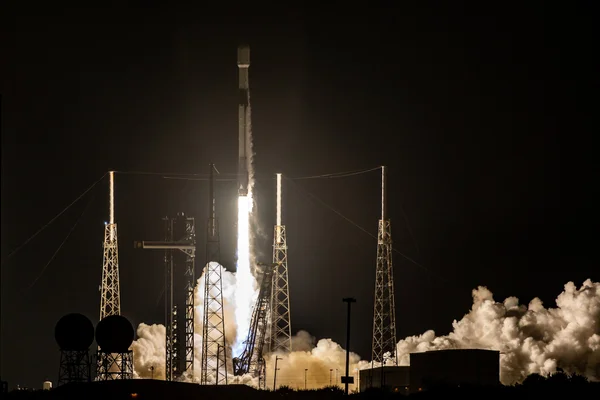
A disused SpaceX Falcon 9 rocket upper stage is hurtling towards the moon at roughly 5,400mph — seven times the speed of sound — and is expected to slam into the moon on Wednesday morning.
The impact, predicted to occur near the Einstein Crater on the moon’s sunlit western limb, will carry the explosive force of approximately three tonnes of TNT, according to space tracking expert Bill Gray.
The 12-metre rocket segment, weighing around 4,500kg, has been drifting through space since it launched a pair of private lunar landers in January last year.
It was never SpaceX’s intention to strike the moon, though experts have noted the collision could have been prevented had the spent stage been redirected into solar orbit.
Mr Gray has estimated the crash will take place at approximately 7.34am UK time, carving out a fresh crater and throwing up a substantial plume of debris.
Scientists anticipate the collision will gouge out a crater roughly 27 metres wide and five metres deep — far too small to spot from Earth but well within range of orbiting spacecraft.
While the initial flash is expected to last less than a second and will probably be too faint for observers on Earth to detect, the resulting stream of ejected material could extend several miles above the lunar surface and remain visible through telescopes for tens of minutes.
Graduate research assistant William Jo told Space.com: “Our calculations suggest the plume should be several orders of magnitude brighter than the dark-sky background for the first few minutes after impact.
“So the plume should be visible, though I’d stress this is a single nominal case.”
Skywatchers in the eastern portions of the US and Canada, along with much of South America, are best positioned to observe the aftermath.
Nasa’s Lunar Reconnaissance Orbiter and South Korea’s Danuri spacecraft are both set to capture before-and-after imagery of the crash site, offering researchers a rare chance to study a well-tracked impact event in detail.
The Danuri orbiter is expected to pass within a mile or two of the rocket just two minutes before it strikes the surface, according to Dr Benjamin Fernando of Los Alamos National Laboratory and his team.