


 Play store

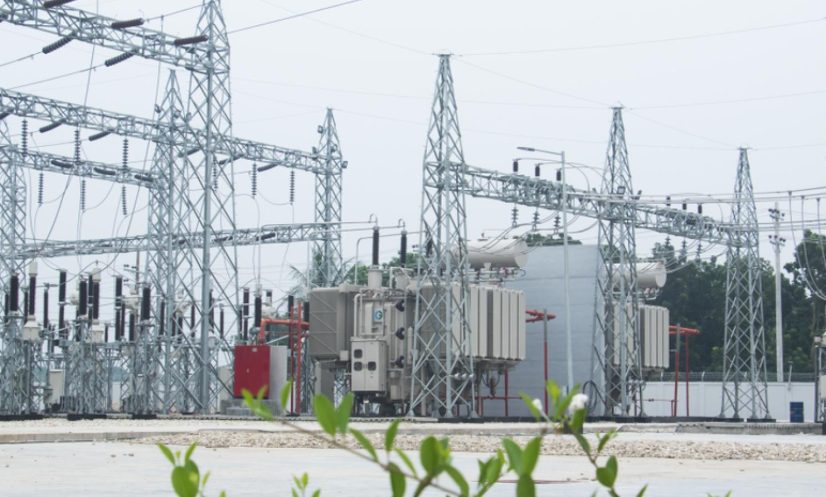
Eighty rural electricity cooperatives across Bangladesh have sought police protection for their grids, substations and offices, citing attacks and vandalism at power facilities amid prolonged load shedding caused by an energy crisis.
The Bangladesh Rural Electrification Association sent a letter to the Inspector General of Police (IGP) on Wednesday, seeking increased security at facilities operated by the 80 rural power associations.
The letter, signed by the organisation’s office secretary Mahbubur Rahman, was sent to the IGP on Wednesday. A rural electricity official confirmed the matter to Sara Bangla.
According to the letter, electricity generation has fallen below demand due to the fuel shortage and severe heatwave, resulting in reduced power supply.
Rural areas under the jurisdiction of the rural power associations are experiencing particularly severe load shedding, causing “growing public anger,” the letter said.
It also noted that power substations and offices in some areas have come under attack.
The association said the rural power cooperatives supply electricity to nearly 80% of the country’s electricity consumers, or around 40 million customers. They also distribute about 60% of the country’s generated electricity in their service areas.
However, the cooperatives do not generate electricity themselves. They distribute to consumers the electricity allocated to them from the national grid.
Over the past several days, the combined average demand of the 80 rural power associations has stood at around 8,000 to 9,000 megawatts, against an average supply of only 5,000 to 6,000 megawatts, according to the letter.
As a result, some areas have experienced load shedding for eight, 10 or even 12 hours a day.
“Due to prolonged load shedding, angry members of the public have attacked and vandalised rural power substations in various areas. Officials and employees on duty are living in fear and insecurity,” the letter said.
The association requested the IGP to issue necessary instructions to local law enforcement agencies to strengthen security at grids, substations and offices under each rural power association.
Copies of the letter were sent to the private secretaries of the power, energy and mineral resources minister and state minister, the power secretary and the chairman of the Bangladesh Rural Electrification Board.
Copies were also sent to all deputy commissioners, police superintendents, senior general managers and general managers of rural power associations, upazila nirbahi officers and officers-in-charge of police stations across the country.
State Minister for Power, Energy and Mineral Resources Anindya Islam Amit has identified the gas shortage as one of the key reasons behind the ongoing electricity crisis.
Speaking to journalists at the Secretariat on Wednesday, he said gas-fired power plants cannot generate electricity according to demand when sufficient gas is unavailable.
He said the government had begun implementing a new strategy from Tuesday evening to manage the situation.
“We have adopted a strategy since yesterday evening. We hope the electricity situation will improve somewhat from this evening, InshaAllah,” Amit said.
Amid the recent gas shortage, nationwide load shedding has exceeded 3,000MW, with rural areas bearing a relatively larger share of the burden.
Amit said new LNG could not be unloaded at Summit’s floating LNG terminal due to adverse conditions in the Bay of Bengal. Meanwhile, Excelerate Energy’s LNG terminal has yet to return to full capacity following an accident.
“We are still unable to operate the Excelerate terminal at full capacity. Domestic production cannot be increased overnight. It is a long-term matter,” he said.
The government is also negotiating with Malaysia to increase gas supplies, Amit said.
After sending a letter to Malaysia, the state minister and the power, energy and mineral resources minister held a virtual meeting with relevant officials there. A Bangladeshi delegation subsequently travelled to Malaysia.
“We are working on their offer. As part of that process, we hope to receive at least one LNG cargo from them,” Amit said.
The government is also considering importing LNG through ISO tanks. However, as such specialised tanks are not readily available, the option is being considered a medium-term rather than an immediate solution.
Amit said the government was consulting experts and business leaders to address the electricity and gas shortages and was working on all available options.
“We are working on all the options available to us,” he said.
The state minister also criticised the energy policies of previous governments, arguing that the current crisis had been building for years because insufficient attention was given to medium- and long-term solutions.
“When you adopt the wrong policy, you have to pay the price at some point,” Amit said.
Asked about the letter seeking police protection for power offices, however, Amit said the Ministry of Power, Energy and Mineral Resources had not issued it.
“We did not issue it. If you ask me, I represent the ministry,” he said.