Play store

Bangladesh Bank is set to introduce person-to-person (P2P) payments through Bangla QR, allowing users to transfer money by scanning a QR code instead of manually entering account details.
The central bank has instructed banks, mobile financial service (MFS) providers, payment service providers (PSPs) and payment system operators (PSOs) to integrate the required features into their apps by October 31, with the service scheduled to launch from November 1, 2026.
In a letter issued on August 6, Bangladesh Bank directed the institutions to enable users to generate dedicated P2P QR codes and scan or upload QR codes shared by others.
The new system is expected to make digital transfers easier and reduce errors associated with manually entering account numbers and other payment details.
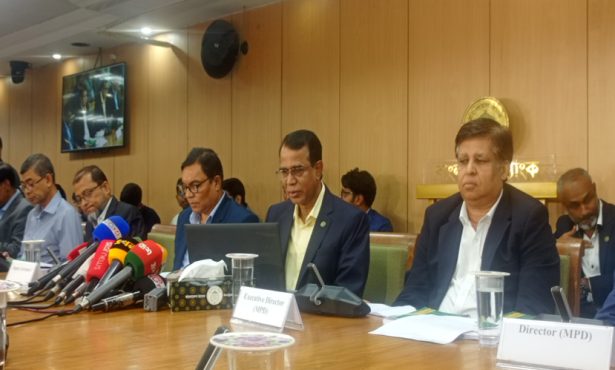
Bangladesh Bank Payment Systems Department Director Sharafat Ullah Khan said the central bank was working to turn Bangla QR into a universal QR platform for transactions. He said Bangla QR currently handles around Tk50-60 crore in transactions every day, with the volume expected to rise significantly from October.
Bangladesh Bank spokesperson Arif Hossain Khan said P2P transactions through Bangla QR could significantly expand digital payments. He noted that entering an incorrect digit while using the existing “Send Money” option can result in funds being sent to the wrong account.
Under the new system, recipients will be able to generate a QR code through their bank or MFS app and share it with the sender. The sender can then scan the code and complete the payment without repeatedly entering the recipient’s account details.
The central bank is also exploring the use of Bangla QR in sectors such as education and healthcare, as well as for tax payments to the National Board of Revenue.
Bangladesh Bank has already moved to make Bangla QR merchant payments more attractive by reducing the Interchange Reimbursement Fee (IRF) to zero. The measure, effective from October 1, means institutions will not be allowed to impose IRF-based fees or service charges on Bangla QR merchant transactions.
The central bank has also established a Tk100 crore fund to encourage small businesses to adopt Bangla QR. Governor Md Mostaqur Rahman said the fund could be increased if necessary.
He also identified limited smartphone access as a major obstacle to expanding digital payments. Around six crore people still use feature phones, according to the governor, and initiatives are being considered to make affordable Android smartphones available to them.
Bangladesh Bank data show rapid growth in Bangla QR transactions. In January 2026, users made 723,378 transactions worth Tk212.05 crore through the system.
By July, transaction volume had risen to 6,254,938, while the total value reached Tk1,475.95 crore.
The number of Bangla QR-accepting merchants has also increased sharply. The central bank recorded 1,352,712 merchants in May, 1,685,188 in June and 2,425,133 in July.
Bangladesh Bank estimates that managing physical cash costs the country around Tk20,000 crore a year. The cost includes printing banknotes, distribution, circulation, collection of damaged notes and their eventual destruction.
Officials say greater use of digital payments could significantly reduce these costs and help Bangladesh move towards a less cash-dependent economy.