Play store

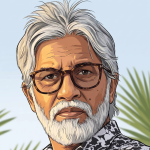
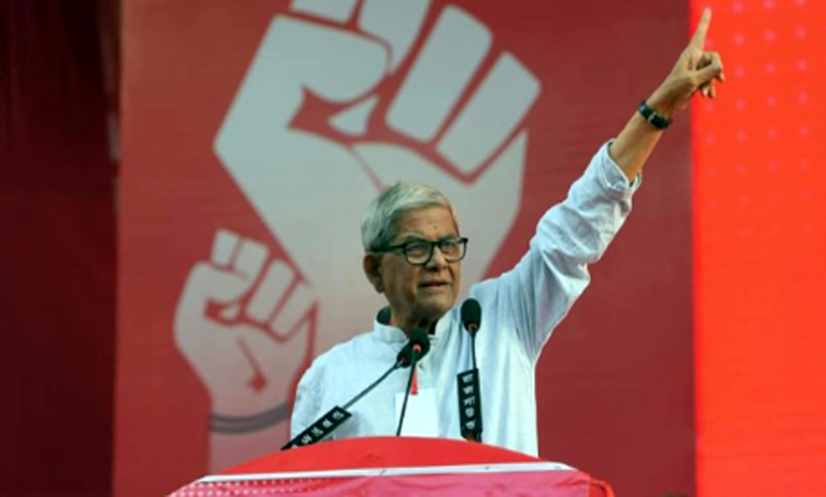
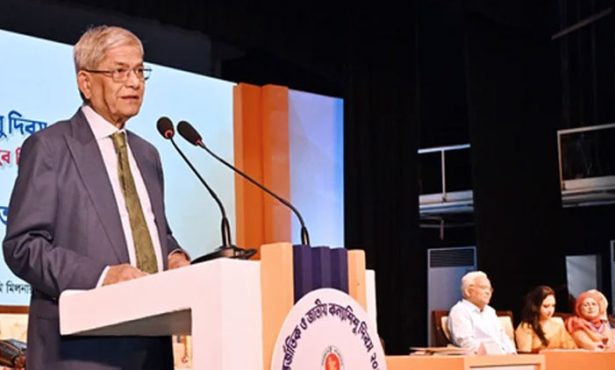
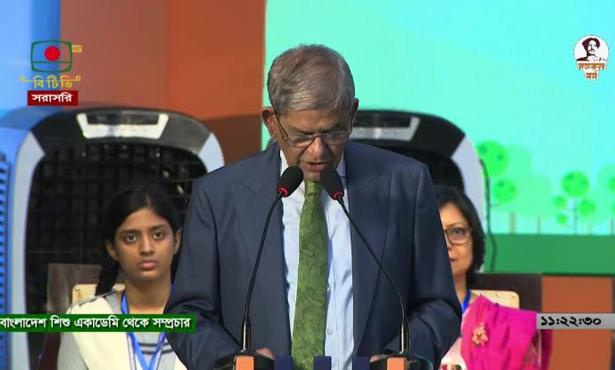
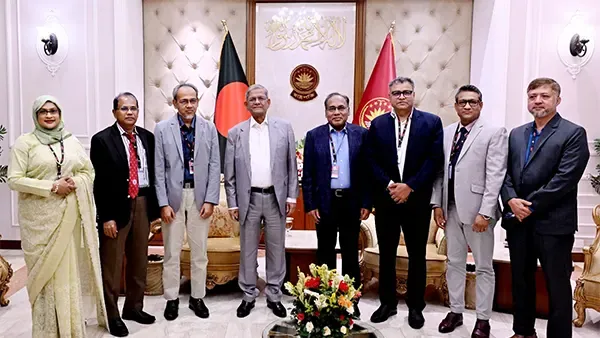
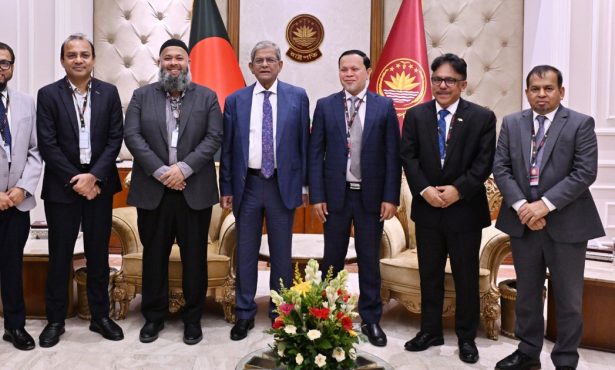
After weeks of speculation, the Bangladesh Nationalist Party (BNP) has finally nominated Mirza Fakhrul Islam Alamgir as its candidate for the presidency. The nomination, announced by BNP Chairman and Prime Minister Tarique Rahman on August 13, is more than a political decision. In many ways, it is a recognition of a long political journey that has taken Mirza Fakhrul from student politics and teaching to the highest constitutional office of the country.
If elected on August 20, as appears highly likely given the BNP’s parliamentary strength, Fakhrul will become Bangladesh’s 23rd president. His nomination has also added an interesting dimension to a presidential election that is expected to be contested for the first time since 1991. For those who have followed his career closely, however, the destination is less surprising than the journey.
Fakhrul’s professional life began not in the corridors of power but in the classroom. He started his career as a lecturer in economics at Dhaka College. He later entered public service and eventually served as private secretary to then Deputy Prime Minister S A Bari.
From there, step by step, he entered active politics and built his position from the grassroots. He served as chairman of Thakurgaon Municipality before moving into national politics and gradually rising through the BNP’s organisational hierarchy.
That journey is remarkable precisely because it was not a straight path to power. It passed through teaching, government service, local government and opposition politics before reaching the leadership of one of Bangladesh’s major political parties.
Fakhrul has also been an unusual figure in Bangladesh’s often confrontational political culture. He is widely known for his measured language, personal courtesy and relatively moderate political behaviour. His political opponents may disagree strongly with his views, but even many of them acknowledge his personal civility.
In my view, that quality of moderation is not a weakness. On the contrary, it is one of the qualities that democratic politics desperately needs.
A political leader does not have to agree with everyone to respect everyone. In fact, the ability to disagree without turning every disagreement into hostility is one of the foundations of a functioning democracy. Fakhrul’s political career demonstrates that political firmness and personal courtesy can coexist.
His greatest organisational test came during the BNP’s long years in opposition. With former prime minister Khaleda Zia facing imprisonment and Tarique Rahman living abroad, much of the responsibility for keeping the party’s organisational and political activities functioning inside Bangladesh fell on Fakhrul.
He became BNP acting secretary general in 2011 and was elected secretary general in 2016. He remained in the post until his presidential nomination this month, making his tenure one of the longest in the party’s history.
That longevity is significant. The BNP is a large and diverse political organisation containing different personalities, interests and political traditions. Keeping such an organisation together during years of intense political pressure required patience, negotiation and organisational skill.
Fakhrul’s supporters see his presidential nomination as a recognition of that contribution. I believe there is considerable merit in that argument.
Over the years, his critics have tried to portray him in different ways. Some have called him a communist because of his student-politics background. Others have described him as pro-India or questioned his political firmness. I have known him personally for nearly half a century, and my experience tells me something quite different.
I know Mirza Fakhrul Islam Alamgir as a deeply patriotic person, a warm friend and a man with a strong sense of personal loyalty.
Of course, personal familiarity does not make anyone infallible. No politician is beyond criticism, and a president in particular must rise above partisan interests. That is precisely why Fakhrul’s next chapter will be more demanding than any previous stage of his political career.
The presidency is not simply another political position. The president is expected to represent the state rather than a party. If Fakhrul is elected, the greatest test will therefore be whether he can successfully make the transition from a senior BNP leader to a president who commands respect across the political spectrum. His long record of personal moderation gives some reason for optimism.
His family background is also distinguished. His father, Mirza Ruhul Amin, was a prominent lawyer and politician who served in public office. His extended family includes several notable figures, including former army chief Lt Gen (retd) Mahbubur Rahman and former parliament speaker and minister Mirza Golam Hafiz.
But Fakhrul’s own political journey should not be reduced to his family background. His rise has largely been built through his own political work.
That is why I believe the phrase “from the grassroots to the State’s highest office” appropriately captures his story.
I would like to end with a small personal memory that, to me, says more about Mirza Fakhrul than many political speeches.
During the BNP government between 2001 and 2006, I was president of the Dhaka Union of Journalists (DUJ), while Fakhrul was state minister for agriculture. One day I went to the Secretariat to meet him. I handed my visiting card to his assistant.
As soon as Fakhrul received my card, he came out of his office himself and took me inside. He could easily have asked an office assistant or peon to bring me in. He did not. It was a small gesture, but it reflected a larger quality: respect for another person.
Such courtesy is easy to dismiss as insignificant in politics, where power often creates distance between public figures and ordinary people. But it is precisely such small gestures that reveal character. That is the Mirza Fakhrul Islam Alamgir I have known.
Now he stands at the threshold of a completely different responsibility. On August 20, parliament is scheduled to vote in the presidential election. The BNP’s parliamentary majority makes his election highly probable.
The journey from a student activist to an economics lecturer, from a government employee to a municipal chairman, from a grassroots politician to a minister, and finally from BNP secretary general to a presidential candidate is extraordinary. But becoming president will not be the end of that journey. It will be its most demanding chapter.
The real measure of Mirza Fakhrul Islam Alamgir’s legacy will ultimately depend not on how successfully he reaches Bangabhaban, but on how successfully he can rise above party politics once he gets there. For a country that has experienced deep political divisions, perhaps that is the most important opportunity his elevation presents.
The views expressed in this article are the author’s own and do not necessarily reflect Sarabangla English Edition’s editorial stance.