Play store


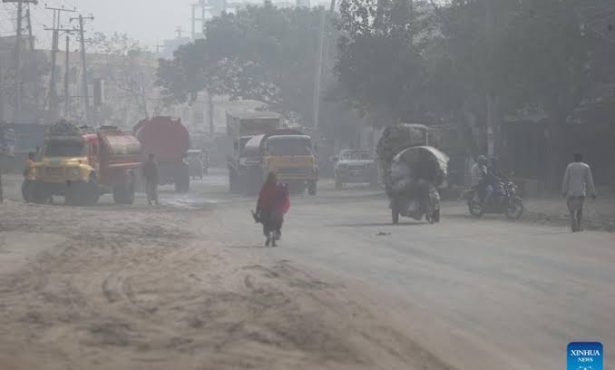
Dhaka’s air quality remained in the ‘moderate’ category on Sunday morning, ranking 25th among cities with the worst air pollution worldwide.
At 9:10am, the capital recorded an Air Quality Index (AQI) score of 71, according to data from air monitoring platforms.
India’s capital, Delhi, topped the global list with an AQI of 227, making it the world’s most polluted city at the time. Kampala in Uganda ranked second with an AQI of 172, followed by Pakistan’s Lahore, which recorded 167.
An AQI score between 51 and 100 is classified as ‘moderate’, meaning air quality is generally acceptable. However, unusually sensitive individuals may experience minor health effects from prolonged exposure to air pollution.
AQI readings between 101 and 150 are considered ‘unhealthy for sensitive groups’, while scores of 151 to 200 are categorised as ‘unhealthy’. Readings between 201 and 300 are deemed ‘very unhealthy’, and any level above 301 is classified as ‘hazardous’, posing serious health risks to the entire population.
In Bangladesh, the AQI is determined using concentrations of five key pollutants: fine particulate matter (PM2.5), coarse particulate matter (PM10), nitrogen dioxide (NO₂), carbon monoxide (CO), sulphur dioxide (SO₂), and ground-level ozone.
Dhaka regularly experiences poor air quality, particularly during the dry winter months, when dust, emissions and stagnant weather conditions increase pollution levels. Air quality typically improves during the monsoon season as rainfall helps remove pollutants from the atmosphere.
Health experts warn that long-term exposure to polluted air can contribute to respiratory diseases, cardiovascular problems and other serious health conditions, with children, older adults and people with pre-existing illnesses being the most vulnerable.