


 Play store

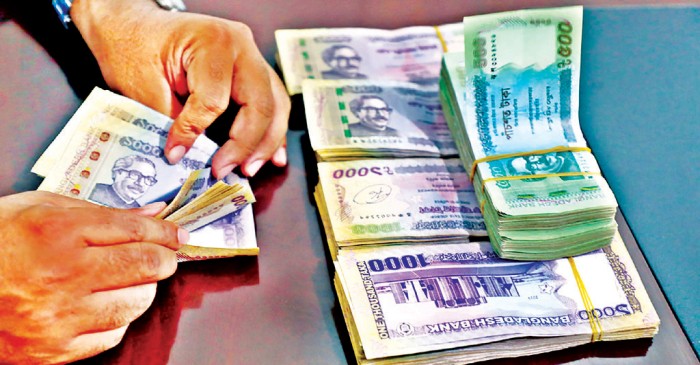
Excess liquidity in Bangladesh’s banking sector has surged to a record Tk 4.08 lakh crore at the end of June 2026, reflecting a sharp slowdown in private-sector borrowing as businesses remain cautious about making fresh investments.
The latest data from Bangladesh Bank show that bank deposits grew 10.74 percent year-on-year in June, while private-sector credit growth slowed to just 4.47 percent.
The widening gap between deposit growth and credit demand has resulted in a substantial accumulation of idle funds in the banking system. Excess liquidity stood at around Tk 1.93 lakh crore two years ago and rose to Tk 2.83 lakh crore in June last year before climbing above Tk 4 lakh crore this June.
Bankers and economists say the record liquidity reflects not only the availability of funds in banks but also weak demand for new loans from businesses and tighter lending practices by banks.
Entrepreneurs have remained hesitant to borrow for setting up new factories or expanding existing businesses amid persistent uncertainty over the operating environment.
Unreliable supplies of gas and electricity remain among the major concerns for industrial investors. Businesspeople say interruptions in energy supplies can disrupt production, making it difficult to generate sufficient cash flow to service bank loans.
High borrowing costs, rising business expenses, political and economic uncertainty, law-and-order concerns and changes in tax and regulatory policies have further discouraged new investment.
As a result, most new lending is currently being used for working capital, imports of raw materials and day-to-day business operations, rather than for establishing new industries or undertaking major expansion projects.
Former Bank Asia President and CEO Md Arfan Ali told UNB that entrepreneurs remained reluctant to invest because the overall business environment had not improved sufficiently.
He said a substantial portion of the surplus liquidity was concentrated in a number of financially stronger banks.
“These banks prefer investing in risk-free government securities,” he said.
Arfan Ali stressed that merely reducing interest rates would not be enough to revive private investment.
“Unless electricity, gas and infrastructure problems are adequately addressed, investment demand will not rebound,” he said.
Weak credit demand is being compounded by a more cautious approach among commercial banks following years of aggressive and, in some cases, poorly assessed lending that contributed to a sharp rise in non-performing loans (NPLs).
Banks are now scrutinising borrowers more closely, assessing the viability of proposed projects, collateral, cash flows and repayment capacity before approving loans.
The situation has also created a divide within the banking sector. Weaker banks are struggling with limited lending capacity, while financially stronger banks with excess funds are increasingly opting for relatively safer investments such as Treasury bills and government bonds.
The result is a banking system with substantial liquidity but comparatively weak private-sector credit demand.
The persistent weakness in private-sector credit growth is significant because bank lending is a major source of financing for industrial expansion, job creation and economic activity in Bangladesh.
While high liquidity could theoretically provide banks with ample funds to finance new investment, the current situation suggests that the principal problem is increasingly lack of demand for productive credit and heightened risk aversion, rather than a shortage of lendable funds.
The record level of surplus liquidity therefore presents a challenge for policymakers. Unless investor confidence improves and structural constraints, particularly energy supply, infrastructure and regulatory uncertainty, are addressed, the excess funds may continue to remain outside productive private-sector investment.
At the same time, banks’ preference for government securities over private-sector lending could further reinforce the trend if businesses remain reluctant to borrow and banks continue to perceive private-sector lending as comparatively risky.