Play store

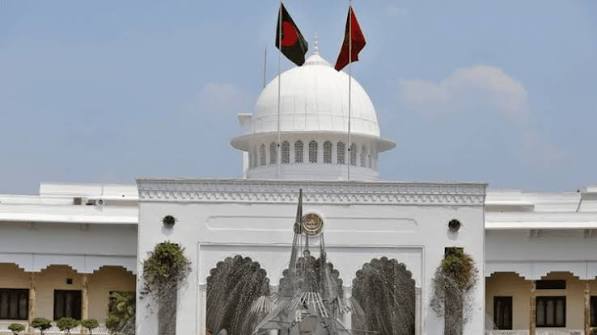
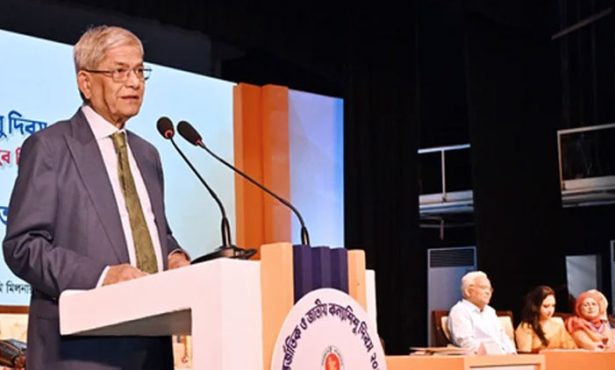
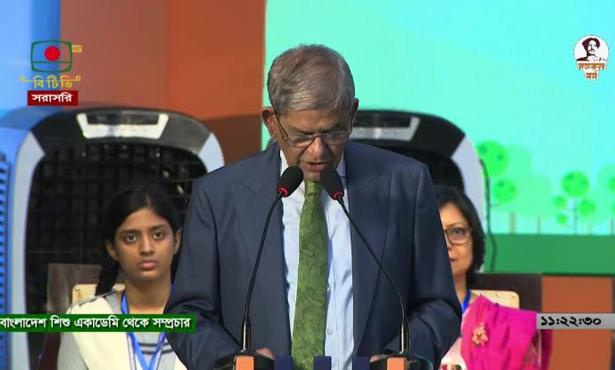
Former BNP Secretary General Mirza Fakhrul Islam Alamgir was Bangladesh’s 23rd president on Thursday in a directly contested election held for the first time in 35 years at the Jatiya Sangsad Bhaban (parliament house). Mirza Fakhrul won the election securing 255 votes against his lone rival presidential candidate Colonel (Retd.) Oli Ahmed, chairman of the Liberal Democratic Party (LDP), nominated by the 11-party alliance led by Jamaat-e-Islami, who bagged 88 votes.
The presidency is the highest constitutional post in Bangladesh. The constitution places the president above all other persons in the state. All official activities of the state are conducted in his name. However, in a parliamentary form of government, the post of president is essentially that of the head of state, not the head of government. Consequently, while the dignity and formal importance of the presidency are significant, its executive powers are not.
How much power the Bangladeshi president holds and what privileges he receives: According to the constitution, the president possesses independent constitutional authority regarding the appointment of the Prime Minister and the Chief Justice. Outside of these, the president is required to act in accordance with the advice of the Prime Minister in the performance of almost all other duties.
However, the president enjoys extensive privileges such as a massive official residence like Bangabhaban, salary, allowances, transportation, medical care and hospitality. Former presidents also retain certain privileges after leaving office.
The President is independent in two appointments: Article 48(3) of the constitution outlines two crucial independent powers of the president. One of these is the appointment of the Prime Minister, and the other is the appointment of the Chief Justice. Regarding this, the constitution states that except for the appointment of the Prime Minister under clause (3) of Article 56 and the Chief Justice under clause (1) of Article 95 of the constitution, the president shall act in accordance with the advice of the Prime Minister in the discharge of all other functions.
If a party secures a majority in a parliamentary election, the president typically appoints the leader of that party’s parliamentary party as Prime Minister. However, if no single party achieves an absolute majority, the president’s constitutional role regarding who can form the government becomes significant.
Even in appointing the Chief Justice, the president is not bound to act on the Prime Minister’s advice. The constitution grants him independent authority in this regard.
The Prime Minister shall keep the president informed on matters of domestic and foreign policy. If the president requests any matter to be submitted for the consideration of the cabinet, the Prime Minister shall present it to the cabinet.
However, there is an important constitutional safeguard here. No court can inquire into whether any advice was tendered to the president by the Prime Minister, and if so, what advice was given.
Special power to grant pardons: One of the president’s most significant powers is the power to grant pardons, reprieves, respites or remissions of punishment.
According to Article 49 of the constitution, the president has the power to grant pardons, reprieves, respites or remissions of any sentence passed by any court, tribunal, or other authority; although within the overall framework of a parliamentary system, the exercise of this power, like the president’s other duties, depends on the advice of the government.
Immunity in the discharge of duties: Another special characteristic of the presidential post is constitutional immunity. The president is not accountable to any court for the performance of his duties. During his term of office, no criminal proceedings can be instituted against him in any court, and no court can issue a warrant for his arrest or imprisonment.
However, this does not mean the president cannot be removed from office under any circumstances. He can be impeached through a parliamentary process on charges of violating the constitution or grave misconduct. There are also provisions for his removal due to physical or mental incapacity.
To remove the president on charges of violating the constitution or grave misconduct, a specific constitutional process of parliament must be followed. After submitting a complaint signed by members of parliament to the speaker, it is considered in parliament within a stipulated timeframe. The president is given the opportunity to defend himself against the allegations. After considering the charges, if a resolution is passed by the votes of at least two-thirds of the total members of parliament, the office of the president shall become vacant.
The parliamentary process for physical or mental incapacity is followed in a nearly identical manner. In this case, there is a provision to form a board consisting of physicians to medically examine the president. Subsequently, if a resolution is passed by a two-thirds majority vote, the president can be removed.
A notable precedent of an initiative to impeach a president in Bangladesh is the case of AQM Badruddoza Chowdhury. In 2002, during the BNP-led government, when an impeachment initiative was launched against him, he resigned.
There is no legal bar to taking legal action against an individual after they resign or retire from the presidency.
Five-year term, maximum of two terms: The presidential term is five years. However, even after the expiration of the term, he continues to hold office until his successor enters office. The same person can serve as president for a maximum of two terms. In the history of Bangladesh, Abdul Hamid served consecutively for the maximum of two terms as president.
While holding the presidential office, he is not qualified to be a member of parliament. If any member of parliament is elected president, his seat in parliament shall become vacant on the day he enters upon office. Now, the parliamentary seat of Mirza Fakhrul Islam Alamgir will be vacated tomorrow (Friday) following his oath of office. Subsequently a by-election will be held for that constituency.
To become president, a person must be at least 35 years old. He or she must have the qualifications required to be elected as a member of parliament, though being a member of parliament is not mandatory to run as a presidential candidate. Anyone who has previously been removed from the presidency through impeachment is no longer qualified to be president.
Salary and other financial benefits: In contrast to his limited executive powers, the financial and institutional privileges of the president are quite extensive. The privileges enjoyed by the president are outlined in The President’s (Remuneration and Privileges) (Amendment) Act. The monthly salary of the president is BDT 120,000, which is tax-free. Salaries were last increased in 2016, prior to which the monthly salary was BDT 61,200. On the other hand, the Prime Minister’s salary is BDT 115,000. The Prime Minster does not receive government privileges when not in office. However, the president continues to receive certain government privileges even after retirement or resignation.
There is also an annual allowance for the president’s hospitality or entertainment expenses. These expenditures are not audited.
The official residence designated for the president is Bangabhaban. Necessary expenditures, including its decoration and maintenance, are borne by the state exchequer. The government also provides a vehicle and necessary transportation facilities for the president’s official travel.
When the president travels abroad on official business, he receives allowances at rates determined by the government.
Discretionary fund of BDT 20 million per year: There is a discretionary fund for the president, amounting to BDT 20 million annually. This money can be spent at the president’s discretion to assist various individuals or institutions.
Additionally, there are special facilities for the medical treatment of the president and his family members. The president and his family members are entitled to free medical treatment in any hospital in the country. If medical treatment abroad is required upon the advice of physicians, those expenses are also borne by the government.
There are also insurance facilities for the president’s air travel. Currently, the amount for this facility is BDT 2.7 million per year. Before 2016, the amount was BDT 1.5 million.In other words, alongside his salary, the president’s residence, vehicles, medical treatment, foreign travel allowances, hospitality, and air travel insurance are extensive privileges guaranteed within the state system to facilitate the discharge of his duties.
Head of state, but not head of government: This is the core characteristic of the presidency in Bangladesh’s parliamentary system of government: he is the highest constitutional person of the state, but not the head of the government. The center of the government’s executive power is the Prime Minister and the cabinet.
Consequently, when discussing the president’s powers, it is essential to distinguish between his formal dignity and his practical executive powers. The constitution places the president above all other persons in the state, but it simultaneously creates an obligation to follow the advice of the Prime Minister in the discharge of most duties.
For this reason, the post of president comes into renewed discussion during national elections or major political crises. Specifically, if no single party achieves an absolute majority in parliament, the president’s role in forming the government can become crucial. However, when there is a clear majority in parliament, the president’s discretionary scope is largely limited.
If the office of the president becomes vacant or if the president is unable to perform his duties for any reason, the speaker performs the duties of the president until a new president assumes office. Following the resignation of former President Md. Shahabuddin last month, the Speaker of the National Parliament, Hafiz Uddin Ahmad (Bir Bikram), assumed the duties of the president. In this manner, the constitution also ensures the continuity of the post of head of state.
Thus, while the presidency is the highest dignified constitutional post in the state, its executive powers within the parliamentary system are limited. Although there have long been discussions in the political arena about balancing the powers of the president and the Prime Minister, it has not materialized to date.
If the office of the president becomes vacant or if the president is unable to perform his duties for any reason, the speaker performs the duties of the president until a new president assumes office. Following the resignation of former President Md. Shahabuddin last month, the Speaker of the National Parliament, Hafiz Uddin Ahmad (Bir Bikram), assumed the duties of the president. In this manner, the constitution also ensures the continuity of the post of head of state.