Play store

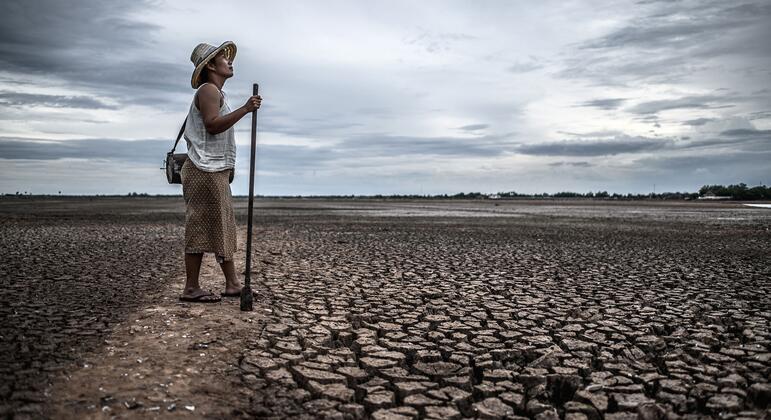
Record-breaking heatwaves, deadly floods and increasingly destructive extreme weather are warning signs of an ever-warming planet that is on course to breach a critical temperature threshold within the next few years, the United Nations has warned.
However, the world can still avoid the worst consequences of climate change if governments act swiftly to cut greenhouse gas emissions, phase down fossil fuels and strengthen adaptation, according to a new report released by the UN Environment Programme (UNEP) on Tuesday.
UN Secretary-General António Guterres said the scorching temperatures across the Northern Hemisphere in recent months, devastating wildfires and deadly flooding offered a glimpse of the dangers that lie ahead if the world fails to accelerate climate action.
“The fight for 1.5 degrees is the fight for humanity,” he said, referring to the internationally agreed goal of limiting global warming to 1.5°C above pre-industrial levels.
“We are set to breach the 1.5°C limit within the next few years,” Guterres warned.
World leaders adopted the landmark Paris Agreement in 2015, pledging to pursue efforts to limit global temperature rise to 1.5°C, a threshold scientists have identified as crucial to reducing the risk of the most catastrophic and irreversible impacts of climate change.
However, the world is currently failing to meet that commitment, according to the new UNEP report.
‘Every fraction of a degree will cost lives’
UNEP Executive Director Inger Andersen warned that there would be no safe outcome if global temperatures remained consistently above the 1.5°C threshold.
“Across the globe, extreme heatwaves are already proving that climate impacts will strike faster, hit harder, and last longer, costing more lives and causing deeper disruption,” she said.
Andersen said the world must now “double down” on climate action by rapidly cutting greenhouse gas emissions while strengthening resilience and adaptation.
“We can and must get on the right path,” she said. “By cutting greenhouse gas emissions, strengthening resilience and adaptation and ensuring exceedance of 1.5°C is as small and short as possible.”
Guterres echoed the warning, saying that even a small additional increase in global temperatures would carry severe consequences.
“Every fraction of a degree will cost lives, destroy livelihoods, deepen inequality and push ecosystems closer to irreversible damage,” he said.
“Humanity is speeding past the limit to avoid climate catastrophe.”
The UNEP report warned that climate risks and impacts would intensify with every additional fraction of a degree of warming and every year that temperatures remained elevated.
The consequences could include more frequent and severe extreme weather, accelerating ecosystem loss, rising threats to human health and food security, worsening water shortages and extensive damage to cities, infrastructure and economies.
Small island developing states and low-lying coastal cities could face increasing risks from sea-level rise and inundation.
The report also warned that the likelihood of crossing irreversible climate tipping points would increase as warming becomes more intense and prolonged. These could include the destabilisation of major ice sheets and the degradation of the Amazon rainforest, potentially triggering changes that would be difficult or impossible to reverse.
‘Solutions are at hand’
Despite the increasingly stark warnings, Guterres said the world could still bring global warming back below 1.5°C by the end of the century.
“We can still bring warming back below 1.5°C by the end of the century,” he said.
“We must make the overshoot as small and short as possible, limiting how high temperatures rise and how long they remain above 1.5.”
He called for what he described as an “overshoot of ambition”, including a faster transition away from fossil fuels, an accelerated expansion of renewable energy, sharp reductions in methane emissions and stronger protection of land, forests and oceans.
Governments, he said, must also go beyond existing national climate plans and strengthen their commitments to achieving net-zero emissions.
The UN chief urged developed countries to triple adaptation finance and ensure that funding reaches communities and countries most vulnerable to climate impacts.
The UNEP report stressed that mitigation and adaptation must advance together, including through measures such as nature-based cooling and the protection and restoration of ecosystems.
It also said that achieving net-zero emissions should be seen not as the final destination but as a milestone towards sustained net-negative greenhouse gas emissions.
According to the report, success will depend on strong political will, effective multilateral cooperation, ambitious policies, inclusive governance and adequate financing.
Countries with greater historical responsibility for climate change, it said, must act faster and with greater ambition.
“The science is clear,” Guterres said. “The solutions are at hand, and the world has never been better equipped to deploy them.”
“Now is the time to raise ambition and accelerate action.”
The UN’s latest warning comes as the impacts of climate change are becoming increasingly visible across continents, with record temperatures, devastating floods, prolonged droughts, destructive wildfires and intensifying storms affecting millions of people.
For vulnerable countries, particularly small island states and low-lying nations such as Bangladesh, the difference between limiting warming to 1.5°C and allowing temperatures to rise further could mean millions more people facing extreme weather, displacement, food insecurity and loss of livelihoods.
The message from the UN is therefore increasingly urgent: breaching the 1.5°C threshold may be approaching, but climate catastrophe is not yet inevitable. The scale of the damage that follows will depend on the decisions governments, businesses and societies make now. Source: UN News