Play store

A court arbitration in The Hague has ruled that India cannot unilaterally suspend a decades-old water-sharing treaty, which New Delhi has kept “in abeyance” since April 2025.
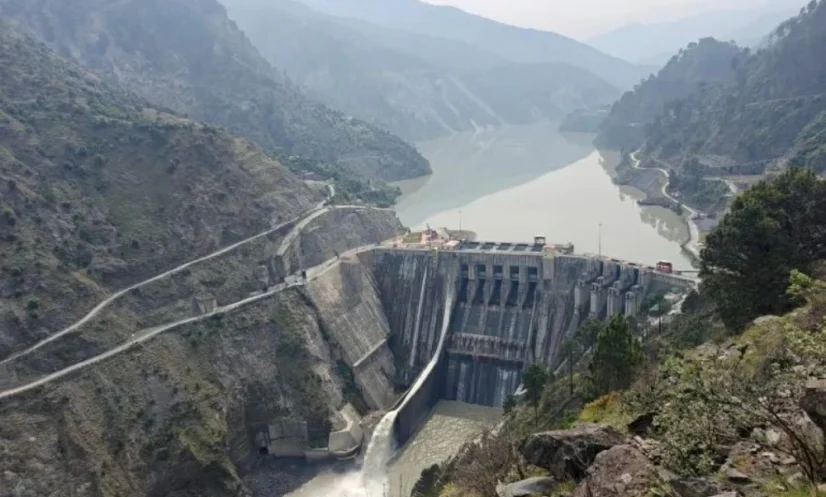
But the Indian government has categorically rejected the ruling by the Permanent Court of Arbitration (PCA), which said the country must uphold the 1960 Indus Waters Treaty with Pakistan and limit construction on a hydroelectric project in the disputed Kashmir region.
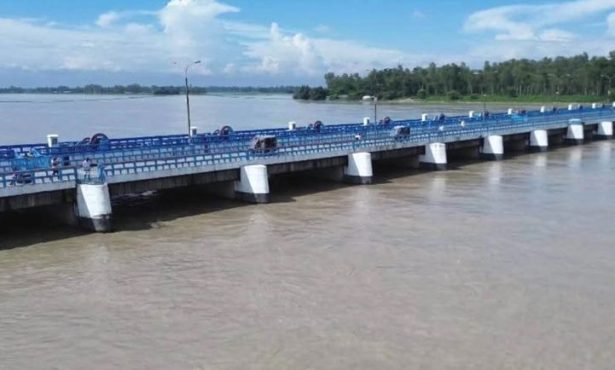
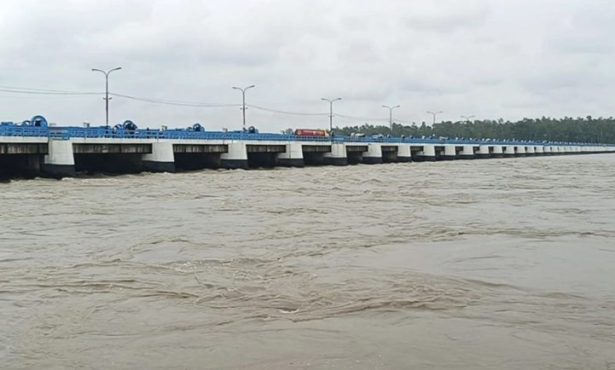
In a unanimous decision issued on Monday, the five-member court found that the treaty “remains fully in force” and that India “must observe its obligations” under it, including those governing the design and operation of hydropower projects on rivers that flow into Pakistan.
The ruling is the first time an international court has ruled on whether India’s decision to place the treaty in abeyance is legally valid.
India announced the decision in April 2025, after a deadly attack on tourists in Indian-administered Kashmir, saying it would suspend the treaty until Pakistan “credibly and irrevocably” ends support for cross-border terrorism.
Islamabad denies accusations that it was behind the attack, in which 26 civilians were killed by gunmen who allegedly tried to determine the religion of their victims first.
India has rejected the jurisdiction of the PCA) – an intergovernmental court outside the United Nations system whose mandate New Delhi has accepted in other cases – in the case brought by Pakistan. India did not participate in any of the hearings that culminated in Monday’s ruling.
It was quick to reject the verdict, leaving Pakistan with a legal and diplomatic victory whose actual worth will now be tested.
After India placed the treaty in abeyance in April 2025, Pakistan applied in March 2026 for the PCA to rule on the treaty’s status, arguing it could not order India to comply with an agreement that might no longer be in force.
The court invited India to take part, but India did not respond. Hearings went ahead at the Peace Palace in The Hague from April 26 to 28, 2026, with only Pakistan present.
The court examined every ground India has cited publicly: Sovereignty, Pakistan’s alleged unwillingness to renegotiate, cross-border terrorism, and changes such as demographic growth, clean-energy needs and climate change.
The court rejected all of them, finding that no rule of international law allows a state to unilaterally suspend a treaty on the grounds that it was a sovereign nation within its rights to walk away from a pact.
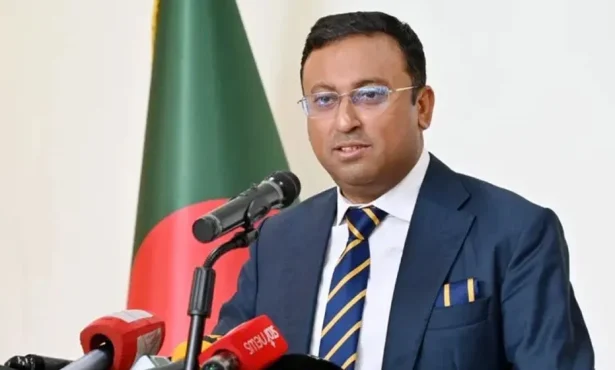
Pakistan’s Deputy Prime Minister and Foreign Minister Ishaq Dar welcomed the ruling.
“Pakistan welcomes the unanimous Award of the Court of Arbitration today, which decisively rejects India’s unlawful attempt to place the Indus Waters Treaty ‘in abeyance’ and reaffirms that the Treaty remains fully in force and binding on both parties,” he said in a statement on X. “India must fully comply with its obligations under the Treaty and with the binding decisions of its dispute settlement mechanisms.”
India, for its part, rejected the ruling within hours.
In a statement, India’s Ministry of External Affairs called the court “illegally constituted”.
“This so-called Court of Arbitration has no jurisdiction whatsoever to pronounce on India’s sovereign decisions,” India’s Ministry of External Affairs said in a statement on Monday.
“Its pronouncements, now or in the future, will have no effect on India’s actions in connection with the projects being undertaken by India,” it added.
Legal experts say the ruling strengthens Pakistan’s position, even if it offers no obvious way to force India’s hand.
“This is not merely declaratory,” Ahmer Bilal Soofi, an international law expert who also served as Pakistan’s caretaker federal law minister, told Al Jazeera. “It gives Pakistan a very categorical, clear legal basis to consider countermeasures under international law, whenever it chooses to do so.”
Sikander Ahmed Shah, professor of international law at the Lahore University of Management Sciences, agreed that India’s absence from the hearings does not weaken the outcome.
Both, however, acknowledged that there is no formal enforcement mechanism comparable to a UN Security Council order. Source Saudi Gazette.