Play store


A massive 100-year oil agreement between the United States and Venezuela has stunned analysts and angered opposition groups, with critics describing the deal as a new form of colonialism.
The agreement, signed in Caracas on Wednesday, follows US President Donald Trump’s pledge to take control of Venezuela’s oil resources after the ouster of President Nicolas Maduro in a US military operation last January.
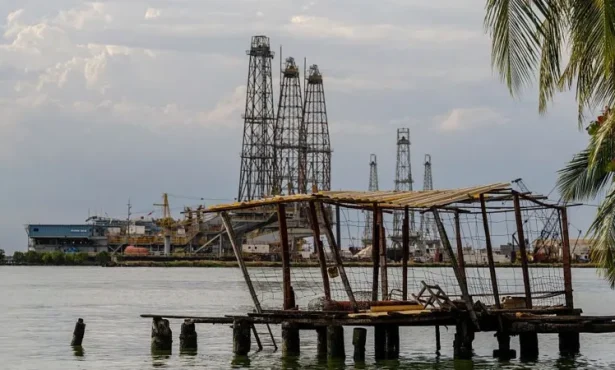
Under the deal, a US-led company has secured exclusive rights for 100 years to 17 Venezuelan oil fields containing an estimated 65 billion barrels of crude—more than one-fifth of the country’s proven oil reserves, according to the BBC.
Both governments have described the agreement as mutually beneficial. Trump called it the “largest oil deal in the history of the world,” while Venezuela’s interim President Delcy Rodriguez called it a “historic agreement,” saying it would bring $100 billion in investment and generate more than $200 billion in taxes and state revenues.
However, the deal has drawn sharp criticism from several quarters.
Elliott Abrams, a former Trump administration special envoy for Iran and Venezuela, called it a “terrible” agreement, arguing that Rodriguez had given away 20% of the country’s national resources without justification.
“I think she is simply following Washington’s instructions,” Abrams said, describing the terms as resembling a “colonial nightmare.”
A White House fact sheet released Tuesday said the US government would work with North American Blue Energy Partners (NABEP), described as Venezuela’s second-largest private oil producer after Chevron.
One particularly striking provision gives the US government veto power over the appointment of any member of NABEP’s board, while a majority of board members must be US citizens.
The agreement comes as oil prices are rising amid heightened tensions between the US and Iran. Increased oil production outside the Middle East could potentially ease pressure on global consumers, analysts say.
US Interior Secretary Doug Burgum told Fox Business that the agreement would shift the “geopolitical center” of global energy markets away from the Middle East and back toward the Western Hemisphere.
The White House said the deal would revive the 19th-century Monroe Doctrine, which sought to establish US dominance in South America.
Trump has suggested the deal could become profitable within two or three years. Energy experts, however, are more cautious, saying Venezuela’s devastated oil sector could take at least a decade to generate substantial profits.
Luis Pacheco of Rice University’s Baker Institute told the BBC that Venezuela would need to invest around $100 billion over the next eight years to return to its production capacity of three decades ago.
He questioned whether those who had squandered Venezuela’s enormous oil potential through years of mismanagement should be entrusted with managing the investment.
Opposition Angered and Disappointed
Venezuela’s opposition parties have expressed deep disappointment over the agreement and anger at Washington’s rapid rapprochement with Rodriguez, a former vice president under Maduro.
Nobel Peace Prize laureate and presidential candidate Maria Corina Machado has avoided directly criticising Trump, but others have spoken out.
Venezuelan economist Ricardo Hausmann accused Washington of choosing an alliance with the country’s former oppressors rather than helping liberate its people and restore democracy.
Although the ruling United Socialist Party of Venezuela (PSUV) has backed Rodriguez, some hardline socialists have denounced the agreement as a “surrender.”
After nearly three decades of opposing US regional influence, they argue that Rodriguez has handed Venezuela’s most valuable resource to its former adversary.
Rafael Ramirez, former head of state oil company PDVSA and oil minister under former President Hugo Chavez, said the agreement “opens the door to a new US colonialism.”
The BBC contrasted the deal with Chavez’s approach to the oil industry. In early 2008, Chavez broadcast his weekly television programme Alo Presidente from the Orinoco River basin, from a former ExxonMobil oil field.
After Venezuela nationalised some of ExxonMobil’s assets in the region, Chavez took a strongly anti-US stance.
“The reins are now in our hands, and we will never give them up again,” he said at the time.
He had also accused previous pro-Washington governments of turning Venezuela into a “nation of gringos.”
Now, under his successors, Venezuela has signed a sweeping oil agreement with Washington—an arrangement that many Venezuelans are struggling to accept.