Play store



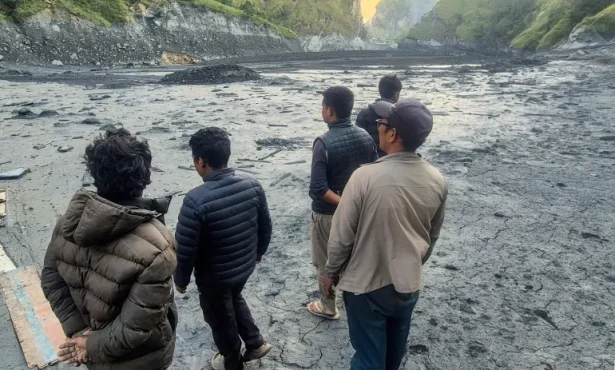
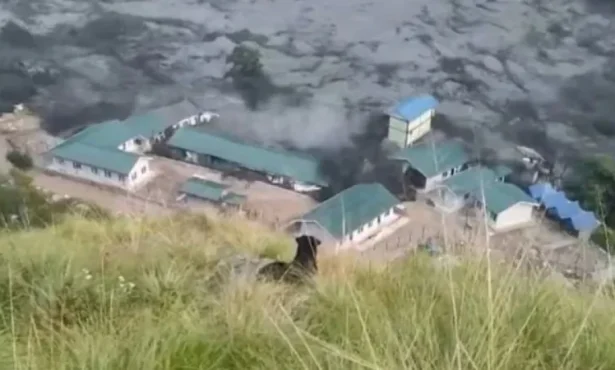
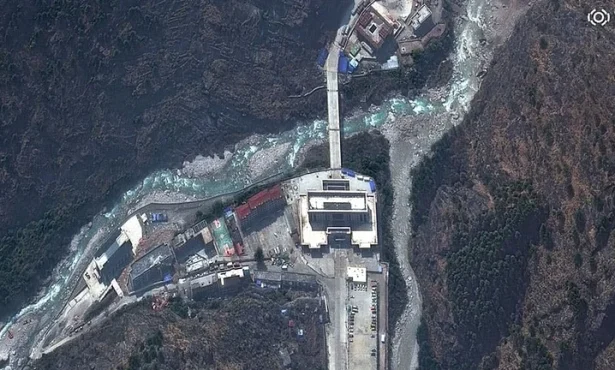
Nepal’s recent glacier-related disaster is a stark reminder that climate change is making natural hazards increasingly destructive. For Bangladesh, however, the lesson extends far beyond the Himalayas.
From deadly landslides in the Chattogram Hill Tracts to recurring waterlogging in Dhaka and Chattogram, Bangladesh is facing a growing combination of climate-driven extremes and human-made environmental failures.
Prof Dr Mohammad Sirajul Islam, a river and water management expert, believes Bangladesh must urgently strengthen disaster monitoring, restore its natural water systems and stop allowing unplanned development to intensify climate risks.
“Climate change is not a local issue. It is a transboundary problem,” he said, stressing that environmental changes in the Himalayas could eventually affect millions of people downstream, including in Bangladesh.
In an interview, Prof Islam, a professor at the Department of Civil and Environmental Engineering at North South University, said the recent disaster in Nepal highlighted the growing instability of glaciers and mountain ecosystems under global warming.
The Himalayas, often described as the world’s “Third Pole”, contain one of the largest concentrations of ice outside the Arctic and Antarctic regions. The mountain range plays a crucial role in sustaining major river systems, including the Ganges, Brahmaputra and Indus.
Prof Islam explained that glaciers normally maintain a natural balance, with snow and ice accumulating at higher elevations while melting ice gradually feeds rivers downstream. Climate change, however, is disrupting that equilibrium.
“More ice is now melting than accumulating in many places,” he said.
As glaciers retreat, water can accumulate behind unstable deposits of rocks, sand and other debris. These natural barriers can collapse suddenly, releasing enormous volumes of water downstream in what is known as a glacial lake outburst flood.
The volume of water alone is not always the most destructive factor, he said. In mountainous regions such as Nepal, the speed and force of floodwater can sweep away everything in its path.
Replying to a question, he said, the consequences of environmental changes in the Himalayas are particularly serious because of the enormous population living downstream.
Around two billion people live south of the Himalayas, meaning environmental disruption in the region has the potential to affect roughly one-quarter of the world’s population, he said.
Prof Islam, who previously served as director of North South University’s Centre for Infrastructure Research and Services (CIRS), emphasised the importance of international cooperation and information sharing.
On other question, he said modern satellite technology can help identify changes in glaciers, cracks in unstable ice formations and other potential warning signs. Countries with advanced monitoring capacity should share such information with vulnerable neighbouring states.
“Nepal does not have the same level of technological infrastructure as some of its neighbours,” he noted, adding that early warnings could help communities living near rivers move to safety before disaster strikes.
For Bangladesh, he said, cooperation among countries sharing major river basins is particularly important. As a downstream and riparian country, Bangladesh could eventually face the consequences of major environmental disruptions occurring upstream.
Prof Islam, a member of the Institution of Engineers, Bangladesh’s Board of Accreditation for Engineering and Technical Education, said institutions such as the International Centre for Integrated Mountain Development could play an important role in strengthening scientific monitoring and regional cooperation.
Although Bangladesh does not face glacier-related hazards, the lessons from Nepal are highly relevant to the country’s hill regions, where landslides have repeatedly claimed lives during the monsoon. The nature of the threat is different, he said.
In Bangladesh, intense rainfall, deforestation, hill cutting and unplanned settlements are among the main causes of landslides.
One increasingly important climate-related phenomenon is the cloudburst, in which an exceptionally large volume of rainfall occurs within a short period.
A city may be able to cope with 10 centimetres of rain spread over several days, Prof Islam explained. But if the same amount falls within one or a few hours, drainage systems, rivers and hill slopes can quickly become overwhelmed.
Climate change is increasingly associated with shorter but more intense spells of rainfall, he said. In mountainous areas, this can severely destabilise slopes.
The destruction of vegetation further increases the danger. Forests help stabilise soil and regulate the movement of water. But cutting trees and developing settlements at the foot of, or along the slopes of, hills weakens their natural structure.
“Natural hills covered with vegetation do not collapse as easily,” he said. “But when the base of a hill is cut and its foundation is weakened, the risk of landslides increases dramatically.”
He said Bangladesh must stop allowing settlements to grow indiscriminately in hazardous areas. Housing in hill regions should be planned according to slope stability, flood risk and geological conditions. Experts should determine where construction is safe and where development could destabilise the landscape.
Prof Islam also questioned the growing dependence on commercial plantations in environmentally sensitive hill areas. While tree planting is generally beneficial, he said the choice of species matters. Commercial plantations involving non-native species may not provide the same ecological protection as indigenous forests.
He favoured conserving and restoring native tree species in Bangladesh’s hill regions while relocating vulnerable communities to safer areas.
About Bangladesh’s chellenge, he said the country’s challenge, he said, has two dimensions. “One is the natural pressure created by climate change, including extreme rainfall. The other is the local crisis created by people through hill cutting and deforestation.”
Prof Islam, who obtained his master’s degree from the National University of Singapore and earned a PhD in environmental engineering from the University of Tokyo, said recurring waterlogging in Dhaka and Chattogram should also be viewed as a failure of urban planning rather than simply a temporary inconvenience during the monsoon.
He pointed to the concept of the “sponge city”, increasingly applied in countries such as China, where urban areas are designed to absorb, store and gradually release rainwater.
When a city is covered with concrete, only a small proportion of rainwater can penetrate the ground. Most of it becomes surface runoff and flows rapidly into drains.
“In many heavily developed cities, around 90 percent of rainfall can become surface runoff,” he said.
Dhaka faces an additional challenge because much of the city is protected by embankments built after the devastating floods of 1988.
The embankments protect the city from external floodwater, but rain falling inside the protected area must be drained through canals, regulators, pumping stations and water retention areas.
The problem, Prof Islam said, is that urbanisation has dramatically increased surface runoff while drainage and pumping capacity have not kept pace.
At the same time, many drains and pipelines are blocked by plastic and other waste, preventing rainwater from reaching pumping stations and retention reservoirs.
The economic consequences are significant. Waterlogging damages roads and pavements, disrupts businesses and industries and destroys household property, including electrical equipment and other assets kept on lower floors.
“What appears to be a problem for five or 10 days a year can actually cause losses worth thousands of crores of taka,” he said.
Chattogram faces additional complications because of its hills and tidal influence. Although rainfall should naturally flow quickly downhill towards rivers and the sea, tidal water and poorly maintained regulators can obstruct drainage. Waste-clogged canals further reduce the city’s ability to discharge stormwater.
Despite spending huge amounts of money on drainage projects, the expected benefits are often not achieved because of poor implementation and inadequate maintenance, he said.
Prof Islam believes elements of the sponge city concept can still be introduced in Dhaka and Chattogram despite their dense development. The basic principle is to keep urban areas as permeable as possible.
In some countries, infrastructure has been redesigned so that rainwater can pass through porous surfaces into underground layers of stone and gravel, where it can be temporarily stored or allowed to recharge groundwater.
Porous pavements, perforated bricks in parking areas and permeable surfaces in parks and open spaces can help reduce surface runoff.
Bangladesh’s building regulations already require parts of many plots to remain open. Under Floor Area Ratio regulations, up to 40 percent of land in certain developments is required to remain free of construction.
Prof Islam said these open areas are important not only for light and ventilation but also for allowing rainwater to recharge groundwater.
In reality, however, many property owners cover these spaces with concrete for parking or other structures.
The consequences are becoming increasingly serious. Dhaka’s groundwater table has fallen dramatically in many areas, with water now having to be extracted from depths of several hundred feet.
Increasing the depth of tube wells may provide a temporary solution, he warned, but it cannot be a long-term answer.
Despite being surrounded by rivers and waterways, Dhaka continues to depend heavily on groundwater.
Prof Islam said the main reason is the severe pollution of surface water. Treating highly polluted river water requires expensive and advanced technology. If sewage and industrial waste continue to enter rivers, the cost and difficulty of producing safe drinking water will remain extremely high.
He said the problem should be addressed at its source. “Prevention is better than cure.”
Instead of allowing rivers to become polluted and then spending heavily to treat contaminated water, Bangladesh should stop untreated sewage and industrial waste from entering water bodies.
He criticised the country’s weak sewage management system, saying that much of Dhaka remains outside effective sewerage treatment.
Although sewage treatment facilities have been developed in parts of the city, many households and commercial buildings still lack proper systems for the safe disposal of septic waste.
Legally, buildings are required to have septic tanks, which should be emptied and the waste transported to designated disposal facilities. In practice, however, illegal connections often allow wastewater to flow into nearby drains.
As a result, untreated sewage eventually reaches rivers and canals.
Industrial pollution has worsened the problem. Factories that fail to operate effluent treatment plants properly continue to contaminate rivers, while the pollution of surface water further increases pressure on groundwater resources.
Prof Islam warned that unchecked groundwater extraction could eventually create serious environmental consequences.
For Prof Islam, the recovery of Dhaka’s canals, wetlands and other natural water bodies ultimately depends on political will.
He said governments in several countries, including China and South Korea, have restored waterways that were previously filled in or buried beneath roads and urban development.
Bangladesh could also recover its lost water bodies if the state made it a priority.
“No individual or group should be allowed to occupy natural water bodies and prevent their recovery,” he said.
Canals, wetlands and retention areas are essential parts of the city’s natural drainage system. Their disappearance has reduced Dhaka’s ability to store stormwater and increased the severity of flooding and waterlogging.
Replying to a question on urban water management, Prof Islam said Bangladesh needs an integrated urban water management strategy combining the recovery of canals and wetlands, improved drainage, increased water retention capacity, modern waste management and stricter enforcement against illegal development.
The country’s growing climate risks cannot be addressed by engineering projects alone, he warned.
The fundamental challenge is whether Bangladesh is willing to protect its natural systems before they disappear completely.
For a country facing increasingly intense rainfall, rapid urban expansion, shrinking wetlands and growing environmental pressure, the message from Nepal is clear: disasters may be triggered by nature, but their scale and consequences are often determined by human decisions.