


 Play store


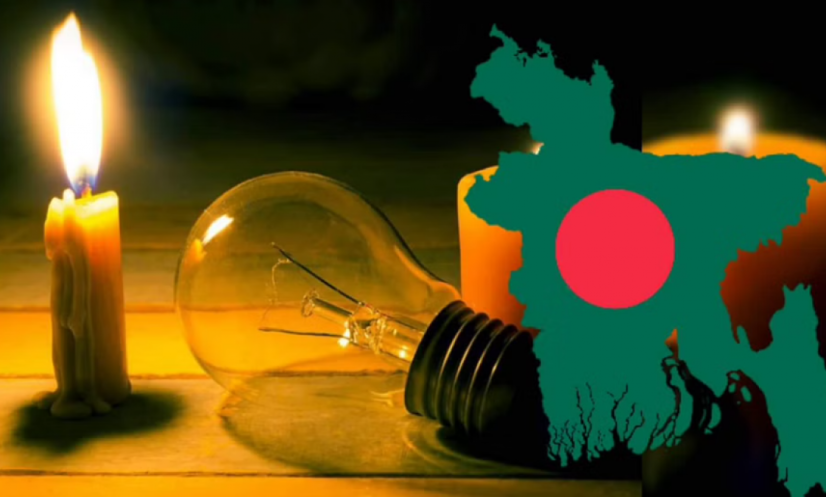
Bangladesh’s power sector has reached a difficult crossroads. Over the past decade, the country has significantly expanded its electricity generation capacity, extended power connections and built new plants across the country. Yet the impressive growth in installed capacity has not always been matched by an equally reliable supply of fuel, efficient use of power plants, prudent financial management or sustainable contractual arrangements.
The result is a contradiction at the heart of the present crisis. Bangladesh sometimes has power plants but insufficient fuel to operate them. At other times, fuel is available but generation becomes financially difficult because of high costs. In some cases, generation capacity exists but remains underused, even as the state continues to bear substantial financial obligations linked to it. The present crisis, therefore, is not simply about whether Bangladesh has enough megawatts.
It is about energy security, fuel availability, the cost of electricity, capacity payments, contractual liabilities, regional dependence, renewable energy, institutional expertise and the ability of the system to withstand and recover from major disasters.
The way out will not come from one dramatic decision or another round of hurried power projects. Bangladesh needs immediate measures to stabilise supply, combined with structural reforms capable of preventing the same crisis from returning.
A practical way forward can be built around ten priorities.
First: Bangladesh must ensure fuel for the power plants it already has
The fastest way to increase electricity supply may not be to build more power plants. It may simply be to make better use of the facilities already in place. This is particularly important for private heavy fuel oil-based power plants that have the capacity to generate electricity but remain idle or operate below their potential because of fuel shortages or supply constraints.
The government should establish a small, capable and empowered team to examine such plants individually and resolve problems quickly. Why is a plant not producing at full capacity? Is fuel unavailable? Are there payment arrears? Is procurement creating delays? Is there a technical problem? Or is the plant itself inefficient? The answers should be found quickly and acted upon.
Bangladesh cannot afford to invest in new capacity while existing plants remain underused because of problems that can be solved through better coordination.
The first rule of crisis management should therefore be simple: make existing power plants work before building unnecessary new ones.
Second: Contracts that burden the public must be reviewed
Bangladesh’s power sector has accumulated significant financial liabilities through various contractual arrangements. Not every contract is problematic, and private investment remains important. But contracts that impose an excessive burden on taxpayers and consumers cannot be treated as untouchable.
Cancelling agreements outright may create legal and financial complications. The more practical approach is to review, renegotiate and restructure them where necessary.
The question should not be simply whether a contract was signed in the past. The real question is whether it continues to serve the national interest today.
Economic conditions change. Fuel prices fluctuate. Electricity demand shifts. Technology advances. All these factors must be taken into account. A contract that appeared reasonable under one set of circumstances may become a burden under another.
The government should therefore seek lawful and negotiated ways of correcting agreements that have become economically unreasonable. The purpose should not be to punish investors. It should be to ensure that private returns and public responsibilities remain reasonably balanced.
Third: Bangladesh should unlock its coastal wind potential
Bangladesh cannot remain indefinitely dependent on imported fossil fuels. Renewable energy must become an increasingly important part of the country’s energy security.
Solar power has received considerable attention, but wind energy, particularly in coastal areas, deserves more serious and carefully planned development. This cannot be achieved simply by approving projects and allowing turbines to be installed wherever land is available.
Wind farms require scientific planning. The position of one turbine can affect the airflow reaching another. Poor planning can reduce efficiency and waste a valuable natural resource. The government must therefore act as a strategic planner rather than merely an approval authority.
Detailed wind-resource mapping should be undertaken, suitable locations identified and turbine layouts scientifically designed. Private investment should be encouraged, but projects must fit within a coherent national plan.
Bangladesh should also begin looking seriously at offshore wind power. Such projects require significant investment and advanced technology, but for a densely populated country with limited land, the sea could become an important source of clean electricity in the future.
Fourth: Electricity imports should be diversified
India will remain an important partner in Bangladesh’s electricity trade. Geography and existing infrastructure make that inevitable and, in many cases, economically sensible. But cooperation should not mean dependence.
Bangladesh should gradually develop alternative regional options, including potential future electricity connections involving Myanmar, Thailand, China and wider South-East Asian power networks.
The possibility of connecting with broader regional systems, including the ASEAN Power Grid, should be considered as part of a long-term strategy.
Diversification would strengthen Bangladesh’s bargaining position and improve energy security. Access to several potential suppliers would allow the country to purchase electricity from whichever source offers the best combination of price, reliability and strategic advantage. The principle should be straightforward: cooperate with everyone, but depend excessively on no one.
Fifth: Expiring power contracts should be judged by economic necessity
Bangladesh must also reconsider the future of ageing heavy fuel oil-based and rental power plants whose contracts are approaching expiry. Renewal should never be automatic.
Each plant should be assessed on its own merits. Is the electricity still needed? How much does it cost to generate? How reliable is the plant? Are cheaper alternatives available?
If a plant can provide necessary electricity at a competitive cost, a new agreement may be justified. But if it has become expensive, inefficient or unnecessary, the government should not continue paying simply because the plant has existed for years.
Future contracts should also move towards a more rational principle: the state should pay primarily for useful electricity supplied, not simply for unused capacity. A power plant does not serve the economy merely by existing. It must produce value.
Sixth: Bangladesh must stop paying heavily for capacity it does not use
One of the greatest contradictions in the power sector is the existence of underutilised capacity alongside substantial financial obligations. The country cannot afford to pay heavily for unused power plants while struggling to finance fuel imports and maintain reliable electricity supplies.
Every underutilised plant should therefore undergo a detailed economic and technical assessment. Can its utilisation be increased? Is fuel the obstacle? Is transmission capacity inadequate? Is the plant located where its electricity cannot be efficiently supplied to consumers? Has the technology become outdated? The answer will not be the same in every case.
Some plants may become more useful if fuel supply or transmission problems are resolved. Others may no longer make economic sense.
Bangladesh needs to shift its focus from the size of installed capacity to the value of usable capacity. Megawatts on paper cannot power factories.
Seventh: Fuel procurement must become smarter and more transparent
Fuel remains the most immediate vulnerability in Bangladesh’s electricity system. The country depends heavily on imported energy, exposing the power sector to international price volatility, supply disruptions and pressure on foreign-exchange reserves.
Bangladesh should strengthen its ability to purchase fuel directly and competitively from international markets where appropriate, reducing unnecessary layers of intermediaries.
When international prices fall, the government should have the institutional capacity to act quickly. But quick decisions must not mean secret decisions.
Energy procurement is an area where transparency is particularly important. Any system of direct purchasing must include competitive benchmarks, independent oversight and proper auditing.
The objective should be simple: buy at the right time, at the right price and through the right process. Better procurement could reduce costs substantially and relieve pressure on the wider economy.
Eighth: Industry should use energy more efficiently through cogeneration
Bangladesh’s future energy policy should not focus solely on producing more electricity. It must also focus on using energy more efficiently. One important opportunity lies in cogeneration, or combined heat and power.
Power generation produces heat, much of which is often wasted. In industries that require both electricity and thermal energy, some of that heat can be captured and used in production. This allows the same fuel to provide more than one form of useful energy.
For industrial zones and large manufacturing facilities, integrated planning between power plants and industries could reduce energy costs and improve efficiency. The cheapest unit of energy is often the one that does not have to be generated because it has been saved. Bangladesh must therefore treat energy efficiency as an energy source in its own right.
Ninth: Bangladesh must invest in specialised people, not only infrastructure
Power plants can be built. Transmission lines can be extended. Fuel terminals can be constructed. Developing skilled people takes much longer. The future of Bangladesh’s power sector will depend heavily on the engineers, economists, lawyers, technicians and administrators who operate and manage it.
The country needs specialised expertise in power generation, fuel management, transmission systems, renewable technologies, energy economics, electricity markets, contract negotiation, project evaluation and disaster recovery.
General training programmes will not be enough. Bangladesh needs a long-term strategy for developing specialised human resources capable of understanding both the conventional energy system of today and the more complex energy transition of tomorrow.
The country will need engineers who understand renewable energy and storage, economists who can analyse energy markets, lawyers capable of negotiating sophisticated international contracts and policymakers who can make decisions based on evidence. This may not produce immediate political headlines, but it could become one of Bangladesh’s most valuable long-term investments.
Tenth: The power system must be prepared for disaster
Bangladesh is one of the world’s most disaster-prone countries. Yet the resilience of the power system does not always receive the attention it deserves. Cyclones, floods, earthquakes, pandemics and major technical failures can disrupt electricity supply precisely when power is most urgently needed.
Besides, hospitals, emergency services, communications, water supply and industry all depend on electricity. The power system must therefore have a clear disaster-recovery strategy.
Critical spare parts should be stored within the country. Technical workshops and emergency repair teams should be adequately equipped. Procedures for restarting power plants and restoring transmission systems should be prepared before a crisis occurs.
Authorities should know which facilities must be restored first, where emergency equipment is located and who is responsible for each stage of recovery. A strong electricity system is not one that never fails. It is one that can recover quickly when failure occurs. Bangladesh should therefore reduce its dependence on waiting for foreign spare parts or technical assistance during emergencies and develop greater domestic recovery capacity.
These ten priorities are interconnected. Fuel shortages cannot be separated from procurement. Procurement cannot be separated from financial management. Financial management cannot be separated from contracts. Contracts cannot be separated from the efficient use of existing power plants. Long-term energy security cannot be separated from renewable energy, regional cooperation and skilled human resources. That is why Bangladesh must move beyond crisis-by-crisis management.
The country should certainly take immediate measures to restore electricity generation by ensuring fuel supplies for existing plants. But at the same time, it must address the deeper weaknesses that repeatedly create financial pressure and energy insecurity. Bangladesh must also stop judging success in the power sector primarily by the number of megawatts installed.
Installed capacity does not necessarily mean affordable electricity. A large number of power plants does not automatically guarantee energy security. Nor does high generation necessarily mean that electricity is being produced efficiently.
The more important questions are these: How reliable is the supply? How affordable is electricity for households and industries? How efficiently are power plants being used? How much does the state pay for unused capacity? How dependent is Bangladesh on imported fuel? How diversified are its sources? And how quickly can the system recover after a major disaster? These questions should define the future of Bangladesh’s electricity policy.
The country needs sufficient generation capacity without unnecessary financial burdens. It needs fuel security without dependence on a single source. It needs regional electricity trade without dependence on one country. It needs private investment without sacrificing the public interest. And it needs renewable energy developed through scientific planning rather than symbolic announcements.
The present power crisis is serious, but it also offers an opportunity to correct long-standing weaknesses. Bangladesh has already demonstrated that it can expand electricity access and generation capacity. The next challenge is more difficult and more important. It must now build a power system that the country can genuinely afford, reliably depend upon and sustain.
The goal should not simply be more electricity. It should be better electricity: affordable, reliable, efficient and resilient. Electricity is no longer merely a public utility. It is the bloodstream of Bangladesh’s modern economy. Industry, agriculture, transport, information technology, healthcare, education and everyday life all depend upon it.
Keeping that bloodstream flowing requires more than emergency measures whenever shortages appear. It requires smarter contracts, better fuel management, diversified energy sources, efficient use of existing capacity, investment in renewable energy, specialised human resources and a system capable of recovering quickly from disaster.
The ten steps outlined above will not solve every problem overnight. But they offer a realistic route from recurring crisis towards genuine energy security. Bangladesh’s challenge now is not simply to produce more power. It is to build a power sector that works better.
The views expressed in this article are the author’s own and do not necessarily reflect Sarabangla English Edition’s editorial stance.